Apples Galore

Many years ago when anything was possible, I pushed an apple pip into the ground and it grew into an apple tree. My apple tree moved with me to two new childhood homes and eventually grew sweet apples that I ate in memory of that first original fruit.

When my parents moved to Devon earlier this year, they tried to bring some part of this apple tree with them. My Dad attempted to graft some winterbound twigs onto new stock, whilst a friend planted fresh cuttings in a transportable mini cold frame. It was the wrong time of year, it was the nature of things – all of these much-appreciated attempts failed (although I still have a pressed leaf from the cuttings of my apple tree).

At the same time as when my parents were preparing to pack up their moving crates however, O and our children planted a new apple tree in our front garden with its own story to tell.

Last November, O brought home a young apple tree from St Bridget Nurseries. He told us how a staff member at the nurseries had helped him to carry the tree to his car. It had been a struggle to wedge the tree into the boot of the car without snapping or trapping any of the precious branches, and they were both tired from the effort. Having recently been in the States where he had learned to reach automatically for his wallet at times like this, O offered to tip the man. The man replied that he wanted no tip, but would instead welcome an apple from the tree the following year.

We planted the tree and worked hard to lay turf over the ground before the first frosts came, only to wake up to an unprecedented covering of snow that lasted for the first two months of our newly-designed garden’s life.
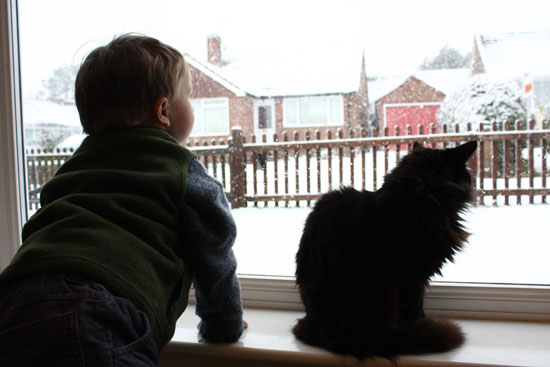
As the ground began to thaw and the dark days started to lengthen, we worried that the young tree had not survived the ill-timed freeze and watched anxiously for signs of growth. Crocuses and daffodils planted at the foot of the tree peeked tentatively through the grass as if unsure about the rewards of pushing upwards through the frozen earth. Buds on the tips of the bare apple tree branches swelled minutely and we held our breath as we waited for Spring to explode.
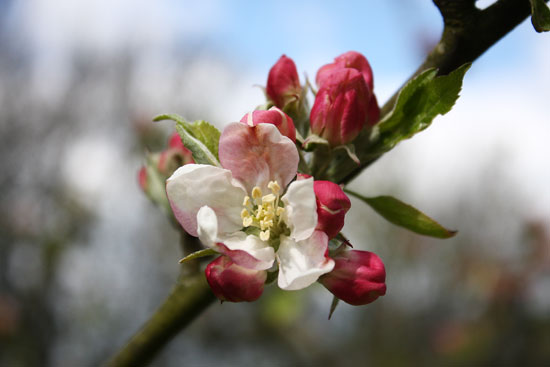
Among the apples we have collected from our tree this year, one is reserved for the man from the garden centre. We will be taking it to him later today. Fingers crossed he enjoys his slow-to-mature tip!

I’m not alone in turning my thoughts to apples at this time of year. Yesterday saw the 21st anniversary of the autumnal celebration of Apple Day with events around the world to inspire and inform an orchard revival. Close to home, Otterton Mill is hosting food tasting, apple bobbing and other family activities tomorrow, whilst we have the opportunity to press our own apples into juice at Matthews Hall in Topsham on Sunday (perhaps we may grow sufficient apples for a drop or two of juice next year!). There’s still time to discover an Apple Day event near you …

Apparently, the association of apples with Hallowe’en is all down to the Celts. They believed that fruits grew magically in the Island of Apples, an enchanted place that was only accessible by passing through water. So next time you find yourself snorting water as bobbing apples bonk your nose at a Hallowe’en party, it may help to remember this mystical isle.

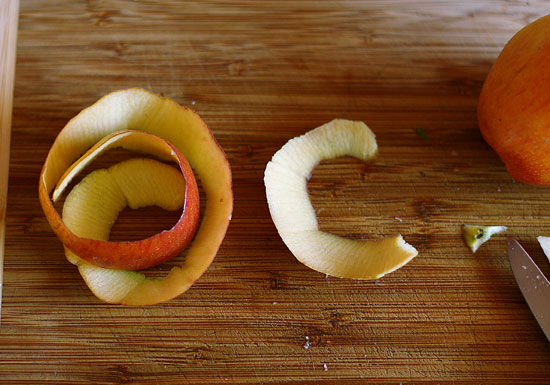
One of my own favourite apple traditions as a child was to throw the peelings over my shoulder to discover the initials of the person I would marry. Well, would you just look at that … spooooky!
I thought that now would be a good time to share a recipe I was inspired to create recently. It’s a dish for those seasons of mellow fruitfulness when the morning mists cling to the path of the river towards the estuary and the crisp evening skies fill with the aroma of wood smoke from bonfires and hearths.
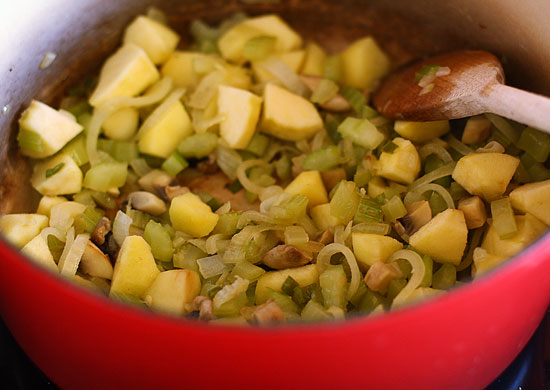
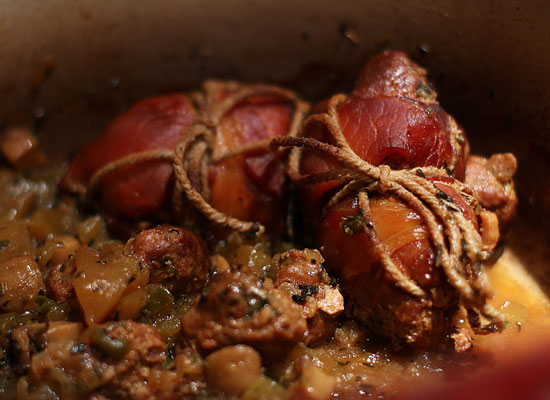
Pork and Apple Sausage Parcels in Apple Stew

2 small onions, halved and cut into long slices
2 sticks celery, diced
6 mushrooms, diced into large chunks
1 green chilli, chopped finely
3 dessert apples, peeled, cored and diced
1 tsp dried sage
1 tsp dried thyme
freshly ground black pepper, to taste
150 ml chicken stock
8 oz pork fillet
6 pork and apple sausages
6 rashers unsmoked back bacon
500 ml dry cider

Using an ovenproof 10″ saucepan with lid:

Fry the onions, celery, mushrooms and chilli in 2 to 3 tbsp olive oil to soften.

Add diced apples, herbs and chicken stock.

Cut the pork into 4 slices, then bash each with a mallet into rectangles. Split 3 of the sausages from their casings and divide the sausagemeat between the pork rectangles. Roll each rectangle and wrap with bacon (1 1/2 slices per pork parcel). Secure with string.

Split the casings of the remaining sausages and make balls out of the sausagemeat. Add to the pan and fry to brown.

Place the pork parcels on top of the apple stew and add the cider (it should come halfway up the sides of the pork parcels).

Cover and place in the oven at 160 degrees C for 1 1/2 hours.

Untie the parcels to serve. Serve with mashed potatoes or rice.
Mrs Mayall’s Banana Chocolate Cake

I was lucky to have some excellent teachers when I was at school. Among the most inspirational, I remember those who taught music to me for more than their ability to get me through A-level aural and harmony examinations. After all, who could possibly forget being served a slice of perfect banana chocolate cake at the end of a particularly demanding class by Mrs Mayall?

It was no small wonder that we begged her for the recipe. I still have my original handwritten copy, the final lines scrawled hurriedly onto the paper as the bell for the start of the next class was sounding.

Beat in vanilla essence and leave frosting in cool place 3-10 mins til thick nuf for sprding.

You have to remember that I wrote those lines in the days before text messaging!

The recipe for the cake itself is so good that I have never (and neither did Mrs Mayall, at least on the day she brought her cake to our music lesson) felt it necessary to follow the instructions I so eagerly scribbled for the frosting.

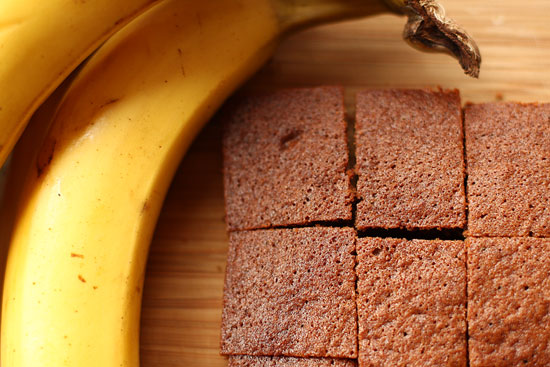
I never imagined when I copied Mrs Mayall’s recipe twenty years ago that it would become one of my children’s favourite ways of using up those inevitable left-over bananas. Unlike many banana cakes, these slices are moist without being claggy and heavy. They are also deliciously chocolaty.

Which is also why I particularly wanted to share this recipe with you on the third anniversary of A Merrier World.

Happy Birthday, dear blog!

Banana Chocolate Cake (adapted from a recipe by Mrs Mayall)

6 1/2 oz/190 g plain flour
2 tbsp cocoa powder
1 tsp bicarbonate of soda
1 tsp baking powder
5 oz/150 g caster sugar
2 tbsp Golden syrup
2 eggs, size 3, beaten
1/4 pint/150 ml vegetable oil
14 pint/150 ml milk
2 bananas, mashed (5 oz)

Preheat the oven to 325 degrees F/170 degrees C.

Grease and base-line a shallow 8″ x 13″/20 x 33 cm baking tray.

Sift together the dry ingredients into a large mixing bowl. Add the remaining ingredients and beat for c. 2 minutes until well combined.

Pour into the prepared tray and bake in the centre of the oven for 30 to 35 minutes until springy to touch.

Parmesan Thyme Shortbread

Today is the last day of term for L and M. It is also their last day at the village school as they will be moving to a specialist music school in September.

Standing in the playground for the final time this morning, they clutched presents for their teachers and received gifts from friends they have known for most of their young lives. It was a particularly poignant moment tempered only by the knowledge that whilst their classmates may be changing, their long-standing friends at home in the village will still be around for after-school play dates.

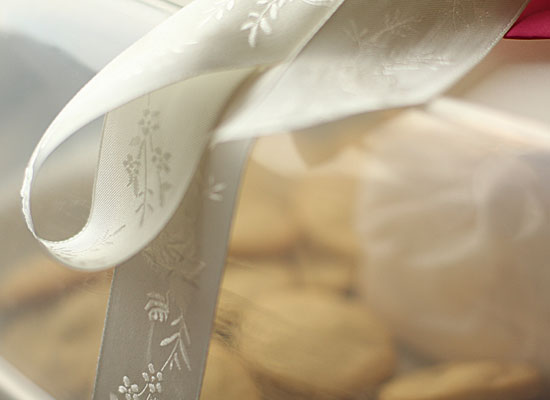
To thank all of the staff at the school for their hard work and dedicated teaching, I made a batch of savoury shortbreads flavoured with Parmesan, thyme and pepper. I arranged these around a block of perhaps the creamiest, tastiest Cheddar cheese ever –Barbers 1833.

Hopefully, these nibbles will provide an antidote to the many sweet, chocolatey treats that I am sure are now filling the staffroom!

Parmesan and Thyme Shortbread

8 oz unsalted butter at room temperature
7 oz Parmesan, freshly grated
1 1/2 tsp dried thyme
1 tsp sea salt
1 tsp freshly ground black pepper
9 1/4 oz plain flour
2 1/4 oz potato starch

Preheat the oven to 180 degrees C.

Beat the softened butter until it is creamy and billowy.

Stir in the grated Parmesan, thyme, salt and pepper, mixing at low speed until combined.

Add the flour and potato starch. Continue to mix at a low speed for about a minute until the dough holds together in clumps.

Press the dough together with your hands and place on a floured surface.

Roll out to about 1/4″ thickness (it helps to place a piece of clingfilm/plastic wrap on top of the dough whilst rolling).

Cut circles using a round biscuit cutter (1 5/8″ diameter). Place on ungreased baking trays and bake in the oven for 10 minutes until slightly puffed and golden.

Transfer to a wire rack to cool.

Makes enough for a staffroom of Primary schoolteachers (about 60 to 70 biscuits … I’m afraid I lost count).

Fairy Cakes

This is the true story of how we were given the food of fairies.

A long time ago when people believed in enchantment …

… a young man was sauntering down a country lane. The hedgerows were brimming with tangled wild roses while the oppressive heat of the midday sun beat down from overhead. The young man hummed a jaunty tune to himself and smiled as he remembered his daughter’s soft features and gleeful delight when she had opened her birthday gifts earlier that morning.

As he approached the bend where a stony farm track crossed the country lane, he became aware of a sobbing noise that seemed to be coming from somewhere in the long grass on the other side of a rickety iron gate. He paused with one hand on the rusted latch but, seeing nobody in the field, turned back to continue on his way.

All of a sudden he heard a mournful cry.

“I’ve broken my spade, I’ve broken my spade!”

The man’s brow knotted in puzzlement as he turned once again to see who would be working at such a sultry time of day. A gentle breeze parted the long blades of grass and the man glimpsed a small girl sitting on a pale, round stone. She was the prettiest fairy the man had ever seen.

The fairy held her broken spade in one hand and in her other some shining nails and a hammer. She raised her eyes to meet the man’s gaze. Smiling at him, she displayed her tools as though asking for his help.

For a long while the young man could only gape in wonderment, his hand frozen in mid-air with fingers outstretched towards the gate.

“I’ve broken my spade!” the fairy called again, breaking into the man’s trance.

It wasn’t difficult for him to mend the broken spade. With a few carefully aimed taps of the hammer, he drove the nails through the sockets and pinned the small rectangular blade onto its worn, wooden handle.

With a smile, the fairy took the mended spade from the young man’s hands and disappeared in a shimmering flurry of wings.

Later that day when the blackbird’s evening song sounded through the encroaching dusk, the young man was astonished to discover a plate of tiny cakes on his kitchen table. He understood immediately that these miniature treats were a gift from the fairy in gratitude for his help in mending her broken spade.

The young man was wise in fairy ways and knew that saying thank you would be impolitic. So he and his family simply shared the sparkling fairy cakes among themselves, savouring every bite and commenting aloud on their tastiness.

When the last crumbs had been licked from the plate, the young man opened the door to the cool evening air and wished the fairies goodnight.

Fairy Cakes (adapted from Mary Berry’s Ultimate Cake Book)

4 oz (100g) soft butter or margarine
4 oz (100g) caster sugar
2 eggs
4 oz (100g) self-raising flour
1 tsp baking powder
1 tsp vanilla extract

Preheat the oven to 200 degrees C/400 degrees F. Line about 18 holes in bun trays with paper liners.

Place all the ingredients together in a large bowl and beat well for 2 to 3 minutes until well combined and smooth.

Half fill each paper liner with the batter.

Bake in the preheated oven for 15 to 20 minutes until the cakes are well risen and golden.

Transfer each cake to a wire rack to cool.

Decorate with icing, silver balls, pink and white miniature marshmallows and sparkling pink fairy dust.

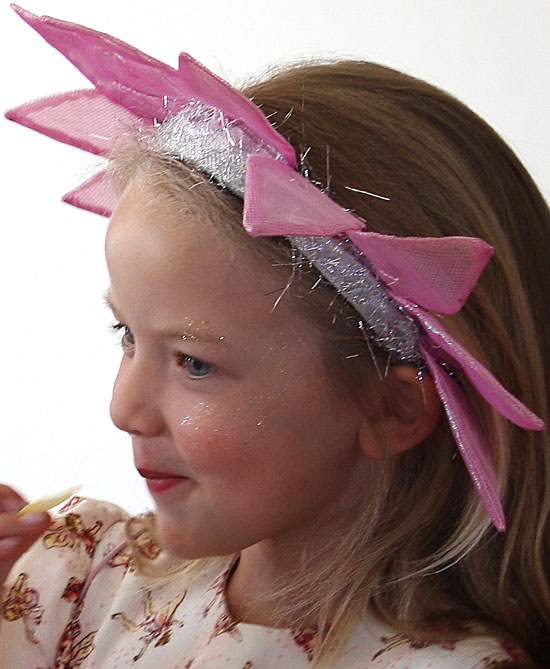
With grateful thanks to Ruth Lawrence of Party Pieces for providing such a wonderful party for my own 5-year-old fairy on her birthday in June this year.

His Hat Was Made of Good Cream Cheese

It is unusual for O to request a dessert. He’s more of a meat-and-two-veg sort of person really. By some quirk of genetic fate, none of his teeth are of the sweet variety.

I tend to forget this fact when planning a menu for guests and invariably end up asking him, “What should we have for dessert?” His disgusted expression as he then contemplates the various sugary options makes me wonder if perhaps I’d just asked him to choose from a range of particularly gruesome and bloody death scenarios by mistake.

“Should we torture our guests with a red hot poker or serve up their severed heads on the silver platters?”

“Don’t we need the silver platters for the fish course, darling? Perhaps the red hot pokers would save on the washing-up.”

Last weekend however, O surprised me. We were standing in the kitchen discussing the popular choices of pizza toppings in preparation for a dinner with family and friends when I inevitably forgot and asked THE question, “What should we have for dessert?”

“Cheesecake,” he replied.

I was stunned. Here was an endorsement more compelling than that of any celebrity chef. O had just requested cheesecake!

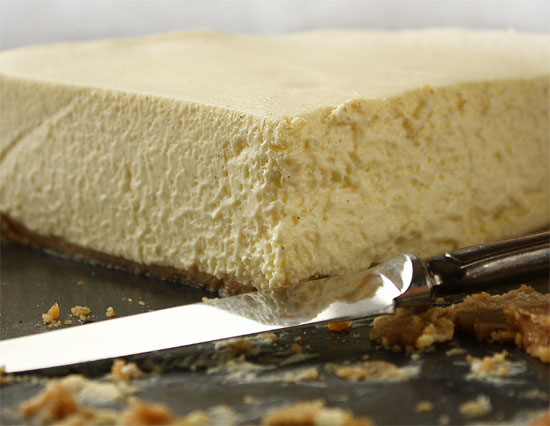
This is how we came to discover Rose’s superb No-Bake Whipped Cream Cheesecake from her latest book, Rose’s Heavenly Cakes.

When I was little and it was the 1970s, cheesecakes were apparently in fashion at dinner parties. I can remember standing on tiptoe to spot the berry-topped creations among the Black Forest Gateaux and cans of squirty cream adorning the dining room table.  Seeing the shining cherries and blackcurrants that smothered the entire surface of every cheesecake I saw back then, I naturally assumed these berries were an inescapable part of the tasting experience. I had an intense dislike of forest fruits and therefore refused to sample even the tiniest morsel of a cheesecake.

Then came that fateful dinner party when the hostess, disturbed at the thought of letting a small child go without dessert, remarked that there were some plain cheesecakes still waiting in the kitchen for their toppings. Would I like to try a slice of one of those, without the berries?

I didn’t try just one slice. Falling instantly in love with the smoothness of the filling and the saltiness of the biscuit-crumb base, I ate so many slices that I promptly felt very sick indeed.

My love affair with the cheesecake was swift and cruel. Unable to forget my self-induced nausea, I couldn’t bring myself to eat cheesecake again for at least another ten years.

Perhaps these memories saved me from a similar fate last weekend, for I would certainly have been far less restrained otherwise when serving myself extra slices of Rose’s no-bake cheesecake. A sublime lightness and creaminess elevate this cheesecake way beyond the sum of its parts. And when I tell you that those parts include a crème anglaise made with crème fraîche and an italian meringue laced with fresh lemon juice, you will know how serious I am about this cheesecake.

Of course, O hasn’t become a newly-converted, sweet-toothed fan of all things sugary following his uncharacteristic request. My hidden chocolate bars are still safe unless my secret hideaway is rumbled by my children. Whilst O certainly enjoyed his slice of cheesecake and appreciated its superior qualities, he’s a die-hard lover of cheese in its purest form at heart.

With three wild children and a long-haired cat running through the rooms, our house makes an unlikely dairy for cheesemaking. Scrupulously clean, we are not.

There is one form of cheese that is within our grasp however, and that is ricotta.

Creamy, rich and tangy, ricotta is traditionally made in Italy from the leftover whey after the process of cheesemaking. A simpler option for those with only a kitchen stove at hand is to heat a mixture of whole milk and acid gently until the curds separate from the whey. These can then be easily removed with nothing more technical than a colander and cheesecloth. Indeed, the most challenging part of the whole procedure is in resisting eating all of the warm, milky ricotta within a few minutes of its production.

I don’t think that I left the whey to drain from the curds for quite long enough this time though, which is a shame because I used whole goat’s milk for this ricotta and O was particularly looking forward to it. It was still quite delicious in a runny rather than fluffy sort of way, but you had to catch it quickly before it dribbled over the edges of the oatcakes!

O says that he’d prefer “more goat, less cream” next time, so the challenge has been set. I’ll try not to bore you too  much with news of my quest to produce a goat’s milk cheese that satisfies my husband’s exacting standards, but I do feel that I owe it to him as a reward for pushing me towards discovering my new favourite cheesecake recipe.

And his hat was made of good cream cheese …

Creamy Goat’s Milk Ricotta (adapted from a recipe by Julia Moskin)

1 litre whole goat’s milk
250ml double cream
190ml buttermilk
3/4 teaspoon salt

Prepare a sieve or colander lined with a cheesecloth or muslin (folded if necessary) over a large bowl.

Place all the ingredients in a large, heavy-bottomed, non-reactive (stainless steel or enameled – something that won’t react with acid or brine) pot and heat slowly to between 80 and 90 degrees C (175 to 200 degrees F). Stir frequently as the liquid warms but stop stirring once the curds have started separating from the whey.

Remove from the heat and pour into the cheesecloth-lined sieve.

Gather together the ends of the cheesecloth and twist to bring the curds together. Do not squeeze.

Allow to drain for 15 to 30 minutes more and then spoon the ricotta into airtight containers. Refrigerate and use within a week.

Don’t discard the whey! It can be used in many recipes (e.g. pancakes, muffins, sauces) in place of buttermilk or sour cream and will keep for up to a week in the fridge.

Oatcakes (adapted from ‘Scots Cooking‘ by Sue Lawrence)

175g/6oz medium oatmeal
50g/20z pinhead oatmeal
1/2 teaspoon salt
1/4 teaspoon baking powder
25g/10z butter, melted
about 50-75ml/2-3fl oz boiling water

Preheat the oven to 170 degrees C  (325 degrees F).

Combine all the ingredients together in a mixing bowl. Add the melted butter and enough boiling water to form a stiff dough when stirred.

Sprinkle some medium oatmeal over a board. Roll out the mixture gently to about 1/4 inch thickness (depending on how thin/thick you like your oatcakes). Use a biscuit cutter to cut out circles of the dough.

Use a spatula to transfer the rounds carefully to a buttered baking tray.

Bake in the oven until just firm (10 to 20 minutes depending on the size of your circles).

Transfer carefully to a wire cooling rack.

Store in an airtight container when completely cooled (you can keep them crisp by storing them buried in porridge oats).

  • Enter your email address to subscribe to this blog and receive notifications of new posts by email.

    Join 289 other subscribers
  • Seasonal Recipes

    candied peel

    baileys chocolate truffles

    gingerbread men

    mince pies

    fudge

    smarties cookies

  • Freshly Made

  • Categories

  • Favourite Feasts

  • Awards

    DMBLGIT Award
  • Archives

  • wordpress visitor counter
  • Adventures in food by Kate Coldrick from Woodbury in Devon.