We Heart Gooseberry Pie

O is quite happy to describe himself as a bit of a Luddite, so I hope I’m not betraying any confidences when I tell you so. It relates to the extent to which he is comfortable (or not) to embrace new technologies. Perhaps the best illustration of this is his endearing persistence in starting all emails to me with a formal, ‘Dear Kate …’ in avoidance of anything more casual. I even received text messages from him in this way until either our need to keep in more regular contact strained his texting thumb or he relaxed his perception of correct wife-husband correspondence.
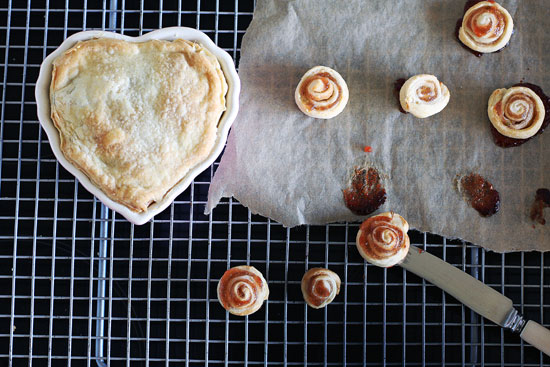
Anyway – why am I telling you this? Only because I know that the title of this post will either have confused the hell out of him or he’ll be reaching for the psychiatrist’s phone number thinking he’s got a psychotic wife on the loose again. Relax – it’s only a doffing reference to txtspk or emoticons or whatever (you see, I really don’t know any more than O does) because a) we really do love gooseberry pie, and b) I really did make my little pie in a heart-shaped ramekin. And really, how many reallies can you fit into one paragraph without sounding insincere anyway?
So, having completely tied myself up in knots (or should that be ‘tied up myself in knots’?). Ug. Who cares? The pie was good.

Which pie?

Didn’t I tell you?

Oh, sorry. I got a bit side-tracked.

Here’s the story.

O picked our first crop of gooseberries.

I made gooseberry pie.

Which would have been a very short post.

Gooseberry Pie (makes one very small ramekin-sized pie for a first crop of gooseberries)

Your favourite shortcrust pastry
+
8 oz gooseberries, topped and tailed
4 oz caster sugar
juice and zest of 1 small lemon
2 tsp cornflour
1 oz butter

Preheat the oven to 180 degrees C.

Put the gooseberries, sugar, lemon juice and zest in a saucepan. Cook over low to moderate heat until the gooseberries are looking very relaxed and chilled out with life.

Strain the mixture then put the strained gooseberries into a bowl and mix with the cornflour until fully incorporated.

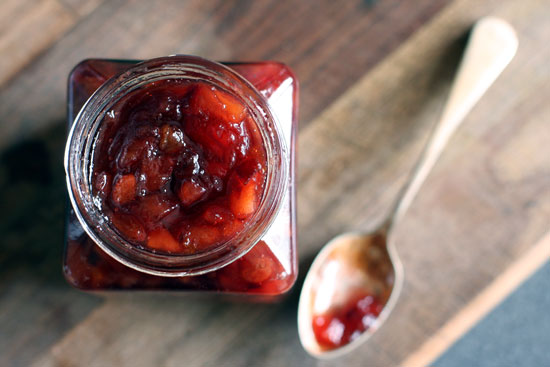
Return the sugary juice to the pan, add the butter and simmer until thickened to a jam-like consistency.

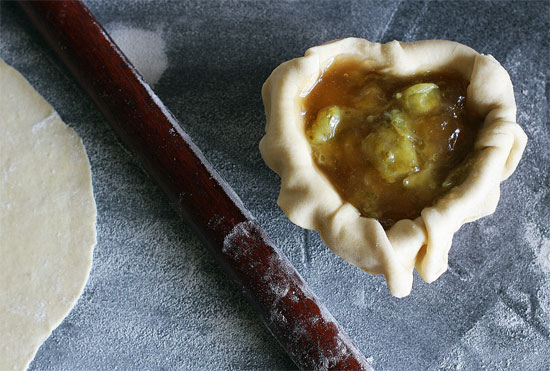
Line your ramekin with pastry.

Mix the gooseberries with enough jam to make a not-too-soggy filling, and scrape into the pastry-lined ramekin. (I had a little extra jam, so made gooseberry snails with the leftover scraps of pastry).

Top the pie with a layer of pastry and seal.

Bake in the oven for about 20 minutes until the pastry is golden and flaky.

This recipe (for what it’s worth) is dedicated to Rose, to whom I sent a heart-shaped ramekin not so very long ago.
xx
Another Slice of Rainbow

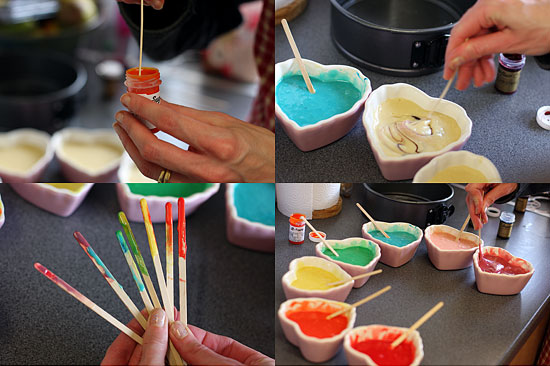
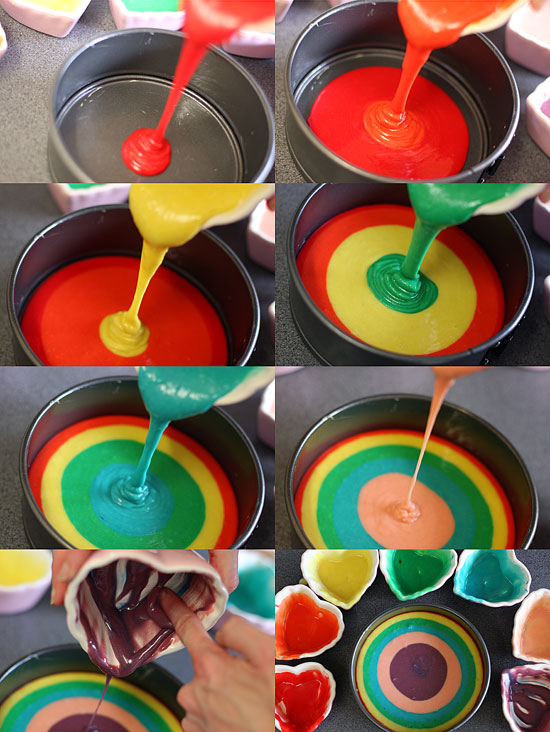
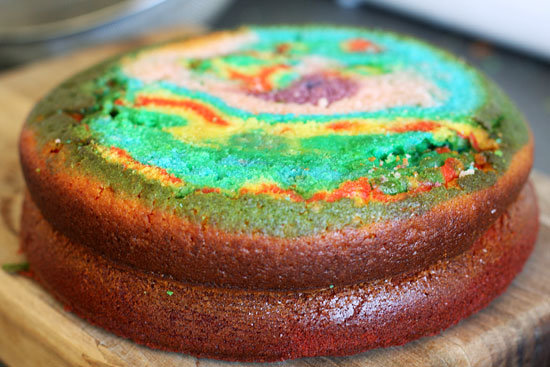
A long, long time ago when M was only four, I baked a rainbow cake for her birthday. Even though she is now all growed up and turned a humongous seven years old yesterday, she still remembers her last slice of rainbow.

“I have to take a cake into school for my birthday on Wednesday,” she told me as we walked in the shade of the Roman city walls on Monday afternoon.

“And it has to be a rainbow cake.”

Sometimes, it’s best not to question dreams too closely …

Just Go With The Season

Some things are my fault; others aren’t. I think rain comes into the latter category but it’s hard to be sure. I hope that the Queen can forgive me if my Lemon Almond Sundrops have inadvertently jinxed the weather for her Diamond Jubilee celebrations …

Today’s rain has come as a reflection of my own unseasonal cravings for deeply rich plum chutney and dark treacle toffee brownies this week. But perhaps it has also come as more than this. It would be easier for me to pretend that my kitchen has remained resolutely cheerful and sunny in the face of such an unsporting downpour however, that my children and I have whipped up storms of cream cheese frosting and hung the festive bunting from every muffin top and trifle – for telling you about the chutney and the brownies is also to tell a little of my own raincloud. Perhaps today’s rain has inched me towards this.

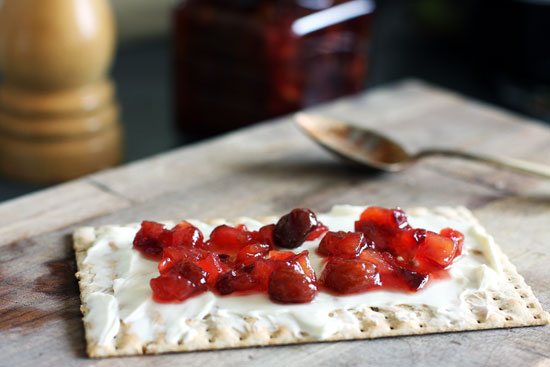
You see, my jar of plum chutney is a necessity. I know it’s not autumn and that we’ve barely made headway into the summer season of fresh plum tarts and salads. I know I should be embarrassed about posting a recipe for chutney in June. It’s just that … well … my jar of plum chutney has become a talisman of sorts in my painful daily battle against my ongoing anorexic voice – the internal voice that accompanies me everywhere, seeking to lock me in an eating disordered world. I developed my own recipe for this chutney, I chopped and stirred and boiled it, I tasted it, I potted it, and now it sits there in my fridge with ‘Eat Me!’ written all over it. And I do – eat it, I mean. It’s good.

But if I tell you this about my plum chutney, I also dare to show you a little bit more of my reality. The real person, the true ‘me’ that hides behind whatever face a blog is able to provide. If I share my plum chutney recipe with you now, in June, then I’m admitting my vulnerability. Being open is to be vulnerable – if I let you know me, I risk letting you reject me. And hurt me – the real me, that is. The one that feels the plugs in the heart. I have lashing rains of doubt and self-loathing already. I don’t want to encounter yet more.

And if I talk about these sinfully dark, sticky treacle toffee brownies I created, then the face will disappear. It’s just me there instead. I’ll tell you how treacle toffee reaches right back into my childhood, how it’s a taste that is at once both bitter and restorative. These brownies have tears folded inside them. But … “Jeez, Kate – it’s summer!” you’ll say. “Save them for the cold evenings of bonfires and frosts. Give us some meringues, some tipsy trifles, some cucumber sandwiches. There’s a party on, you know!”

You’ll be right though. There is a party on after all – and I didn’t set out to be a damp squib. Rain might have stopped play for a while but it’s brightening up now and there’ll still be time for a few overs before tea.

Just don’t mind me if I sit here on the sidelines with my pot of plum chutney and plate of treacle toffee brownies for a bit longer. Perhaps someone might like to join me – there’s plenty to share.

Ploughmans Plum Chutney

5 oz caster sugar
75 ml white wine vinegar
25 ml malt vinegar
3 large plums, stoned and diced
1 apple, peeled, cored and diced
1 1/2 oz sultanas
1/4 tsp salt

For the spice bag
1 star anise
1/4 oz fresh, peeled ginger
1 large clove garlic
1/2 oz peeled red onion
1/2 tsp black mustard seeds
1/2 tsp black peppercorns

Put the sugar and vinegars in a medium saucepan and heat gently until the sugar has dissolved.

Tie the ingredients for the spice bag in a square of muslin and crush them all up a bit with your fist. Add the spice bag together with the other remaining ingredients to the saucepan.

Bring slowly to the boil, then simmer gently for an hour. Stir regularly so that the syrupy mixture doesn’t stick and burn.

Test for readiness by drawing a wooden spoon through the mixture – it’s thick enough when the chutney parts briefly to reveal the bottom of the pan.

Pot while still warm in a sterilised jar. The chutney will probably improve if left to mature a while, but I haven’t managed to test that theory so far – my jar is empty within a week or so …

Treacle Toffee Brownies

4 oz butter
8 oz dark muscovado sugar
5 oz light muscovado sugar
1 tsp salt
1 tsp baking powder
1 tsp vanilla extract
5 oz wholegrain spelt flour
2 oz cocoa powder
3 eggs

Preheat the oven to 180 degrees C. Grease and baseline a 9″ x 12″ pan.

Melt the butter, then stir in all the remaining ingredients until thoroughly combined.

Scrape into the pan and smooth. Bake for 20 to 25 minutes until risen but still a little gooey.

Cool completely in the pan before removing and cutting into squares.

Boom Boom Ain’t It Great To Be Floury

If you’d asked me ten years ago whether I thought I could ever get excited over a bag of flour, I’d have died laughing. No way! I mean, come on – are you serious? A bag of what?  My thoughts on flour (not that I ever lost any sleep over them then) were more along the lines of, “Where the hell is it?” in a supermarket rather than of an ecstatic, jump-up-and-down-with-glee sort of variety.

But that was before I came across an old, slightly dog-eared copy of Rose Levy Beranbaum’s Cake Bible in a second-hand shop in Kirkcudbright.  That was back in 2007. I soon became embroiled in a search to find a replacement for the bleached cake flour that seemed to be so crucial to the success of her most-raved-about recipes. Not that I’m obsessive or anything. Just saying …

Cake layers baked with untreated (L) and heat-treated (R) flour.

I couldn’t simply ship in a whole load of cake flour from the US because the bleaching of flour had been prohibited in the UK since 1997. A bit of online research (okay, googling) revealed that the heat-treatment of flour provides a viable and successful alternative to bleached flour for use in high-ratio cake recipes. Eh Voilà! (I thought). Only, no. After tracking down a supply of heat-treated cake flour at Carr’s Flour Mills Ltd, I phoned them and was frustrated to be told that they only sold it in vat-sized amounts, and they wouldn’t sell any to me anyway because I’m not a business. To be honest, I think they were highly suspicious of my inquiry. They probably thought I was some sort of rival milling industry.

One thing led to another and my poor microwave came in for a bit of a battering as I nuked batch after batch of different flours in an attempt to recreate the heat-treatment process at home. When my hair-brained experiments actually began to generate visible improvements in the cakes I was baking, I started blogging about my results. I was surprised to find that I wasn’t the only one desperately seeking cake flour …

Why on earth were the UK flour mills so reluctant to sell their heat-treated cake flour to home bakers? John Lister from Shipton Mill popped over to A Merrier World to explain a bit of the background:

From the merry Miller in the wood…..Greetings…..stunned by the ingeniuity in the world, happily chortling here to learn of such madness and can hardly believe what happens in the kitchens of England……brilliant news on the cake flour, some years ago the global millers used to spend their time pumping chlorine gas through flour to denature and bleach it to make a perfect functional flour suited to cake making……in the last few years the process was outlawed for health reasons and heat treatment replaced it…..industrial sauce and cake manufacturers now use soft flours that are heat treated, such heat treatment processes are not readily available to smaller millers, still struggling with stone age technology, (Mill stones etc) so the idea of microwaving the flour is fascinating and a perfect solution by the sounds of it, am off to try this out, and will let you know the progress, John

Despite the obvious demand for heat-treated cake flour among home bakers, it seemed likely therefore that supplies would be restricted to commercial use for the foreseeable future.

So … does that explain why I’m so delighted to discover that at least two mills are now selling bags of heat-treated cake flour to individual consumers? (If you still don’t get my excitement, then you probably won’t have read this far anyway).

Dasha kindly left a comment on A Merrier World to let me know about the 16kg bags being sold by FWP Matthews Ltd.  She says, “You need to place the order over the phone as it is not listed in their online shop. The woman I spoke to was super helpful and said that they usually despatch same day with a next day courier.”

The second supplier came to my notice via a comment from AliceL on Rose’s blog. This heat-treated cake flour is being sold in 2kg bags as The Ultimate Cake Making Flour by Cinnamon Square. Furthermore, Alice reported the results of her comparison of the variously-treated cake flours:

Inspired by Rose and Kate, I baked and compared 3 versions of [Rose’s Favorite Yellow Layer] cake:
– one with USA Cake flour (imported via eBay at significant cost 🙂
– one with Kate Flour (made using UK Shipton Mills cake flour, no cornflour)
– one with UK “Cinnamon Square” heated Treated Cake flour (9.65% protein, no cornflour)

Results were all excellent. All three had good x2 rise and were tasty, moist and melting.
USA Cake Flour slightly higher in the centre (~2mm) and marginally finer texture.
Kate and Cinnamon Sq Heat Treated flour cakes were indistinguishable from each other. Just very slightly more fluffy/crumbly than USA cake flour – a tiny bit of Xantham gum would work there I suspect.

Can you hear my feet banging now as I jump up and down with glee?!

Sorry – must dash. Off to buy some flour …

Baked Bean and Sausage Pasties

What keeps you going?

I’ve been asked that question many times over the last several months as I’ve struggled with the twin demons of anorexia and bipolar disorder. And my answer has always been, “My family. My children.”

Take yesterday, for example. There we were, in the middle of a busy supermarket – my three children and me (always an expensive way to do the shopping) – deciding what to cook for their dinner. Surrounded by so many tasty options on the shelves in every aisle, M nevertheless said, “Baked bean and sausage pasties – the ones that you make.”

So that was what we did.

Times like this are what keep me going.

Baked Bean and Sausage Pasties

7 oz bread flour (I know, an unusual choice of flour for pastry – but it needs to be strong enough to hold the filling)
3 oz butter
water
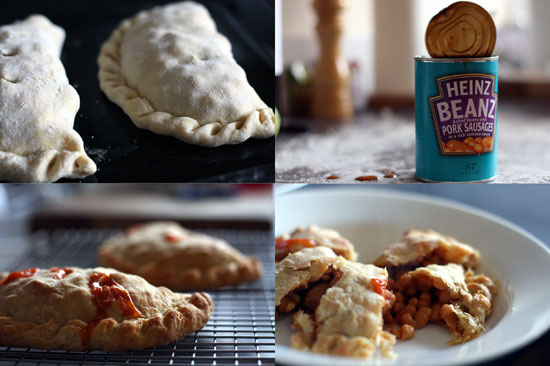
2 tins of baked beans and sausages

Rub the butter into the flour and stir in just enough water to form a dough. Wrap in cling film and leave to rest in the fridge for 30 mins or so.

Preheat the oven to 180 degrees C.

Divide the pastry into four pieces. Roll out each piece into a circle.

Empty the cans of baked beans into a sieve to strain out most of the runny tomato sauce (otherwise the pasties disintegrate into a soggy mush. Trust me – I’ve tried it).

Spoon four mini sausages (assuming there are 8 in each tin. Can you tell I know my Heinz baked beans …?) and a quarter of the baked beans into the centre of each pastry circle. Brush the edges with water and stretch the lower half of the circle up and over the filling. Seal the edges and crimp. Snip two or three slits in the top of each pasty to let out the steam (and sauce!).

Place each pasty on a baking tray and bake in the oven for 25 to 30 mins until the pastry is golden and cooked.

Eat warm.

  • Enter your email address to subscribe to this blog and receive notifications of new posts by email.

    Join 289 other subscribers
  • Seasonal Recipes

    candied peel

    baileys chocolate truffles

    gingerbread men

    mince pies

    fudge

    smarties cookies

  • Freshly Made

  • Categories

  • Favourite Feasts

  • Awards

    DMBLGIT Award
  • Archives

  • wordpress visitor counter
  • Adventures in food by Kate Coldrick from Woodbury in Devon.