Ancient Roman Banquet

After L’s successful guest post in October, my younger daughter told me today that she also wanted to write a guest post for A Merrier World (not that there’s ever a hint of sibling rivalry between them, of course …) So, here is M – she is six years old and has been having a lot of fun at school this term …

We have been learning about the Ancient Romans at school. A Roman centurion came in to help us learn about them. We made shields and then we had a battle with the Year Ones. We used balls instead of cannons and swords. The Year Ones (who were supposed to be the Celts) kept on running away, so we won. The centurion also brought in some fish sauce that smelled disgusting!

Anyway, on Friday the 23rd we did a Roman presentation. I was in the Roman banquet scene. My line was, “The Romans loved holding feasts. One of the things they loved was… peacock brains!” Somebody else in the Roman banquet said they also liked surprises in their food such as doves flying out of the stomach cavity of a roasted suckling pig. We discovered that the Romans lay down to eat and that they made themselves sick so that they could eat more (but that was only in fancy banquets).

Today we had a Roman banquet in our classroom. Everyone dressed up as Romans. I was a slave who opened the door. Here’s an interesting fact – the slaves who opened the doors had to look fancy so everyone knew that the person who owned the house was rich.

Our teachers had researched lots of Ancient Roman recipes. Some of the recipes were in the cookery book that I took into school for them. At our banquet, we tasted lots of food that the Romans would have eaten. I only liked the grapes and the apple as well as the bread dipped in olive oil. I didn’t like the peacock brains, which were really just mince cooked in the oven. When we were making the peacock brains, we had to put our hands in the mince. I hated the honey cake – it looked like an omelette (and I don’t like them either!). There were some olives as well, but I didn’t try them.

For dessert, we all ate some Ancient Roman biscuits that I had baked last night with my Mum. They were called ‘serpette’ and they used honey instead of sugar. We sprinkled sugar on the top instead of sesame seeds because we thought they would be tastier that way. Unfortunately, the Romans didn’t have sugar, so that bit wouldn’t have been invented in Roman times. We made them into ‘S’ shapes like the serpette biscuits that are made today in the Castelli Romani near Rome.
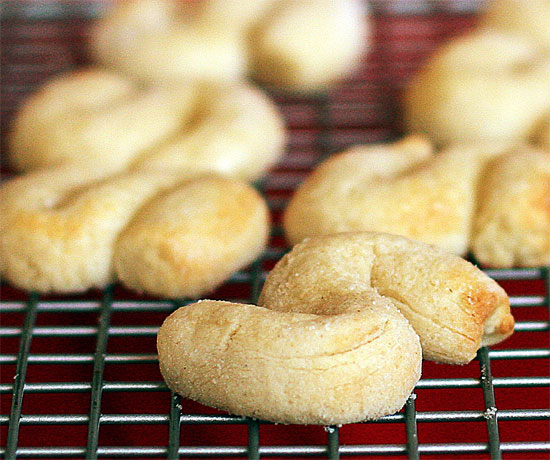
My friends said that the biscuits were really delicious. They asked me how I had made them into ‘S’ shapes. I told them that we rolled some of the dough into a sausage shape and then we curled it around so that it looked like an ‘S’.

Ancient Roman Honey Serpette

12 1/2 oz plain flour
1 tsp baking powder (which the Romans didn’t have – sorry!)
1/8 teaspoon baking soda (as above … sorry!)
1/2 teaspoon salt
4 oz unsalted butter, room temperature
6 oz honey
2 eggs
1 egg white and castor sugar to sprinkle (or sesame seeds)

Put the flour, baking powder, baking soda and salt in a mixing bowl and use a whisk to mix them all together.

Use another bowl now. Put the butter and honey into it and beat them together. Add the eggs a bit at a time. Make sure that everything is mixed up very well.

Tip the flour and stuff into the bowl and mix it all together to make a dough.

Cover the dough bowl with cling film and put it into the fridge until the dough is cold and firmer.

Put the oven on to 180 degrees C.

Grease some baking trays and line them with baking parchment.

Sprinkle some flour on the work top. Roll bits of the dough into long sausage shapes. Cut them into shorter lengths and curl them to make an ‘S’ shape. Put the S’s onto the baking trays.

Brush some egg white onto the top of each serpette (this is a bit like glue) and sprinkle the tops with a bit of castor sugar.

Bake the serpette in the oven for about 7 minutes or until they are just turning golden.

Cool the serpette on a wire rack.

Eat – yum, yum!
Mothering Sunday Scones


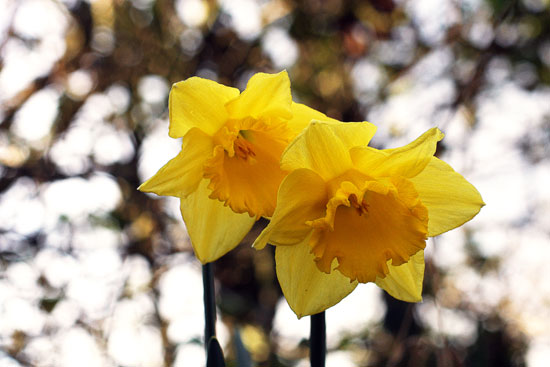
Spring flowers and lighter evenings – it’s a lovely, hopeful time of year for celebrating motherhood.

My children proudly handed their handmade cards to me on Sunday morning whilst I enjoyed a special Mothering Sunday cup of tea in bed. M had written that she loves me because I’m cosy. T’s card told me that it’s because I make chocolate biscuits.

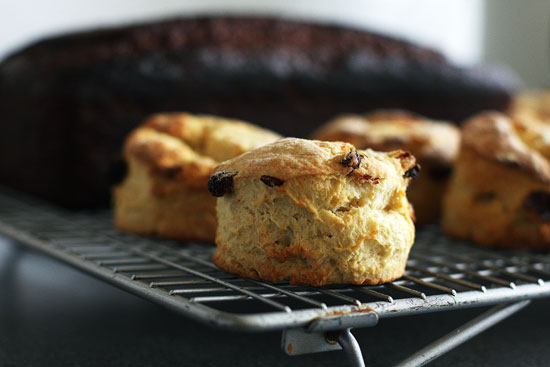
For my own Mum, I baked some fruit scones and gingerbread.

Fruit Scones (adapted from a recipe by Claire Clark)

440g/15 3/4 oz plain flour
50g/1 3/4 oz baking powder
80g/2 3/4 oz caster sugar
a pinch of salt
80g/2 3/4 oz unsalted butter, diced
40g/1 1/2 oz sultanas
150ml/5fl oz double cream
150ml/5fl oz milk

Put the flour, baking powder, sugar and salt into a large mixing bowl and whisk to combine.

Rub the butter into the flour, then stir in the sultanas.

Mix the cream and milk together. Pour onto the flour mixture and mix until the dough starts to come together. Turn out onto a lightly floured surface and knead gently to form a smooth, soft ball. Wrap this in clingfilm and chill in the fridge for 1 hour.

Preheat the oven to 200 degrees C/400 degrees F. Roll out the dough to a 2.5cm/1 inch thickness and use a 5cm/2 inch cutter to cut it into rounds. Transfer these to a baking tray lined with baking parchment.

Bake for 10 minutes until the scones are golden brown.

Rocky Road Sticky Toffee Crispie Cakes

Don’t make these.

Just don’t.

Rocky Road …

Sticky toffee …

Crispie cakes …

You’re going to regret this.

Okay then, you can’t say I didn’t warn you …

Rocky Road Sticky Toffee Crispie Cakes

375g (x3 boxes) Cadbury’s Chocolate Fingers
225g pitted dates
300g Green and Black’s 72% cook’s chocolate
300g Green and Black’s white chocolate
200g butter
100g mini marshmallows
115g Rice Krispies

Line a 20x30cm cake pan with baking parchment, leaving flappy bits hanging over the sides to use as handles for pulling the cake out of the pan.

Chop fingers into small, bite-sized pieces (the Cadbury’s chocolate fingers that is – not your own).

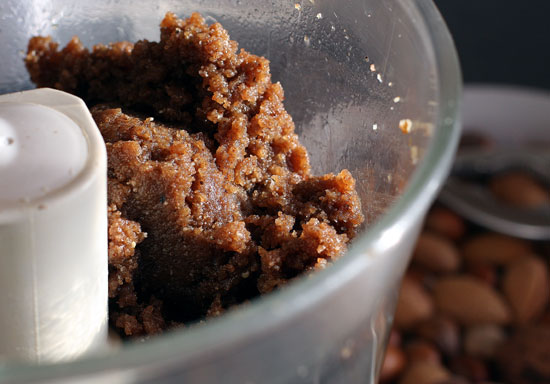
Whizz the dates in a food processor until they turn into a smooth paste.

Melt the chocolates and butter in a bowl set over a pan of warm water.

Stir in the dates and mix until combined.

Add the chopped fingers, marshmallows and crispies. Stir to incorporate evenly.

Scrape into the prepared cake pan and spread with a spatula. Leave the cake to set in the fridge for an hour or so, or for as long as you can put off eating it (whichever comes sooner).

Unmould and cut into squares.

The Best-Ever Apple Cake Recipe

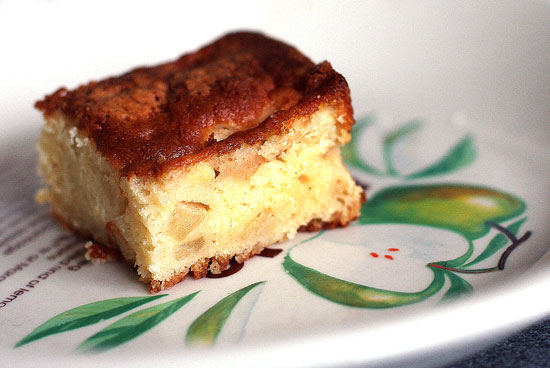
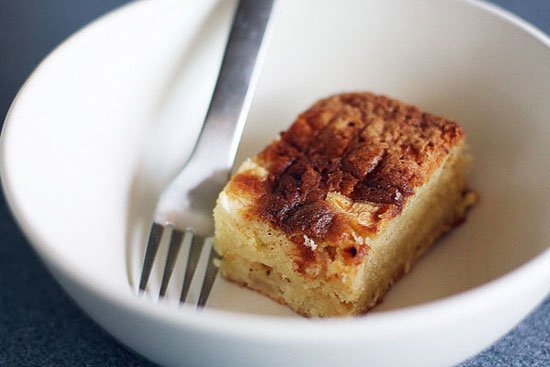
Perhaps I should qualify this before the lawyers come knocking on my door. I’m going to give you the best-ever apple cake recipe, the only recipe you’ll ever want to use from now on, the recipe that beats all other apple cake recipes hands down … according to my husband.

I’ve written before about my husband’s peculiar lack of a sweet tooth, so the fact that he endorses this recipe wholeheartedly should be merit in itself. It wasn’t a snap decision on his part, either – this recipe is the result of many failed and not-quite-right trials over the course of several years of trying to match my apple cakes to his specific expectations. It had to be moist and taste of apples rather than spices. Not too sweet. No faffy crumbly topping stuff. No sultanas or raisins. Noticeable apple chunks – none of that puréed muck. And it didn’t stop there. Nothing baked in a round cake pan – he wanted his slices to be square.

Not demanding in the slightest then, huh?

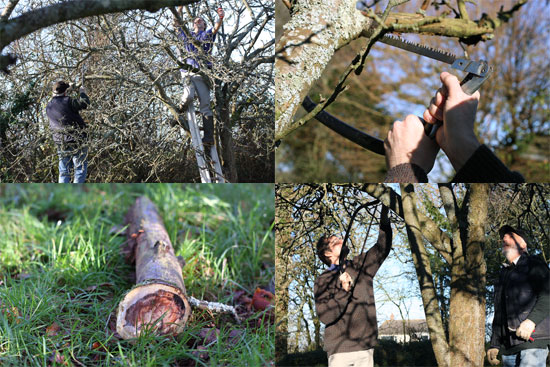
Anyway, I’d given up. And then we moved to a house with an orchard at the bottom of its garden.

As autumn turned into winter, I sent my three children out to collect the windfalls in T’s little red wagon. Seven truckloads later, I faced a showdown situation. If I couldn’t create that perfect apple cake recipe with such an abundance of readily-available fruit, then I would have failed forever as a loving, doting wife and homemaker. Well, whatever – you get the picture.

The pressure wasn’t entirely self-induced. O did point out that his birthday was coming up and please, could I bake an apple cake for him to take into work …?

So I stayed up late, burnt the midnight oil, sweated and slaved, worked day and night …

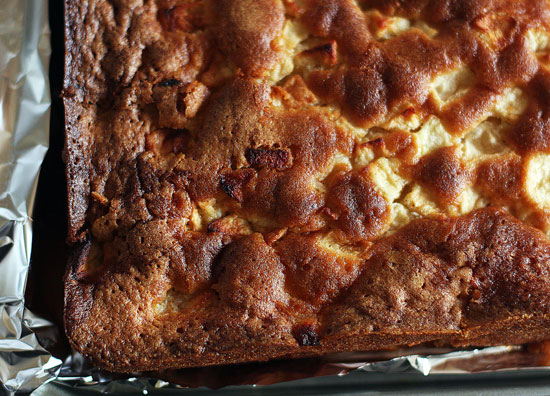
Actually, I hit on the bright idea of mixing a few appple chunks into my favourite yellow cake recipe, tossing it all into a rectangular cake pan and slamming it into the oven for 40 minutes or so to see what happened.

What happened was the best apple cake ever … according to my husband.

PS – Chris from Green Valley Cyder said that he’d eaten many apple cakes but that this was “one of the best.” So you don’t have to take just my husband’s word for it.

The Best-Ever Apple Cake (by me and according to my husband)

13 1/4 oz peeled, cored and diced Bramley apples
2 tbsp lemon juice
1/4 to 1/2 tsp ground cinnamon
1/4 to 1/2 tsp mace (or grated nutmeg)
7 oz unsalted butter, room temperature
13 1/4 oz castor sugar
5 1/4 oz eggs (weighed without shells), room temperature
2 3/4 oz egg yolks (weighed without shells), room temperature
1 tbsp vanilla extract
8 oz plain flour
2 1/2 tsp baking powder
1 tsp sea salt
160 ml whole milk, room temperature

Preheat the oven to 175 degrees C (165 degrees C for a fan-assisted oven).

Grease and base-line a 9″ x 13″ rectangular cake pan.

Peel, core and dice the apples (c. 4 largeish Bramleys). Toss in the lemon juice, cinnamon and mace (add as much or as little of these spices to suit your own taste). Set aside.

Cream the butter and sugar in a large mixing bowl until they are very light and fluffy (start to beat slowly and then gradually increase the speed – this allows air bubbles to be incorporated and expanded without popping).

Combine the whole eggs, egg yolks and vanilla in another bowl. Mix with a fork, then add gradually to the creamed butter and sugar, beating well to combine after each addition.

Whisk the dry ingredients together in yet another bowl. Beat 1/3 of the dry ingredients into the batter, then 1/2 of the milk. Repeat and then add the final 1/3 of the dry ingredients (ie. dry/wet/dry/wet/dry).

Combine half of the apples with the batter, mixing gently to distribute evenly. Scrape the batter into the prepared cake pan and smooth the top with a spatula. Scatter the remaining apple pieces over the top of the batter.

Bake for 40 to 50 minutes until the cake is golden and springy, and a tester comes out clean (unless you’ve speared an apple, that is).

Cool in the pan for 10 minutes, then turn the cake out of the pan and cool on a wire rack. Trim the sides and cut into squares.

No-Bake Chocolate Ganache Tart

Although we don’t have a television, which possibly makes us a slightly unusual family, we do watch a variety of TV programmes via BBC iPlayer and 4OD. Recently, we enjoyed Hugh Fearnly-Whittingstall’s latest River Cottage series in which he gave up eating meat for four months over the summer. The programmes in this series charted his discovery of new vegetarian combinations and dishes, ranging from simple soups and salads to lavish banquets and wedding feasts.

Perhaps the most intriguing creation from the entire series however was Laura Coxeter’s raw chocolate ganache tart. Prepared with a heady mix of pecans, medjool dates, avocados and cacao powder, it really is a work of pure genius.

The idea behind the tart is that it can be served to raw food eaters, vegans and anyone wishing to avoid dairy, gluten and soya in their diet. I don’t know about you, but I wouldn’t normally associate such a recipe with something that turns out to be richly chocolately and sinfully sumptuous. But Laura really did appear to have pulled it off, judging by the velvet gooiness of the ganache and the fervent lip-smacking of its tasters. I was inspired to give it a go.

Now, I have to confess that I’m not a raw food eater. Okay, it’s probably not such a huge confession – Laura’s the first raw food eater that I’ve ever come across. I did therefore make a few changes to the tart, which will no doubt have raw foodies shuddering in their graves. In essence, my recipe is more or less true to the original although not an exact replication.

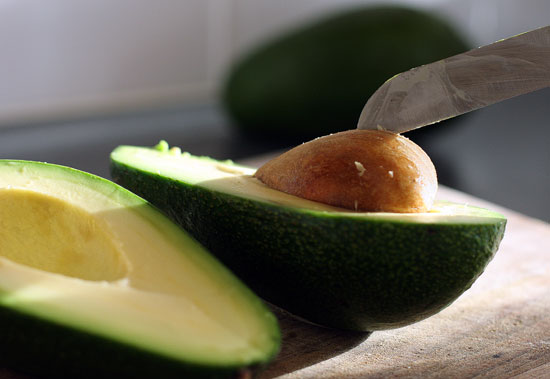
The secret behind the ganache is avocado. Whizzed up in a food processor with cocoa powder and sugar, avocados form the basis of a smooth, luxurious texture that is normally achieved by mixing chocolate and cream. The whole tart is ridiculously easy to make – you just need to make sure that you’ve allowed plenty of time for it to chill and set before serving.

The finished tart got a thumbs-up from my children, and I certainly wouldn’t hesitate to present it as the pièce de résistance at the end of a more grown-up dinner party. All in all, this recipe is just in time for the festive season. Happy Holidays 🙂

No-Bake Chocolate Ganache Tart (adapted from a recipe by Laura Coxeter)

For the base
300g/10 1/2 oz pecans
1 tsp salt
200g/7 oz medjool dates

For the filling
4 medium, ripe avocados
150g/5 1/2 oz rice bran oil
Seeds of 2 whole vanilla pods
200g/7 oz cocoa powder
1/4 tsp salt
300g/10 1/2 oz castor sugar

Blend the pecans in a food processor, then add the salt and dates. Whizz them all together until the mixture balls into a dough.

Press the dough into the base of a 9″ springform pan. Chill in the freezer to harden.

Peel and de-stone the avocados, then blend the pulp in the food processor. Add the oil, vanilla seeds, cocoa, salt and sugar and process until smooth.

Scrape the filling onto the base and spread evenly with a spatula or palette knife.

Set the tart in the freezer for an hour before serving.

  • Enter your email address to subscribe to this blog and receive notifications of new posts by email.

    Join 289 other subscribers
  • Seasonal Recipes

    candied peel

    baileys chocolate truffles

    gingerbread men

    mince pies

    fudge

    smarties cookies

  • Freshly Made

  • Categories

  • Favourite Feasts

  • Awards

    DMBLGIT Award
  • Archives

  • wordpress visitor counter
  • Adventures in food by Kate Coldrick from Woodbury in Devon.