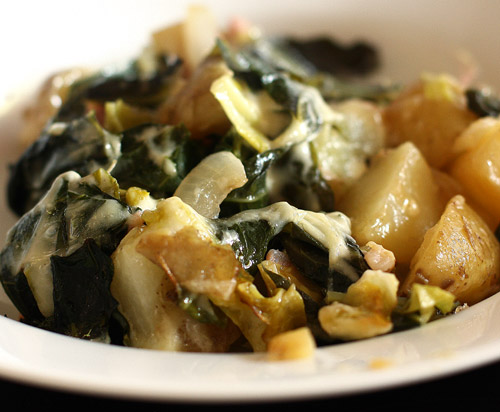
The Best-Ever Apple Cake Recipe

Perhaps I should qualify this before the lawyers come knocking on my door. I’m going to give you the best-ever apple cake recipe, the only recipe you’ll ever want to use from now on, the recipe that beats all other apple cake recipes hands down … according to my husband.
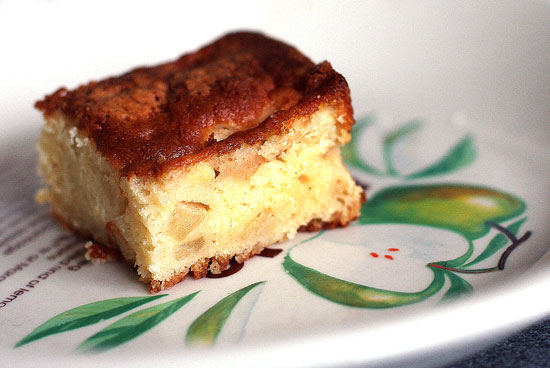
I’ve written before about my husband’s peculiar lack of a sweet tooth, so the fact that he endorses this recipe wholeheartedly should be merit in itself. It wasn’t a snap decision on his part, either – this recipe is the result of many failed and not-quite-right trials over the course of several years of trying to match my apple cakes to his specific expectations. It had to be moist and taste of apples rather than spices. Not too sweet. No faffy crumbly topping stuff. No sultanas or raisins. Noticeable apple chunks – none of that puréed muck. And it didn’t stop there. Nothing baked in a round cake pan – he wanted his slices to be square.

Not demanding in the slightest then, huh?

Anyway, I’d given up. And then we moved to a house with an orchard at the bottom of its garden.
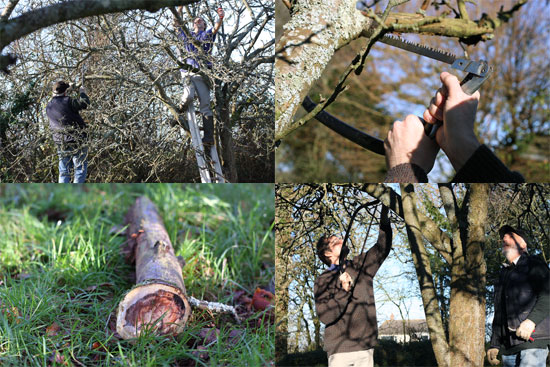
As autumn turned into winter, I sent my three children out to collect the windfalls in T’s little red wagon. Seven truckloads later, I faced a showdown situation. If I couldn’t create that perfect apple cake recipe with such an abundance of readily-available fruit, then I would have failed forever as a loving, doting wife and homemaker. Well, whatever – you get the picture.

The pressure wasn’t entirely self-induced. O did point out that his birthday was coming up and please, could I bake an apple cake for him to take into work …?

So I stayed up late, burnt the midnight oil, sweated and slaved, worked day and night …

Actually, I hit on the bright idea of mixing a few appple chunks into my favourite yellow cake recipe, tossing it all into a rectangular cake pan and slamming it into the oven for 40 minutes or so to see what happened.
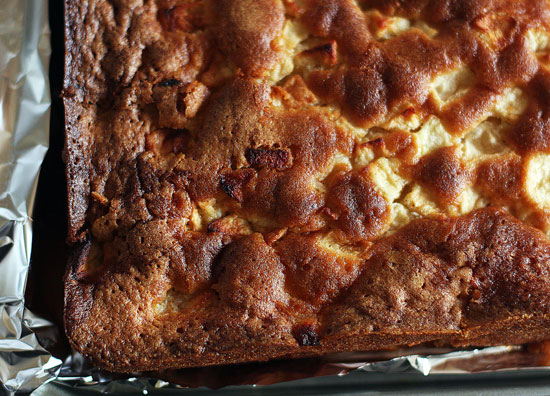
What happened was the best apple cake ever … according to my husband.

PS – Chris from Green Valley Cyder said that he’d eaten many apple cakes but that this was “one of the best.” So you don’t have to take just my husband’s word for it.
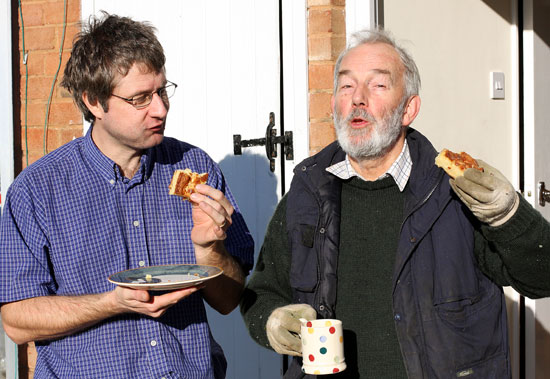
The Best-Ever Apple Cake (by me and according to my husband)

13 1/4 oz peeled, cored and diced Bramley apples
2 tbsp lemon juice
1/4 to 1/2 tsp ground cinnamon
1/4 to 1/2 tsp mace (or grated nutmeg)
7 oz unsalted butter, room temperature
13 1/4 oz castor sugar
5 1/4 oz eggs (weighed without shells), room temperature
2 3/4 oz egg yolks (weighed without shells), room temperature
1 tbsp vanilla extract
8 oz plain flour
2 1/2 tsp baking powder
1 tsp sea salt
160 ml whole milk, room temperature

Preheat the oven to 175 degrees C (165 degrees C for a fan-assisted oven).

Grease and base-line a 9″ x 13″ rectangular cake pan.

Peel, core and dice the apples (c. 4 largeish Bramleys). Toss in the lemon juice, cinnamon and mace (add as much or as little of these spices to suit your own taste). Set aside.

Cream the butter and sugar in a large mixing bowl until they are very light and fluffy (start to beat slowly and then gradually increase the speed – this allows air bubbles to be incorporated and expanded without popping).

Combine the whole eggs, egg yolks and vanilla in another bowl. Mix with a fork, then add gradually to the creamed butter and sugar, beating well to combine after each addition.

Whisk the dry ingredients together in yet another bowl. Beat 1/3 of the dry ingredients into the batter, then 1/2 of the milk. Repeat and then add the final 1/3 of the dry ingredients (ie. dry/wet/dry/wet/dry).

Combine half of the apples with the batter, mixing gently to distribute evenly. Scrape the batter into the prepared cake pan and smooth the top with a spatula. Scatter the remaining apple pieces over the top of the batter.

Bake for 40 to 50 minutes until the cake is golden and springy, and a tester comes out clean (unless you’ve speared an apple, that is).

Cool in the pan for 10 minutes, then turn the cake out of the pan and cool on a wire rack. Trim the sides and cut into squares.
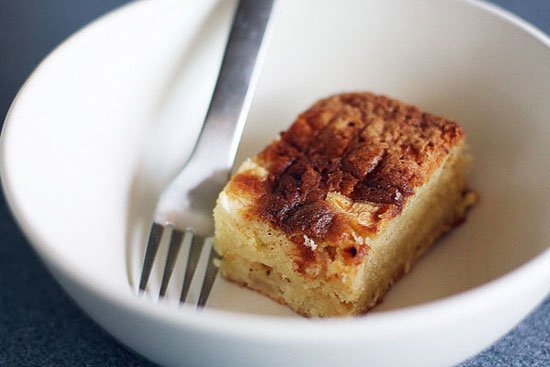
No-Bake Chocolate Ganache Tart

Although we don’t have a television, which possibly makes us a slightly unusual family, we do watch a variety of TV programmes via BBC iPlayer and 4OD. Recently, we enjoyed Hugh Fearnly-Whittingstall’s latest River Cottage series in which he gave up eating meat for four months over the summer. The programmes in this series charted his discovery of new vegetarian combinations and dishes, ranging from simple soups and salads to lavish banquets and wedding feasts.

Perhaps the most intriguing creation from the entire series however was Laura Coxeter’s raw chocolate ganache tart. Prepared with a heady mix of pecans, medjool dates, avocados and cacao powder, it really is a work of pure genius.

The idea behind the tart is that it can be served to raw food eaters, vegans and anyone wishing to avoid dairy, gluten and soya in their diet. I don’t know about you, but I wouldn’t normally associate such a recipe with something that turns out to be richly chocolately and sinfully sumptuous. But Laura really did appear to have pulled it off, judging by the velvet gooiness of the ganache and the fervent lip-smacking of its tasters. I was inspired to give it a go.

Now, I have to confess that I’m not a raw food eater. Okay, it’s probably not such a huge confession – Laura’s the first raw food eater that I’ve ever come across. I did therefore make a few changes to the tart, which will no doubt have raw foodies shuddering in their graves. In essence, my recipe is more or less true to the original although not an exact replication.

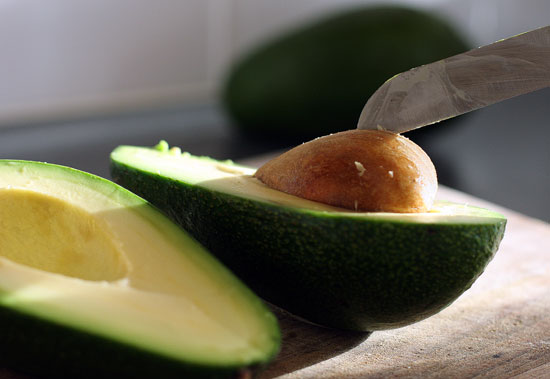
The secret behind the ganache is avocado. Whizzed up in a food processor with cocoa powder and sugar, avocados form the basis of a smooth, luxurious texture that is normally achieved by mixing chocolate and cream. The whole tart is ridiculously easy to make – you just need to make sure that you’ve allowed plenty of time for it to chill and set before serving.

The finished tart got a thumbs-up from my children, and I certainly wouldn’t hesitate to present it as the pièce de résistance at the end of a more grown-up dinner party. All in all, this recipe is just in time for the festive season. Happy Holidays 🙂

No-Bake Chocolate Ganache Tart (adapted from a recipe by Laura Coxeter)

For the base
300g/10 1/2 oz pecans
1 tsp salt
200g/7 oz medjool dates

For the filling
4 medium, ripe avocados
150g/5 1/2 oz rice bran oil
Seeds of 2 whole vanilla pods
200g/7 oz cocoa powder
1/4 tsp salt
300g/10 1/2 oz castor sugar

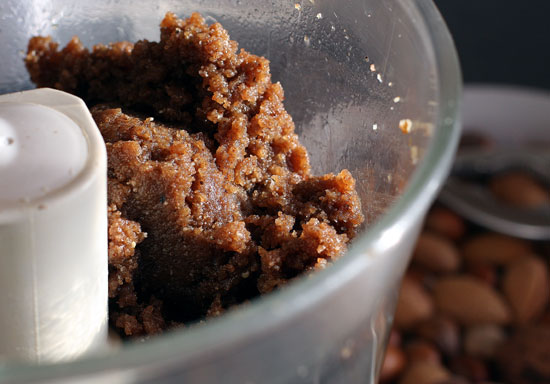
Blend the pecans in a food processor, then add the salt and dates. Whizz them all together until the mixture balls into a dough.

Press the dough into the base of a 9″ springform pan. Chill in the freezer to harden.

Peel and de-stone the avocados, then blend the pulp in the food processor. Add the oil, vanilla seeds, cocoa, salt and sugar and process until smooth.

Scrape the filling onto the base and spread evenly with a spatula or palette knife.

Set the tart in the freezer for an hour before serving.

A Soul Cake

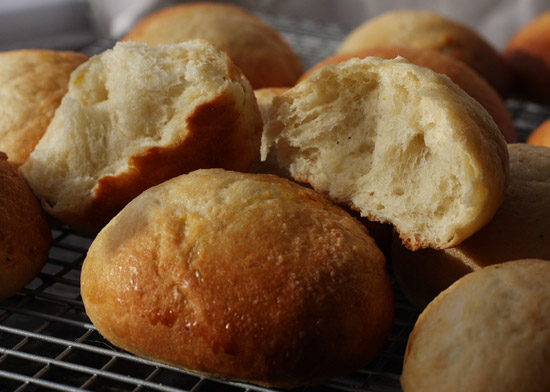
Our Hallowe’en celebrations yesterday were different from those of recent years. Quite apart from everything else, we are in the middle of moving house and have to contend with the disruptive upheaval and emotional turbulence that this creates. Instead of our usual wild witching party with friends, we held a more subdued family coven meeting in the kitchen where various spells were chanted and slimy slugs and snails were shaped from a bubbling cauldron of bread dough.

Despite the general sense of ghoulish revelry that prevailed throughout the evening, Hallowe’en is very much a seasonal festival for me and a time to reflect on the transition from summer into winter. This association reaches back in time to pre-Christian Europe when people’s lives were closely tied to the food production cycle. The end of the summer months initiated a period of the year when livestock were rounded up and culled, crops were stored and fishing boats were repaired in preparation for the coming winter. The night we know as Hallowe’en was more commonly described then in Gaelic as Samhain, or Summer’s End. Festivities on the eve of November 1st marked the end of the harvest and the beginning of the darker half of the year.

The evening of the day before a new season was believed to be a significant boundary in the Celtic world. Boundaries were important to the Celts, not least because they separated the dead from the living. Boundaries and thresholds in both time and space were regarded as protection for the living against the supernatural inhabitants of the Otherworld. The transition between the old and new years at Samhain was therefore a particularly unsettling time for the Celts as they firmly believed that it was on this eve that the boundary between the worlds dissolved and the barrier between the living and the dead became permeable. Not only could supernatural spirits pass more easily into our world, but humans also could be tricked into passing through to the other side and then trapped there, unable to return to their living families.

Many Samhain traditions can be understood as an attempt either to frighten away malevolent spirits or to welcome home dead relatives. Hideous faces carved into jack-o-lantern turnips kept evil spirits away from the door whilst food would often be left outside as offerings to appease the dead.

The modern-day custom of trick-or-treating also has its roots in Celtic tradition. Bonfires blazed at Samhain, both to signify the dying of the sun god and to banish the ill-intentioned.  Small cakes or biscuits would be baked and scattered around the bonfires, possibly to propitiate spirits trapped in animal form. Although the Christian calendar introduced the names of All Souls’ Eve and All Souls’ Day for Samhain in an attempt to supplant the pagan festival of the dead, the old ways persisted. Sweet and steaming small cakes would be piled onto plates to welcome night visitors on All Souls’ Eve in the Dark Ages.

The same small cakes had been assimilated into Christian symbolism by the eighth century, when they would be used to pay visiting beggars on All Souls’ Eve for their promises of prayers for departed family members. By the nineteenth century, children from poor families would go into the streets to beg for these ‘soul cakes.’ The practice came to be known as ‘souling’ and would often be accompanied by a simple souling song.

Soul, Soul, a soul cake!
I pray thee, good missus, a soul cake!
One for Peter, two for Paul,
Three for Him what made us all!
Soul Cake, soul cake, please good missus, a soul cake.
An apple, a pear, a plum, or a cherry, any good thing to make us all merry.
One for Peter, two for Paul, and three for Him who made us all.

I have to include this version of a traditional souling song by Sting, not for any special musical considerations but purely because it was filmed inside Durham Cathedral (where I was married).

This year, I wanted to make my own soul cakes to share with family and friends. Variously described as sweet bread, biscuits or cakes and ranging in shape from square to round to oval, it proved to be impossible to track down any one definitive recipe. Some sources cited wholegrain flour and dried fruits as common ingredients, while others suggested saffron, ginger or lemon as primary flavours. Many testers of handed-down, folk recipes complained that the cakes they made were hard and dry, things I wanted to avoid in my own soul cakes.

I liked the idea of baking small, sweet bread buns – something akin to an iced bun with an enriched dough and a light, fluffy crumb. I chose to include saffron and lemon for their bursts of bright sun yellow, and nutmeg for its warmth (and because it’s one of my favourite spices – my other favourite being cardamom, which I didn’t think would go so well). The recipe I came up with appears to have been a success – my Nan enjoyed hers at lunchtime today and L pilfered and ate three straight off this afternoon (which is why she couldn’t finish her dinner).

Soul Cakes

15 oz strong white bread flour
1 1/2 tsp fast action dried yeast
3 tbsp castor sugar
2 tsp sea salt
2 large eggs
3 oz unsalted butter
generous pinch of saffron
1/4 tsp grated nutmeg
grated zest of 1 lemon
200 ml milk

Glaze
1 egg, beaten with 1 tbsp milk
castor sugar to sprinkle

Put all the ingredients for the dough in a large bowl and mix to combine. Knead for 7-8 minutes in a mixer with a dough hook attachment. The dough should clear the sides of the bowl but stick to the bottom – add enough flour or milk to achieve this.

Scrape the dough out onto a floured surface. Sprinkle with flour and then pat to remove the excess. Fold the top third down and the lower third up (a business-letter type of fold). Cover with clingfilm and leave to rise for 1 hour.

Spread the dough out gently into a rectangle by pushing with your fingers, then 3-fold it again, cover with clingfilm and leave to rise for a further 30 minutes.

Repeat this spreading, folding and covering. Leave to rise for a further 30 minutes.

Preheat the oven to 180 degrees C.

Cut the dough into equal pieces of about 1 oz in weight. Shape these into a ball, then flatten with the heel of your hand. Place each disk onto a baking tray lined with parchment, allowing room for the dough to expand.

Brush the tops with the glaze and sprinkle with castor sugar. Leave to rise for 30 minutes, then bake for 10 to 12 minutes until golden. Remove to a wire rack to cool.

Makes c 22 soul cakes.

Kate’s Marvellous Medicine

Let me say straight off that my sister named this post. It wasn’t my idea to put myself in the title, but she insisted. I’m not altogether sure whether it’s a compliment or a dig – after all, she was likening my style of cooking one evening to George’s method of creating a medicine for his Grandma in Roald Dahl’s story of George’s Marvellous Medicine:

George had absolutely no doubts whatsoever about how he was going to make his famous medicine. He wasn’t going to fool about wondering whether to put in a little bit of this or a little bit of that. Quite simply, he was going to put in EVERYTHING he could find. There would be no messing about, no hesitating, no wondering whether a particular thing would knock the old girl sideways or not. The rule would be this: whatever he saw, if it was runny or powdery or gooey, in it went.

It all started with a fridge full of leftovers. There was half a chunk of cooked beef brisket, a slightly bendy parsnip, the bulb end of a small and apparently seedless butternut squash and a couple of boiled potatoes. Because of my inability to keep tabs on the contents of the vegetable drawer when in a supermarket, there were also about three separate bags of carrots, all in various degrees of freshness.

It all needed using and O wasn’t around to judge, so I decided to throw everything together into a sort of parsnippy, potatoey, carrotty, beef stew. With a tiny bit of butternut squash. So what if it’s Summer?

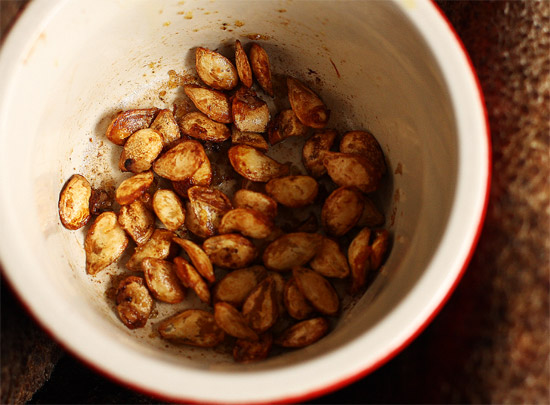
The tiny amount of butternut squash that I could add to the stew became even smaller when I discovered the seeds clustered in the very end of the bulb. Lucy became rather excited at this point and rescued the seeds from where I’d scooped them out onto the pile of peelings designated for the compost bin. In a moment of brilliance, she doused them in olive oil, sprinkled them with sea salt and roasted them in the oven until they turned golden and puffed. Wow. They were absolutely delicious, each seed exploding in your mouth with an intense, toasted popcorn flavour. From now on, I’ll be buying butternut squash for the seeds alone!


It was then that things started to become more complicated. A couple of the girls’ friends from the village popped in and commented hungrily on the tasty smells coming from our kitchen. I took pity on them and found myself inviting them to stay for dinner. Uh-oh. What had started out as a meagre stew for my sister and me now needed to expand rapidly to satisfy the appetites and expectations of four ravenous children as well.

Carrots. Kids like carrots and I had a vegetable drawer full of the things. I chopped them all up and added them to the pot. I also poured in a tin of tomatoes for good measure. As I stirred the stew however, I had a growing feeling of unease. No way were the children going to eat this. It was far too lumpy. All those carefully diced vegetables and finely sliced onions just weren’t the sorts of things I could imagine disappearing quickly from the plates of these girls.

The Magimix food processor comes in handy for moments like this. The stew transformed into broth at the push of a button. Instead of serving it with mashed potato, I could now present it as a pasta sauce. No problem.

Only there was a problem. It wasn’t until after I’d added the beef to the mulch that I realised it was still too grainy – I hadn’t blended it for long enough, and now it was too late to tip it back into the Magimix for another attempt. I looked for a more hopeful second opinion, but Lucy agreed. No way were the children going to eat this.

That was why things got messy.

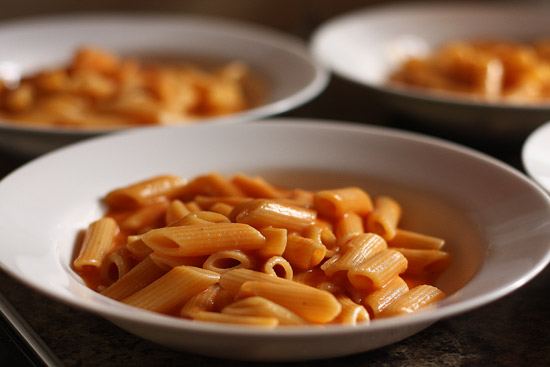
I know it doesn’t look good, but sieving the whole mixture was a master stroke. The liquid that drained from the lumpy, gooey mulch was smooth, clear and perfectly flavoured with a balance of carrot, tomato, parsnip and butternut squash. Far from having cooked up something destined only for the dustbin, we had created an award-winning pasta sauce.

Fortunately, the girls thought so too.

It doesn’t happen very often in my experience of cooking for children, but what better endorsement is there than plates like these?!

The only downside was that Lucy and I were left with a pan full of mush for our dinner. Yum.

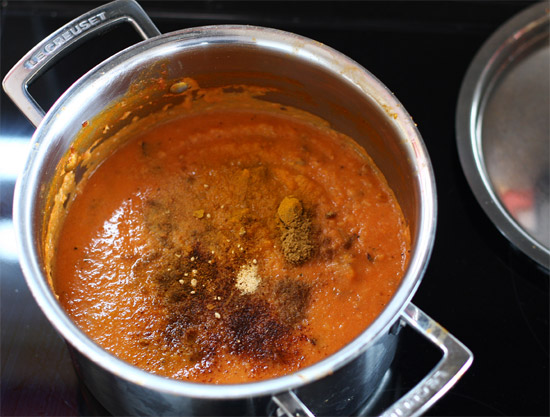
This was when Lucy came up with the title for this post. She watched me pull a random selection of spice jars from the shelf and dump the powders indiscriminately onto the top of the mulch.

“Great,” she commented. “Kate’s Marvellous Medicine.”

I gave it a stir, shoved it in the oven and ignored it until the children were in bed.

Eh voilà!

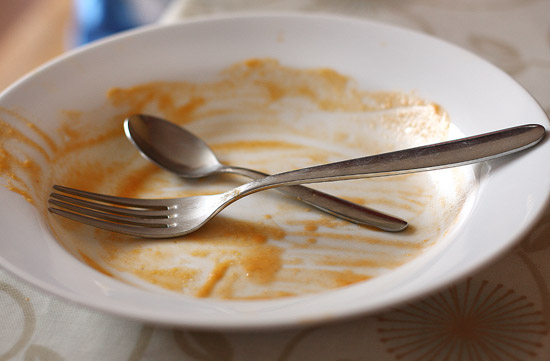
Beef curry.

It was a tasty one, too. Even Lucy said so, which is quite something considering that she had witnessed the madness of the whole evening’s cooking process!

Good Old Tasty English Cheddar Cheese

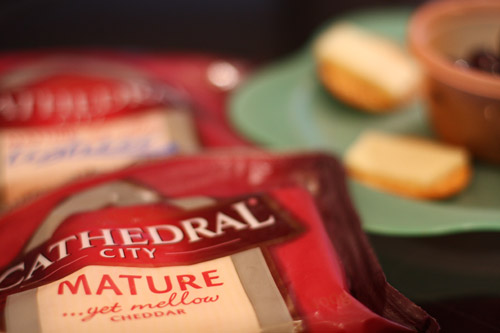
Cathedral City mature

It’s no secret around here that we love cheese. From Dolcellate (which was an annual Christmas present from a client when O was working as a vet in Dorset) to Brie de Meaux (which explodes with the taste of honey when tasted with a sip of red wine), and from a goat’s cheese pyramid (which I carried in my handbag to London as a present for my sister) to Pont l’Eveque (which just plain stinks, but tastes gloriously rich if you can get beyond the smell of mouldy socks), the cheese board has a position of elevated importance for us in the course of a fine dining experience.

However, setting aside all regional and continental considerations …

If you’re wondering what to eat,
There’s one thing you cannot beat –
That good old tasty English Cheddar cheese.

As sung by The Wurzels.

In 2008, Cheddar was voted the nation’s favourite cheese in research by the British Cheese Board. Cheddar cheese and pickle sandwiches, Ploughman’s lunches … 90% of all households turn to Cheddar for its versatility. Whilst O and I mostly prefer to eat our Cheddar straight, with or without any crackers,  it also excels when used as a bubbling topping on Shepherd’s pie, a creamy sauce for Macaroni and a melted filling in toasted sandwiches.

Cheddar is apparently the most purchased and consumed cheese in the world, with all modern variations originating from a recipe developed on the land around the village of  Cheddar in Somerset hundreds of years ago. The earliest references to Cheddar cheese date from 1170, when it is recorded that King Henry II bought 10,240 lbs of it at a farthing per lb (in modern terms, that’s 4644 kg for a total cost of £10.67).

All Cheddar cheeses are not created equal however, and an enduring question concerns how people choose which Cheddar to buy. With a possible taste profile ranging from extremely mild to extremely sharp, it’s obvious that the exact same Cheddar is unlikely to please everyone. In our house, we prefer the mature Cheddars for their sharpness, dislike a texture that is too gritty with salt and look for a taste that grows and develops in the mouth. Taste aside however, considerations such as price, packaging and promotional offers also influence the decisions that consumers make. Add health considerations to the mix and research shows that 16% of adults restrict the amount of cheese they eat, choosing to eat cheese less often, to eat smaller portions or to buy lower-fat substitutes.

When Cathedral City Cheddar contacted me and claimed that their lower-fat, Cathedral City Mature Lighter Cheddar cheese could deliver taste on a par with their mature variety, we were naturally intrigued. As far as pre-packed, block Cheddar cheese goes (as opposed to the more rarefied traditional farmhouse Cheddar cheeses), we’ve always gone to Cathedral City Mature (or even Extra-Mature) as our first choice. Apart from loving how the bags have a resealable thingymagig along the top (which saves wrestling with countless acres of annoyingly clingy clingfilm), we’ve always found Cathedral City to be  a good, flavourful everyday Cheddar that our children enjoy eating too.

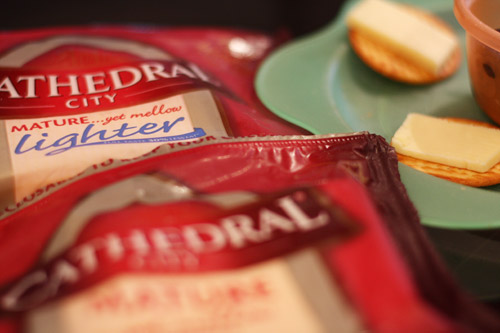
Cathedral City lighter

Cathedral City asked me if I would be interested in comparing their lighter mature variety with their macho, full-bodied cheddar, and I agreed. This was a particularly timely proposition as we had recently tasted a variety of low-fat cheeses at the Devon County Show and had been unanimously unimpressed by their blandness and rubbery texture. It would be interesting to see if Cathedral City had come up with something better …

We decided to conduct a double-blind experiment in which samples of Cathedral City Mature were compared for taste with samples of Cathedral City Mature Lighter cheese. I sliced and divided the samples; O fed one of each (not knowing which was which) to our willing guinea pigs …

Cathedral City taste taest

Although we found that the mature Cheddar does in fact have a more complex taste that lingers and develops for longer than that of the lighter cheese, we were very pleasantly surprised by the mellow flavour and creamy texture of Cathedral City Mature Lighter. When O took some taste-test samples  into work the next day, two of his colleagues couldn’t tell the difference at all and one even preferred the lighter cheese to the higher-fat Cheddar. This is quite a result for Cathedral City – researchers have been striving to create a reduced-fat cheese with these flavour and texture profiles for years (see this report by the National Dairy Foods Research Center Program, for example).

A quick search of the internet revealed that Cathedral City Mature Lighter is already a popular choice of Cheddar, especially among those who are weight-conscious or on a diet. Posters in this Slimming World forum all vote for Cathedral City Lighter with comments like:

“I like Catherdral City Lighter – really very nice.”

“Another vote for Cathedral City Lighter. Best low fat cheese I’ve tried.”

“Definitely Cathederal City Lighter! It’s so good and I can’t tell the difference between that and the full-fat one! Mmm! Don’t like the Weight Watchers one it’s like eating paper, ew!”

Incidentally, the chewy, rubbery texture that is usually associated with low-fat Cheddar is down to the function of fat. In full-fat cheese, larger fat globules create weaker spots in the network structure which in turn break down into smaller particles during chewing, thereby allowing a smooth, creamy texture to develop in the mouth. In low-fat cheese, there are not enough weak spots in the structure to create this texture, which leads to a firmer, rubbery texture that needs more chewing before swallowing. So you can see how impressive it is when a lower-fat Cheddar also has a smooth, buttery, creamy texture, even when melted …

melted Cathedral City cheese

Cathedral City’s Mature Lighter Cheddar cheese should certainly be seen as a welcome addition to the reduced-fat cheese market. Unlike many other lower-fat cheeses, it is something that people can both enjoy and feel good about eating (and if anyone’s stuck for inspiration on what to do with it, then Cathedral City also provide a wealth of recipes on their website). Ultimately, I hope that more people than ever can now be persuaded of the glories of that good old tasty English Cheddar cheese!


  • Enter your email address to subscribe to this blog and receive notifications of new posts by email.

    Join 289 other subscribers
  • Seasonal Recipes

    candied peel

    baileys chocolate truffles

    gingerbread men

    mince pies

    fudge

    smarties cookies

  • Freshly Made

  • Categories

  • Favourite Feasts

  • Awards

    DMBLGIT Award
  • Archives

  • wordpress visitor counter
  • Adventures in food by Kate Coldrick from Woodbury in Devon.