Candyfloss Clouds

I have to keep reminding myself that we’re in the middle of the summer holidays. Apart from during one brief, glorious spell of sunshine yesterday, the seas reflect the grey of the skies and our car boot is filled with waterproofs and wellies rather than swimsuits and suncream.

Perhaps the weather is to blame for the strange sightings of unidentified flying objects around our house these last few evenings. When three small children and one barely-grown-up adult are cooped up together during the day while the rain pours outside, it’s hardly surprising that weird gizmos rise to the surface eventually.

flying floss machine

This particular flying floss machine had been stored (what do you mean, “hidden”?) under a bed for some time. Oh, it’s not that we didn’t appreciate the present, Aunty Lucy – really, honestly, truly, L thought it was the best present in the whole wide world. It’s just that … well … it’s a candyfloss maker! You know – candyfloss – that sticky, sickly, sticky, sticky, sticky stuff. Emphasis on sticky.

Well, I’m here today to tell anyone who has a candyfloss maker hidden under their bed: “It’s okay.  H o n e s t l y.”

I take it all back. Not only is it the simplest thing in the world to clean, it doesn’t spread gobs of icky-hot sugar all over your kitchen walls and ceiling at all. At least, ours doesn’t. And even O has finally been won over by its charms (no, that doesn’t extend to his actually trying any of the stuff – it’s more in appreciation of the pleasure it gives to his sweeter-toothed offspring).

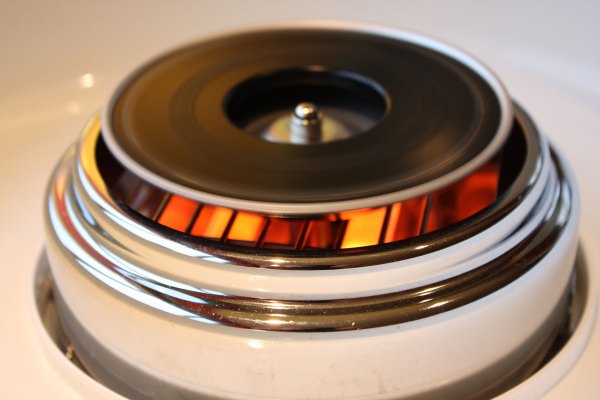
Look, it’s easy. You set it spinning around for a bit while it heats up and prepares for take-off …

taking off

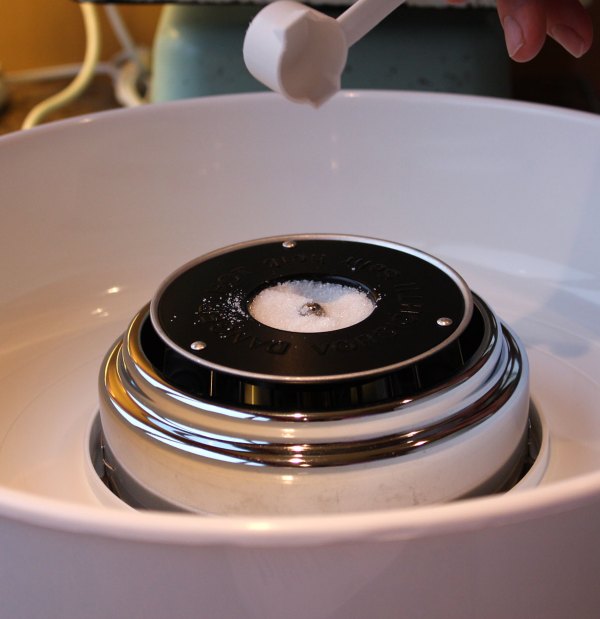
… and then you scoop some granulated sugar (the manual was quite specific about that – ‘use ONLY granulated sugar’) into the middle.

sugar

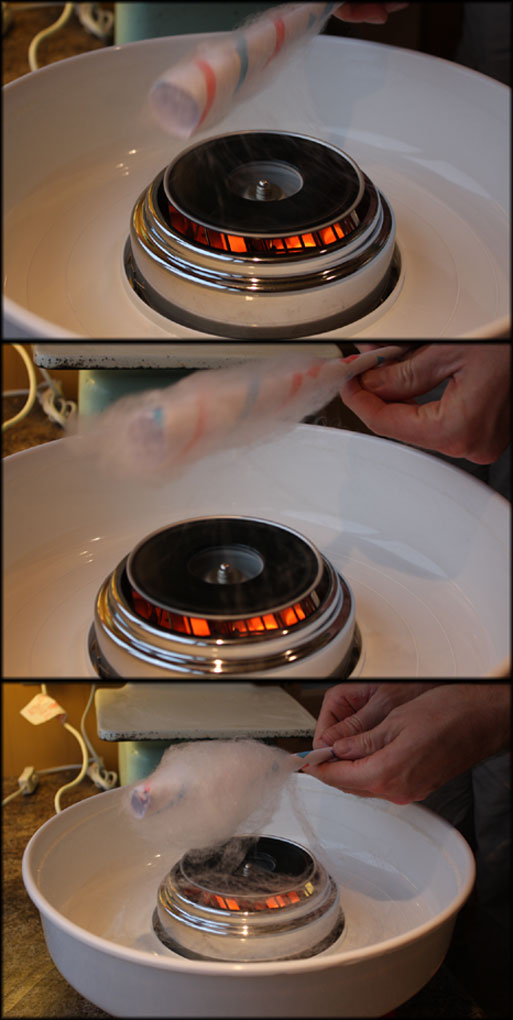
After that, you set it spinning again and wait for the fine, gossamer strands to start appearing. Wind these onto a paper cone …

fluffy floss

… and hand to someone with extremely high sugar tolerance levels.

holding candyfloss

Can you catch a candyfloss cloud on your tongue this summer?

candy cloud

Orange Whisky Genoise

When Rose came to stay, I confessed to her that I’d never dared to make a genoise. I could swear that her eyes lit up with delight as she whipped out some Wondra.

“I’ll show you how,” she said. “It’s easy.”

rose genoise

The lemon genoise that Rose made that day in my kitchen was one of the most perfectly moist and tender cakes that I have ever tasted. It floated softly like a cloud before melting on my tongue into waves of syrupy lemon sea. And although the recipe as a whole had seemed dauntingly complicated, Rose’s patient explanation of each step showed me that I really had nothing to fear from such an infamous undertaking.

I waited awhile before making a genoise entirely on my own, however. Although each step in itself now seemed to be quite manageable, my three little kitchen helpers added an extra layer of complexity that I wasn’t sure would be entirely beneficial to the proceedings. Finally, one morning last week when only my two-year-old T was with me at home, I plucked up the courage.

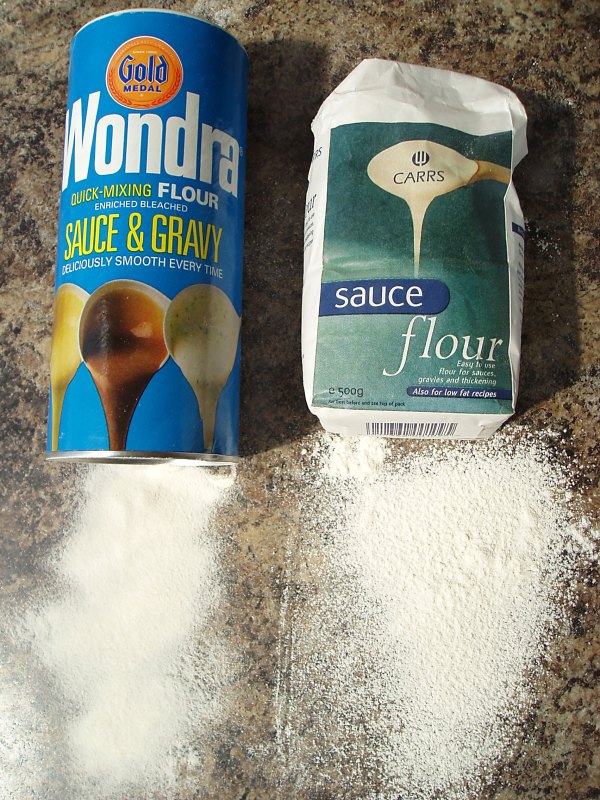
I was spurred on partly by the packet of Carr’s Sauce Flour that was sitting in my flour cupboard. I was curious to discover whether or not it would perform similarly to Wondra flour, a product that is unavailable in the UK.

Rose introduced Wondra to the genoise-making public in her presentation on flour to the Experimental Cuisine Collective at New York University in 2008 (see the third and fourth parts). Marketed as a ‘quick mix wonder’ for thickening sauces and gravies, Wondra is manufactured by a process called agglomeration. This involves hydrating or wetting the flour to form clusters among the particles. These large, agglomerated clusters are then spray-dried to produce uniform particles that flow freely, like salt or sugar. The resulting ‘instantized’ flour dipserses easily and quickly in water. This is because the larger particles are able to overcome the natural surface tension of water better than the finer particles of non-instantized flour (which is also why regular flour tends to forms lumps that are wet on the outside but remain dry on the inside when added to water).

Rose found that this enhanced dispersibility of Wondra was particularly useful when used in a genoise – the flour particles mixed easily and quickly with the batter, which helped to avoid overstirring and deflation of the whisked eggs.

As I said earlier, we can’t get Wondra in the UK. We can get a flour that is similarly marketed as being ‘thickeningly easy’ in sauce and gravy-making, however – Carr’s Sauce flour.

It’s not quite the same. It isn’t bleached, for a start. Or agglomerated (unless they’re just not admitting to that bit). Apparently, it’s made from “wheats that by nature do not form glutinous lumps with the addition of liquids.”

It doesn’t really look the same as Wondra, either. It doesn’t flow freely but behaves like regular flour in the packet and on the spoon. It’s also whiter.

sauce flours

It does disperse easily in water, however … and also in genoise cake batters.

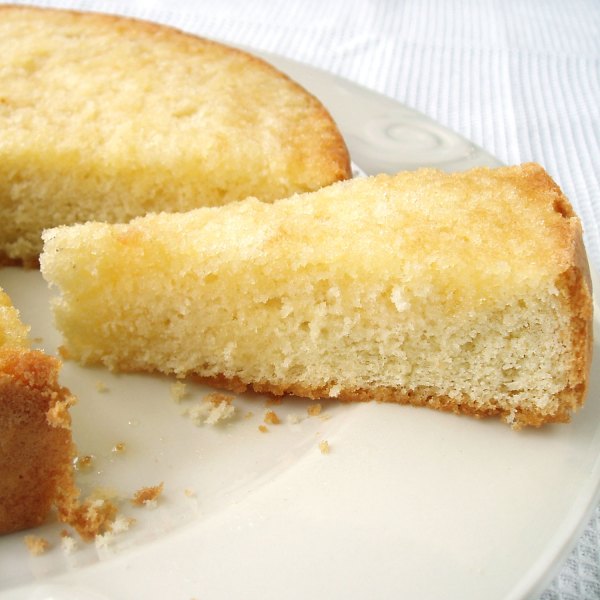
I’m a shockingly inexperienced genoise-baker, but I can certainly confirm that the texture and taste of the orange whisky genoise I made last week with Carr’s Sauce flour were at least as good as I remember them being when Rose made her genoise with Wondra flour. If my own cake didn’t rise quite so high as it should have done, it was purely because about a third of the batter ended up all over T, my little kitchen helper!

I have some Wondra left over from Rose’s visit, so perhaps I will attempt a direct comparison one day soon. For now, I’m happy in the knowledge that I can ‘face my fear and do it anyway’ 😉 .

orange whisky genoise

Edible Lives: Farida’s Azerbaijan Cookbook

Two months have passed since Cynthia nominated Farida from Farida’s Azerbaijani Cookbook as my next participant in this Edible Lives series of conversations with food bloggers. The delay is all my fault – I went off to France and got carried away with being in holiday mode, and then my emails ended up in Farida’s spam and delayed our conversation further until they could be found again. Thank you for bearing with me throughout this time, Farida!

All images courtesy of Farida

All images courtesy of Farida

Before I met Farida, I knew little (aka nothing) about the food and culture of Azerbaijan. Through her blog and our conversation together, I have discovered not only a wide array of temptingly delicious recipes but also an affectionate portrait of Farida’s homeland. As Farida writes, it is traditional for the doors of people in Azerbaijan to be always open to guests. I’m honoured to have been invited to take my own place at Farida’s table in her journey to recapture and present the familar flavours and tastes of her childhood memories.

Here, then, is the story of Farida’s Azerbaijani Cookbook

Farida's Azerbaijani Cookbook

How did you get the idea of starting a food blog?

I got the idea to start a food blog a little after I took on writing an Azerbaijani cookbook. One day, I happened to listen to a radio program that talked about blogs and this was actually the first time I’d ever heard the term. I did a search on the Internet and was quite impressed by the number of food blogs out there and became immediately fascinated with the whole idea of sharing the recipes and stories online. A good friend of mine encouraged me to start a blog too and I didn’t wait any longer. My blog is primarily focusing on Azerbaijani cuisine, but I also post other recipes I love which are not particularly Azerbaijani.

Were there any food blogs in particular that inspired you at the start?

I can’t say that one or two blogs inspired me in particular, because there are lots of nice ones out there and a little bit from all of them somewhat inspired me to start my own blog. I especially loved the ones with ethnic foods from around the world. I find that one can learn so much about a culture by learning new recipes and by reading the stories behind them.

Yes, Cynthia commented on how she learns something new each time she reads your blog, yet at the same time she notices similarities between your culture and hers through the food you describe. Have you found that writing for your blog has helped you in the process of working on your cookbook in any way?

Writing on my blog absolutely helped me on working on my cookbook, and in more than one way. Since my cookbook is going to be a mix of food and culture, I wanted to know what aspects of the culture people would be more interested in knowing, what exactly draws their attention about Azerbaijani food, what it is that that they would like to learn more about and I found that comments I have been receiving on my blog are really helpful in this respect.

Stuffed Grape Leaves

Stuffed Grape Leaves

Through my blog, I have also met wonderful people who have volunteered to test the recipes that are going to be in my cookbook. And what is most important is that receiving feedback on my posts from all over the world really motivates me to go that extra mile and work harder on my cookbook.

You say on your blog that you only cooked occasionally when you were living in Azerbaijan. How did you go about compiling your recipes and putting together all of the background information that brings your posts to life so vividly after your move to California?

Yes, it is true that I didn’t cook much back in Azerbaijan. My cooking was limited to salads, appetizers and some cakes and sweet pastries that my family made quite often, especially for special occasions, like birthdays or holidays. But I was familiar with food. I saw food being cooked on a daily basis. I was familiar with ingredients and which ingredients were used in what dish, but I never put it into practice.

This is to say that I grew up in a culture where food is a very important part. Azerbaijanis do not eat out much except for special occasions, when extended families get together to celebrate an occasion. There is somebody in every family who cooks every single day. It is usually a mother or a grandmother. Since receiving a higher education is very important in Azerbaijan, parents would rather see their children reading a book and going to libraries than spending their time in the kitchen cooking for the family, or better yet, inventing new dishes. Such was my case too.
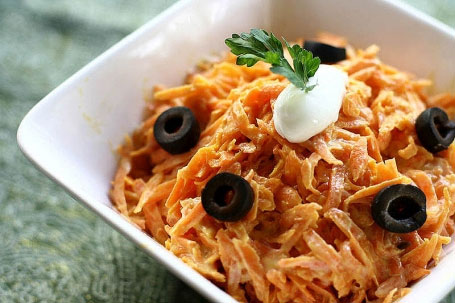
Carrot Salad

Carrot Salad

I would like to mention that I’ve always had a passion for recipes and I’ve been collecting them since I was about 11-12. Sounds contradictory, right? I know, but this is true. I kept collecting and being fascinated by all the ingredients and methods of cooking described in recipes, but I rarely used them. All until I came to the US in 2002. Away from Azerbaijan and my family, I missed homemade food and had no other choice than to begin cooking myself. Later came the idea for a cookbook, then for a food blog. Most background information on recipes I provide on my blog is coming from my everyday exposure to those foods back in Azerbaijan.  Today I cook Azerbaijan and Turkish food on a daily basis, and I love to experiment with other international foods as time permits.

What do your family and friends back in Azerbaijan think of your food blog and does it help you to keep in touch at all?

My family was a little surprised when I told them I would write a cookbook and start a blog, but they were very happy and supportive of the idea and believed in me from day one. My friends support my initiative too.

Shekerbura - Making a Novruz Dessert Step by Step

Shekerbura - Making a Novruz Dessert Step by Step

I receive emails from friends or relatives who have tried some of the recipes from my blog and it is especially encouraging to hear that my recipes actually work. So, in a sense, my blog does help me stay connected with people I love but who are far away from me. More than anything, my blog helps me stay connected with my roots and with the culture I grew up on.

As well as staying connected to Azerbaijan through the recipes you post on your blog, you also say that you like to experiment with other international foods and to write about these too. What are your favourite sources of recipes for these other foods?

I love to learn about cultures though their foods. In the past, I used to experiment with them more often but now that I am concentrating on my cookbook, I have less time to do so. My favorite sources for the recipes are ethnic cookbooks and blogs. I am an avid reader of quite a few blogs on ethnic cuisines, and here are some of my favorites: Marija’s Palachinka on Serbian cuisine, Peter’s Kalofogas on  Greek cuisine, Sunita’s Sunita’s World, Cynthia’s Tastes Like Home on Caribbean cuisine, Zerrin’s Give Recipe and Banu’s Almost Turkish Recipes, both on Turkish cuisine.

Another favorite blog of mine is Elise’s Simply Recipes. Elise is one of the bloggers who warmly welcomed me to the blogging world where I had just stepped back then. Her blog is a fantastic source for great recipes.

In terms of your own culture, what have you discovered that people like and want to learn about Azerbaijani food?

I think people who visit my blog, particularly non-Azerbaijanis, like to read stories behind traditional recipes. This is where they can learn about a particular tradition, or a ceremony, or just how and when a certain dish is eaten. Anything that would help them catch a glimpse of culture along with the recipe sounds interesting to readers.

Ceremonial Rice Pilaff

Ceremonial Rice Pilaff

How close are you to completing your book?

My goal is to have it published by the end of this year, or early next year, at the latest. I am almost done with the recipe writing part of it and what is left is mostly the cultural, historical information that will appear at the beginning of the book as well as throughout it.

What’s your own favourite recipe on your blog, and what’s your most popular post?

My favorite recipe on my blog is for stuffed grape leaves and this is only because it happens to be my favorite dish.

The most popular post must be that that on zebra cake.

Zebra Cake

Zebra Cake

Although it is not a traditional Azerbaijani cake (most cakes are a European import to Azerbaijan but Azerbaijanis have wholeheartedly accepted them into their cuisine) it is definitely not a stranger in the country. I have received numerous comments on that particular post and continue to receive emails from people who have tried the cake. This is a great honor and I am very flattered that my zebra cake is being made in different parts of the world.

And finally, who do you nominate to be the next person I invite to talk to me about their food blog, and why?

I would like to nominate Marija from Palachinka to be your next interviewee. Marija and I met (virtually) when I had just started my blog and have become good friends ever since. Her blog has taught me a lot about Serbian food. Marija is an amazing photographer and food stylist. Her blog is truly inspirational.

As is your own, Farida 🙂 . Thank you ever so much for talking to me. I’m looking forward to being able to buy your book and reading more of your fascinating stories behind the food of Azerbaijan.

Rainbow Cake and Unicorns

Update June 2012: detailed photos on how to make a Rainbow Cake are here.

Update April 2010: the activities and games I planned for M’s party are described in a separate post here.

At the end of her birthday party last year, M announced that she would be having a unicorn party for her next birthday. I didn’t realise that she was absolutely serious about this. I thought, “It’s a whole year away – she’s bound to change her mind.” But no, for a whole year M has stuck to her original intention and has been counting down the days until her unicorn party. 

You could argue that I’ve had a whole year to prepare, so why the sudden rush to get everything ready last week? Well, M may have had a solidly clear idea of the grand theme for her party, but she left the finer details entirely up to me. Not wanting to disappoint, I threw myself into turning our house into an enchanted forest in the hope that any passing unicorns might be tempted to pop in on the big day. We made glittery trees and rainbow streamers while M’s big sister created a welcoming poster for the front door.

Last year, M set her heart on a cake she saw in a book by Debbie Brown (here’s a warning to parents – only ever let your children see pictures of cakes that you’re happy to make yourself). Four being so much more grownupperer than three, M has now thankfully entered the chocolate frosting and smarties stage. I’m not so very far removed from the icing sugar cloud of despair that I miss those fondant modelling sessions yet … I’m quite happy to be doing chocolate and smarties.

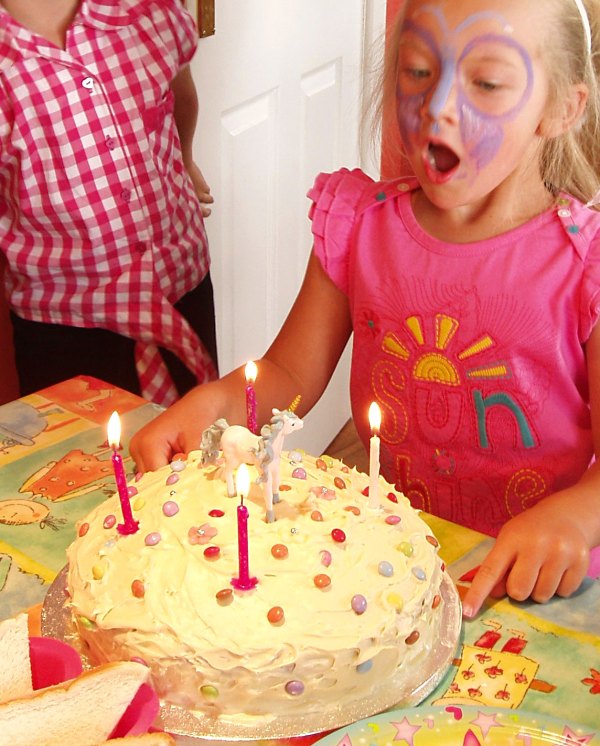
I couldn’t resist giving the birthday girl a little surprise, though. From the outside, M’s cake looked perfectly normal (in a homemade sort of way) – a magical plastic unicorn standing amid swirls of white chocolate buttercream and scattered smarties. M’s seven little party guests looked on dutifully as M blew out her candles and I took a knife to cut into the cake.

unicorn cake

Hesitating before plunging in to make the first slice, I asked them all, “Do you know what happens when a unicorn stands on top of a birthday cake?”

“No,” they whispered with wide eyes.

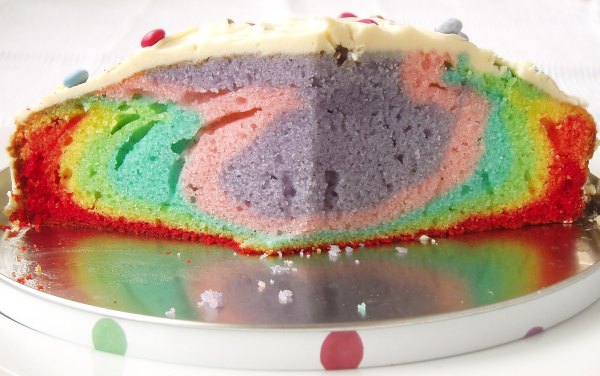
“He makes a rainbow,” I told them, cutting into the cake.

rainbow cake cut

“Wow!”

The next day, M sidled up to me and asked, “Mummy, how did the unicorn do that to my cake?”

Well, if there’s by any chance anyone left in the blogosphere who hasn’t come across a rainbow cake before now, I’ll explain my own take on the concept … just in case a unicorn happens to pass by and stand on another little girl’s birthday cake 😉 .

I’m not sure who had the original idea – there’s a box-mix version doing the rounds that appears to have started with this thread in the dubiously-named ‘Something Awful’ forums. Rejecting the layered box-mix and diet soda variety however, I based my own rainbow cake recipe on Farida’s beautiful Zebra Cake (stay tuned for more from Farida in an upcoming post).

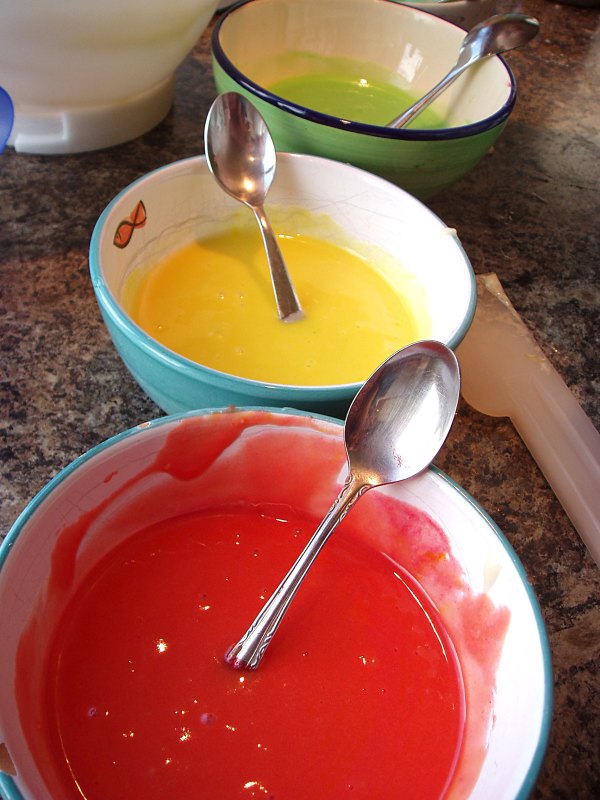
I followed Farida’s instructions to make a yellow cake batter (whichever basic cake recipe you choose, it’s important that it’s one in which the batter doesn’t mix about too much during baking or you’ll end up with a muddy brown cake instead of a rainbow). Then, instead of dividing it into two parts and colouring one part with cocoa as Farida did, I divided the mixture between seven bowls (roughly 4 tablespoons of batter in each) and used my fondant paste dyes to colour each portion a different colour of the rainbow.

coloured batter

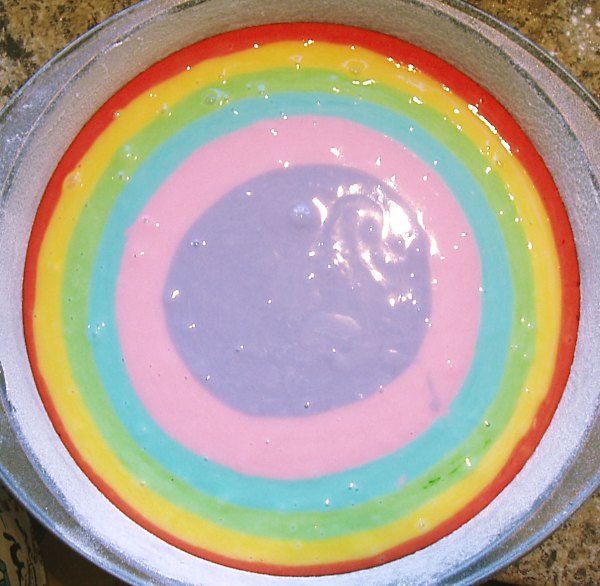
I then poured each rainbow batter in turn (starting with red) into the centre of my prepared cake pan. As Farida says, don’t wait for each colour to spread out before starting with the next – just pour the batter into the centre of the pan, then pour the next colour right on top and then the colour after that without waiting for each to spread fully. The weight of each batter pushes the previous colour out further and, as long as you keep a steady hand with the pouring, they all sort themselves out.

batter in pan

And it’s as simple as that.

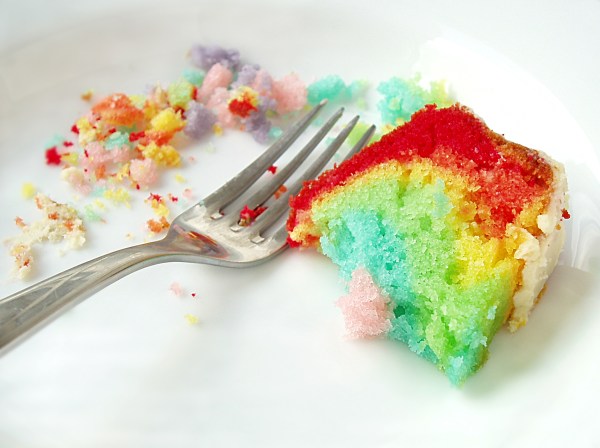
I found out in the school playground this morning that one of the guests has kept her special piece of rainbow cake carefully wrapped up since the party so that she can show it to everyone who visits.

rainbow cake crumbs
You might also like:

Rocky Road

Pumpkin Cake

Fairy Cakes

Elderflower Cordial

I remember the very first time I ever tasted elderflower cordial. It was an extremely hot summer and I had traveled the great distance between the North and the South of England (which is a far greater divide psychologically than physically, as anyone from ‘Up North’ will confirm) to be with my boyfriend during the holidays. As the sun beat down on the yellowing grass, we sipped cool, refreshing drinks of elderflower cordial and loitered with our fellow bellringers in the shady ringing chambers of old church towers.

The taste of elderflower cordial today transports me straight back to that time. Only now, the boyfriend is my husband and we have three young children who are already in love with the smell and taste of elderflowers.

T smelling elderflowers

Although elderflowers grow abundantly in the hedgerows of Devon, this is the first year that we have collected the flowers to make our own cordial. It was O’s idea last weekend.

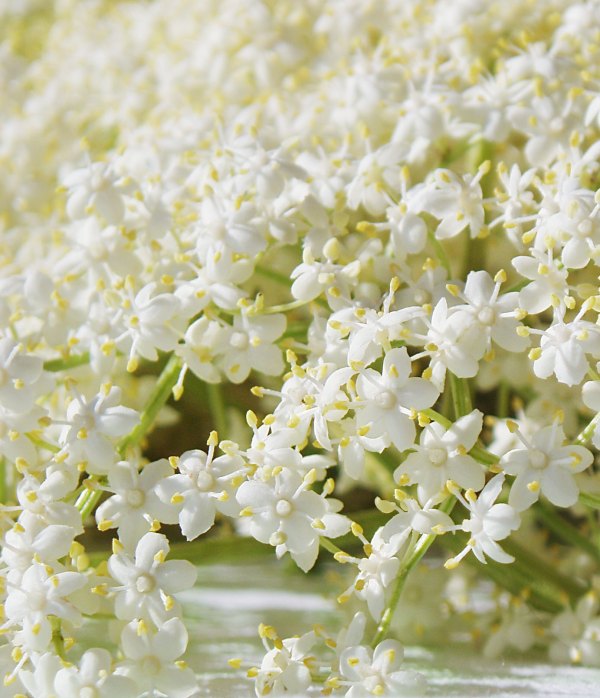
elderflowers

My collection of cookbooks on the kitchen bookshelves yielded two recipes for elderflower cordial. The first was by Sophie Grigson and the second was in The Cook’s Scrapbook (a lovely book with a whole section on foods from the wild). At first sight, Sophie Grigson’s recipe seemed the more appealing as the elderflowers only required steeping overnight, rather than the five days called for in the second recipe. However, Sophie’s recipe also used relatively more sugar, and we wanted to avoid making the cordial too sickly sweet. In the end, we decided to combine the two recipes by using less sugar and straining the mixture after one day (largely through fears that it would become a mildewed pond if left for any longer).

Both recipes included citric acid, something which I do not happen to keep in ready supply. Apparently, this acts as a preservative so that the bottled cordial can be kept for up to a year. It also enhances the charateristic sour zing of the elderflowers.

Although citric acid is found naturally in the juice of the lemons that are also used in the recipes, it is in too small a quantity in lemons to provide a substitute for the amount of citric acid required – it would take about thirteen lemons to produce an equivalent amount of citric acid, something which would also override the essence of elderflower in the cordial.

Unfortunately, the larger chain pharmacy stores in the UK no longer stock citric acid because it can be used to make heroin more soluble. However, it is also used in wine-making so can be found in small quantities in home brewing shops. We tracked down a supply locally at Quay Side Easy Brew on the Historic Quay in Exeter.

If you haven’t yet made elderflower cordial, I can reassure you that it is simply the easiest thing to do. The most important part is to make sure that the flowers you gather are fresh and white and not creamy or brown, which means that you have to get the timing right – generally, the flowers will be at their best for only two weeks in the early summer of each year. Apparently, it’s also best not to pick blossoms from beside a road … a piece of advice that we didn’t follow to the letter, although the narrow Devon lanes we get around here could hardly be classified as major motorways 😉 .

elderflower cordial

Elderflower Cordial

2 kg / 4 lb 6 oz caster sugar
1700 ml / 3 pints boiling water
90 g / 3 oz citric acid
30 large elderflower heads, flowers snipped from stems
3 lemons, sliced

Put the sugar into a large bowl and add the boiling water. Stir until all of the sugar has dissolved, then add the citric acid, elderflowers and lemons (we were concerned about the many bugs that seemed to be living in the flowers, so we put the pot on the oven top and boiled everything up for a minute or so … I haven’t seen anywhere that recommends you do this, but it certainly didn’t impair the flavour of our finished cordial at all).

Cover the bowl and leave to stand at room temperature for 24 hours.

Scald a sieve, jug and muslin cloth with boiling water, then strain the cordial through the muslin (double-thickness) into the jug.

Clean and scald 3 or 4 bottles (we used wine bottles with screw caps). Pour the strained cordial into the bottles. Cork or cap the bottles, then store in the fridge.

To drink, dilute one part cordial with two or three parts water (still or sparkling), tonic, soda or gin.

  • Enter your email address to subscribe to this blog and receive notifications of new posts by email.

    Join 289 other subscribers
  • Seasonal Recipes

    candied peel

    baileys chocolate truffles

    gingerbread men

    mince pies

    fudge

    smarties cookies

  • Freshly Made

  • Categories

  • Favourite Feasts

  • Awards

    DMBLGIT Award
  • Archives

  • wordpress visitor counter
  • Adventures in food by Kate Coldrick from Woodbury in Devon.