Jubilee Nutella Cookies

There is a connection between The Queen’s 2012 Diamond Jubilee and these chewy Nutella cookies. Honestly, there is – just bear with me.

My Mum likes trees. A lot.

So … for her birthday last year, we gave her a gift membership of the Woodland Trust, the UK’s leading woodland conservation charity. She hence became the proud owner of a native tree in a wood not so very far away from here. I’m not sure where that wood is, but Mum received the details in her welcome pack.

Mum also receives regular copies of the members-only magazine, Broadleaf. It was in one such issue recently that she discovered the Woodland Trust’s plans to get everyone madly planting trees in celebration of the Jubilee. I hadn’t especially registered the fact but it turns out that Her Majesty The Queen is the only British sovereign ever to celebrate a Diamond Jubilee (other than Queen Victoria in 1897, that is). I guess the Woodland Trust can be forgiven for getting so excited about the whole thing then. And also for using it as a springboard for planting 6 million trees across the UK.

The part of the magazine article that most interested my Mum however was the statement:

We hope neighbours, communities, schools and families will come together to plant thousands of individual trees in their gardens, playgrounds and community spaces – each taking the chance to mark this special moment in history in a way that will stay with them forever.

Can you see where this is heading?

Yep, both my sister and I are in line for receiving a special Jubilee tree that we can plant in our own gardens at home.

It’s good timing. O has been hacking and slashing the overgrown heather in our garden since we moved here last November, whilst my sister also has a new garden to plan after moving house only a few weeks ago. Going down the edible route, we have each requested a Jubilee Hazel from the selection of trees on offer in the Woodland Trust shop. Thanks, Mum 🙂 .

So you see, there is a connection after all.

Hazel trees make hazelnuts … hazelnuts make Nutella … Nutella makes cookies.

Jubilee Nutella Cookies

6 oz plain flour
1/2 tsp salt
3/4 tsp baking soda
4 oz butter
6 oz Nutella
3 1/2 oz light muscovado sugar
2 1/2 oz golden caster sugar
1 large egg
1/2 tsp vanilla extract
4 oz chopped roasted hazelnuts (optional)

Preheat the oven to 175 degrees C and line several baking trays with parchment paper.

Put the flour, salt and baking soda in a bowl and whisk to combine thoroughly.

Cream the butter and Nutella in a mixer bowl, then add the sugars. Beat until light and fluffy.

Add the eggs and vanilla gradually, beating after each addition.

Fold in the flour mixture, stirring just enough to combine. Stir in the hazelnuts, if using. Pop the batter in the fridge for 15 mins or so until it’s firmed up a bit.

Plop dollops of batter onto the prepared baking trays, leaving plenty of space between them for the cookies to spread (I used about 1 1/2 tbsp of batter for each dollop).

Bake for 15 mins (for soft and chewy cookies) to 17 mins (for crisp and chewy cookies), rotating the baking trays once during baking.

Leave the cookies to cool on the tray for a couple of minutes before removing them to a wire cooling rack.

Makes 14 to 18, depending on the size of your dollops.

Baked Bean and Sausage Pasties

What keeps you going?

I’ve been asked that question many times over the last several months as I’ve struggled with the twin demons of anorexia and bipolar disorder. And my answer has always been, “My family. My children.”

Take yesterday, for example. There we were, in the middle of a busy supermarket – my three children and me (always an expensive way to do the shopping) – deciding what to cook for their dinner. Surrounded by so many tasty options on the shelves in every aisle, M nevertheless said, “Baked bean and sausage pasties – the ones that you make.”

So that was what we did.

Times like this are what keep me going.

Baked Bean and Sausage Pasties

7 oz bread flour (I know, an unusual choice of flour for pastry – but it needs to be strong enough to hold the filling)
3 oz butter
water
2 tins of baked beans and sausages

Rub the butter into the flour and stir in just enough water to form a dough. Wrap in cling film and leave to rest in the fridge for 30 mins or so.

Preheat the oven to 180 degrees C.

Divide the pastry into four pieces. Roll out each piece into a circle.

Empty the cans of baked beans into a sieve to strain out most of the runny tomato sauce (otherwise the pasties disintegrate into a soggy mush. Trust me – I’ve tried it).

Spoon four mini sausages (assuming there are 8 in each tin. Can you tell I know my Heinz baked beans …?) and a quarter of the baked beans into the centre of each pastry circle. Brush the edges with water and stretch the lower half of the circle up and over the filling. Seal the edges and crimp. Snip two or three slits in the top of each pasty to let out the steam (and sauce!).

Place each pasty on a baking tray and bake in the oven for 25 to 30 mins until the pastry is golden and cooked.

Eat warm.

Lentils with Lemon and Coriander

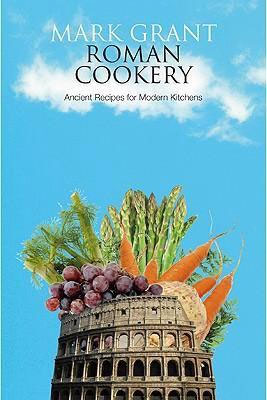
Inspired by M’s contagious enthusiasm for all things Roman, I was tempted last night to try out a particularly tasty-sounding recipe from the Roman Cooking book that M had taken into school. I love lentils, I adore lemons, and coriander is one of my favourite herbs. How could a recipe entitled ‘Lentils with Lemon and Coriander’ be anything but delicious? At least it didn’t feature those peacock brains and stuffed dormice that M had talked about.

The cookery book in question is a collection of recipes for everyday Roman food by Mark Grant. According to the blurb, he taught classics for more than twenty years, translated numerous culinary works of the ancient world and worked also as a cook and catering manager. Encouragingly for us twenty-first century cooks, he adapts his translations of Roman recipes to use modern kitchen equipment, less time-consuming methods and readily-available ingredients. There’s none of that ‘These should be put in a jar with water and left in the sun for forty days‘ stuff – simply bring the ingredients to the boil and simmer for forty minutes.

Another refreshing feature of the book is that Grant has based its recipes on more than just the writings of Apicius (who seems to have had a peculiar penchant for tender larks’ tongues and roasted flamingoes). In fact, Grant goes so far as to state in his introduction that ‘none of the recipes in this book come from the pages of Apicius, something that has not been attempted before.’ Instead of sensational recipes for lavish banquets and extravagant feasts, Grant takes the theme of everyday Roman food as his starting point. This means that his recipes offer us a singular opportunity to eat the ordinary food of the Roman Empire and taste the simple dishes of the humble wine bars, fried-fish shops and backstreet restaurants of that time.

The lenticula recipe that caught my eye yesterday comes from a series of letters on food by a sixth-century Byzantine Greek named Anthimus. Whilst Anthimus conceived these letters as advice to the Frankish king on how to eat healthily (he was, after all, a physician), his observations about food are credited now as being both the first French cookery book and the last cookbook to come out of the Roman Empire. That’s quite a reputation to have gained from the odd bit of letter-writing.

After my trip to the small Tesco (okay, I confess – I do still shop there, even after my chicken rant) in Exeter High Street failed to produce any satisfactory lentils or red wine vinegar for the recipe I wanted to try out, I eventually found the missing ingredients I needed at Carluccios. Splashing out? Perhaps. But if you’re going to do a thing properly …

The result?

O and I both agreed that we will definitely, most certainly be keeping this recipe among our favourites. Although the mix of lentils, red wine vinegar and lemons isn’t necessarily the most obvious flavour combination, it really does work. It isn’t just quirky for the sake of being exotic or adventurous. It is tasty too – something which is quite rare for an historical cookbook.

Unfortunately though, it isn’t quite so photogenic as those roasted flamingoes might have been. But hey – how pretty can a plate of lentils ever look?

Smile and wave boys, smile and wave.

Lentils with Lemon and Coriander (adapted from a recipe by Mark Grant)

200g/6 oz Umbrian lentils
1 tbsp Chianti wine vinegar
Juice of half a lemon
1 slice of lemon
1 tbsp olive oil
100ml water
2 tsp ground coriander
A handful of fresh coriander leaves
Sea salt, to taste

Boil the lentils in a pint of water (or more … ours needed extra) for about 20 to 30 minutes until tender.

Drain and rinse, then add the vinegar, lemon juice, lemon slice, olive oil, water and ground coriander.

Simmer gently for 20 minutes (with the lid on to start, then remove as necessary to reduce).

Chop the fresh coriander leaves finely (or rustically, as I did) and sprinkle them over the top of the lentils just before serving.

Ancient Roman Banquet

After L’s successful guest post in October, my younger daughter told me today that she also wanted to write a guest post for A Merrier World (not that there’s ever a hint of sibling rivalry between them, of course …) So, here is M – she is six years old and has been having a lot of fun at school this term …

We have been learning about the Ancient Romans at school. A Roman centurion came in to help us learn about them. We made shields and then we had a battle with the Year Ones. We used balls instead of cannons and swords. The Year Ones (who were supposed to be the Celts) kept on running away, so we won. The centurion also brought in some fish sauce that smelled disgusting!

Anyway, on Friday the 23rd we did a Roman presentation. I was in the Roman banquet scene. My line was, “The Romans loved holding feasts. One of the things they loved was… peacock brains!” Somebody else in the Roman banquet said they also liked surprises in their food such as doves flying out of the stomach cavity of a roasted suckling pig. We discovered that the Romans lay down to eat and that they made themselves sick so that they could eat more (but that was only in fancy banquets).

Today we had a Roman banquet in our classroom. Everyone dressed up as Romans. I was a slave who opened the door. Here’s an interesting fact – the slaves who opened the doors had to look fancy so everyone knew that the person who owned the house was rich.

Our teachers had researched lots of Ancient Roman recipes. Some of the recipes were in the cookery book that I took into school for them. At our banquet, we tasted lots of food that the Romans would have eaten. I only liked the grapes and the apple as well as the bread dipped in olive oil. I didn’t like the peacock brains, which were really just mince cooked in the oven. When we were making the peacock brains, we had to put our hands in the mince. I hated the honey cake – it looked like an omelette (and I don’t like them either!). There were some olives as well, but I didn’t try them.

For dessert, we all ate some Ancient Roman biscuits that I had baked last night with my Mum. They were called ‘serpette’ and they used honey instead of sugar. We sprinkled sugar on the top instead of sesame seeds because we thought they would be tastier that way. Unfortunately, the Romans didn’t have sugar, so that bit wouldn’t have been invented in Roman times. We made them into ‘S’ shapes like the serpette biscuits that are made today in the Castelli Romani near Rome.

My friends said that the biscuits were really delicious. They asked me how I had made them into ‘S’ shapes. I told them that we rolled some of the dough into a sausage shape and then we curled it around so that it looked like an ‘S’.

Ancient Roman Honey Serpette

12 1/2 oz plain flour
1 tsp baking powder (which the Romans didn’t have – sorry!)
1/8 teaspoon baking soda (as above … sorry!)
1/2 teaspoon salt
4 oz unsalted butter, room temperature
6 oz honey
2 eggs
1 egg white and castor sugar to sprinkle (or sesame seeds)

Put the flour, baking powder, baking soda and salt in a mixing bowl and use a whisk to mix them all together.

Use another bowl now. Put the butter and honey into it and beat them together. Add the eggs a bit at a time. Make sure that everything is mixed up very well.

Tip the flour and stuff into the bowl and mix it all together to make a dough.

Cover the dough bowl with cling film and put it into the fridge until the dough is cold and firmer.

Put the oven on to 180 degrees C.

Grease some baking trays and line them with baking parchment.

Sprinkle some flour on the work top. Roll bits of the dough into long sausage shapes. Cut them into shorter lengths and curl them to make an ‘S’ shape. Put the S’s onto the baking trays.

Brush some egg white onto the top of each serpette (this is a bit like glue) and sprinkle the tops with a bit of castor sugar.

Bake the serpette in the oven for about 7 minutes or until they are just turning golden.

Cool the serpette on a wire rack.

Eat – yum, yum!

Mothering Sunday Scones


Spring flowers and lighter evenings – it’s a lovely, hopeful time of year for celebrating motherhood.

My children proudly handed their handmade cards to me on Sunday morning whilst I enjoyed a special Mothering Sunday cup of tea in bed. M had written that she loves me because I’m cosy. T’s card told me that it’s because I make chocolate biscuits.

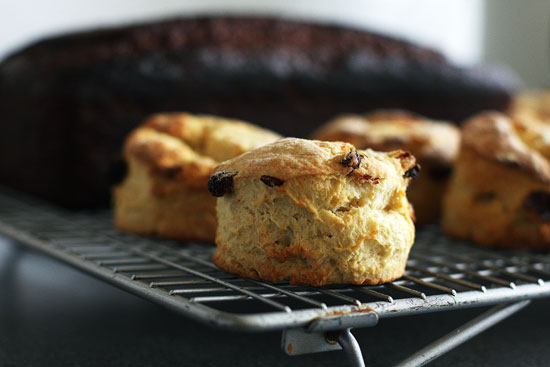
For my own Mum, I baked some fruit scones and gingerbread.

Fruit Scones (adapted from a recipe by Claire Clark)

440g/15 3/4 oz plain flour
50g/1 3/4 oz baking powder
80g/2 3/4 oz caster sugar
a pinch of salt
80g/2 3/4 oz unsalted butter, diced
40g/1 1/2 oz sultanas
150ml/5fl oz double cream
150ml/5fl oz milk

Put the flour, baking powder, sugar and salt into a large mixing bowl and whisk to combine.

Rub the butter into the flour, then stir in the sultanas.

Mix the cream and milk together. Pour onto the flour mixture and mix until the dough starts to come together. Turn out onto a lightly floured surface and knead gently to form a smooth, soft ball. Wrap this in clingfilm and chill in the fridge for 1 hour.

Preheat the oven to 200 degrees C/400 degrees F. Roll out the dough to a 2.5cm/1 inch thickness and use a 5cm/2 inch cutter to cut it into rounds. Transfer these to a baking tray lined with baking parchment.

Bake for 10 minutes until the scones are golden brown.

  • Enter your email address to subscribe to this blog and receive notifications of new posts by email.

    Join 289 other subscribers
  • Seasonal Recipes

    candied peel

    baileys chocolate truffles

    gingerbread men

    mince pies

    fudge

    smarties cookies

  • Freshly Made

  • Categories

  • Favourite Feasts

  • Awards

    DMBLGIT Award
  • Archives

  • wordpress visitor counter
  • Adventures in food by Kate Coldrick from Woodbury in Devon.