Strawberries and Rhubarb

It’s the beginning of the school Easter holidays and Spring is well underway here in Devon. We have watched the furry-covered magnolia buds bursting into full blossom in the gardens at the University where O works, and L and M have collected the fallen ‘fairy blankets’ from the ground beneath the trees. We have blue skies at last, too!

magnolias

Back at home, our garden is picking itself up after being cruelly assaulted by winter’s frosts and builders’ footsteps. Whilst I generally throw in a few suggestions of things I’d like for my kitchen pots, the main planting and sprouting of any fruit and vegetables in our garden is O’s province. However, O is in Cambridge taking exams this week, so I’ve been left in charge of the nursery. And it’s a very different kind of nursery from the one that has been my own domain for the past seven years. Instead of changing nappies and spreading cream on sore baby bottoms, I’ve found myself piling soil around newly sprouting potato plants and making sure the strawberries have just the right amount of water to drink.
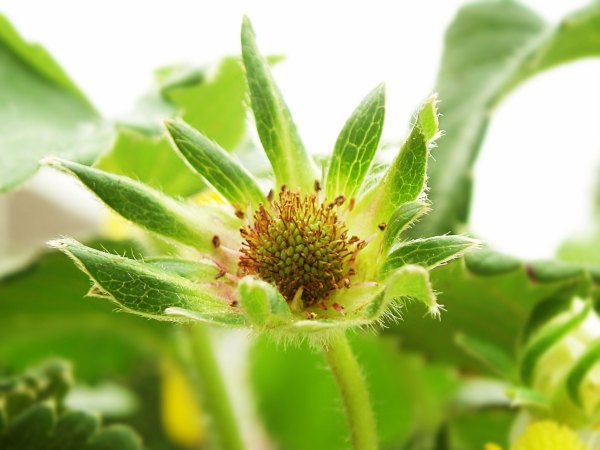
spring strawberry

Come back soon, O – having sole responsibility for these babies is terrifying me!

strawberry and flower

Although it will be a while before our strawberries are ripe and juicy-red, this time of year brings an abundant supply of strikingly rosy forced and blanched rhubarb. Not a fruit as such, it still bridges the period between autumnal apples and sweet summer berries when it comes to puddings and desserts. It may not be truly seasonal, but the warm, dark conditions in which forced rhubarb is grown produce a stem that is more tender and less stringy than the outdoor variety of later months. And the rhubarb is also an almost disconcertingly vivid pink.

rhubarb

I have fond memories of rhubarb from my childhood in the North-East of England. There are photos of my sister and me hiding under our gigantic umbrellas of rhubarb leaves whilst playing in our parents’ garden (I must note here that the leaves are toxic if consumed due to overconcentration of oxalic acid – fortunately, we never felt in the remotest way inclined to munch on a rhubarb leaf when we were little). I do remember biting into the raw stem however, dipping it into a bowl of sugar to take away the tartness of its taste. It might have been relatively unfashionable until recently in the South of England, but I wouldn’t mind betting that rhubarb never lost its popularity during those years in the allotments and gardens of the North.

So when I encountered this season’s first homegrown rhubarb yesterday at Dart’s Farm, I just couldn’t resist buying a bunch. One thing led to another … the children wanted to bake cookies, they clamoured for gingersnaps, ginger is a classic flavouring for rhubarb …

Our rhubarb pudding was inspired by a recipe from Wicked Desserts (Delicious) for simple roasted rhubarb and lemon curd pots. We made our own gingersnaps for the topping and poached rather than roasted the rhubarb pieces.

rhubarb poaching

Although orange and rhubarb are a match made in heaven, I prefer the sublime combination of rhubarb, pomegranate juice and rosewater. Divine. So that’s what I used.
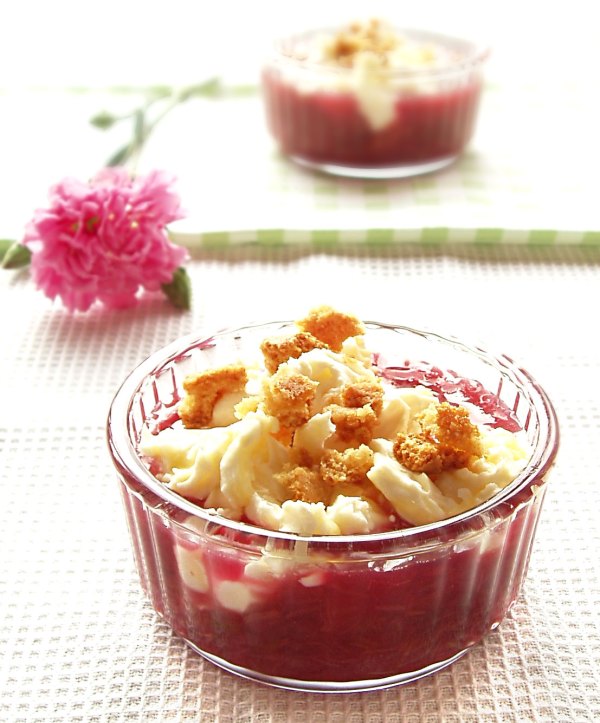
rhubarb lemon mascarpone

Rhubarb and Lemon Curd Pots

7 oz caster sugar
200 ml pomegranate juice
200 ml water
3 tbsp rosewater
1 lb forced rhubarb, cut diagonally into thin slices
1/2 oz butter
6 tbsps lemon curd
250g tub of mascarpone
4 gingersnaps (recipe here)

Place the sugar, pomegranate juice, water and rosewater in a large pan and bring to the boil. Add the rhubarb and simmer for 10 to 15 minutes to reduce. Stir in the butter. Leave to cool.

Swirl the lemon curd into the mascarpone with a knife.

Divide the poached rhubarb between 6 serving pots. Spoon the lemony mascarpone on top.

Crush the gingersnap biscuits and sprinkle the crumbs over the mascarpone.

This post is my entry to CLICK: Spring/Autumn.

Mum’s Orange Trifle

I didn’t expect to be posting anything this month. Quite aside from the usual demands on my time made by my three children, husband and cat (okay, leave the cat out of the equation – being rather proud of his nature, he’s a fairly self-sufficient and independent feline friend), my kitchen currently looks like this …

kitchen view

It certainly doesn’t inspire images of heavenly home-baking and cosy family gatherings around the warmth of the stove.

However, when I read that the theme for this month’s Sugar High Friday was Childhood Delights, I instantly thought of my Mum’s orange trifle. And I knew that here was something I could prepare with the barest of kitchen equipment still available to me (namely, a plastic jug and a microwave). Most importantly, I could not only share the wonders of my Mum’s trifle, but I could also reveal the magical secrets of … The Custard Spoon!

I never liked fruit with “bits” in it as a child. This dislike referred specifically to the seeds in berries, the pips in grapes and the stones in prunes and cherries. I still prefer jelly over jam, and have a reputation in family circles for picking the rind out of the marmalade I spread on my breakfast toast. Manufacturers hadn’t cottoned on to the idea of ‘smooth’ yoghurts for children back then, so my Mum used to patiently sieve the berries out of any yoghurts before giving them to me to eat. Of course, my aversion to ‘bits’ meant that I missed out on many of the desserts typically presented during my childhood days … berry-topped cheesecakes, summer puddings, Black Forest gateaux and trifles.

I had another strong dislike. I couldn’t stand, absolutely hated, cream. Yuk!

When I tell you that my Mum’s trifle was one of my favourite childhood desserts, it’s probably obvious that she made something slightly outside the normal cookbook understanding of ‘trifle’ for me. She used tinned mandarins in place of the more traditional raspberries and cherries, and covered the custard layer with a sprinkling of chocolate flake rather than with lashings of cream.

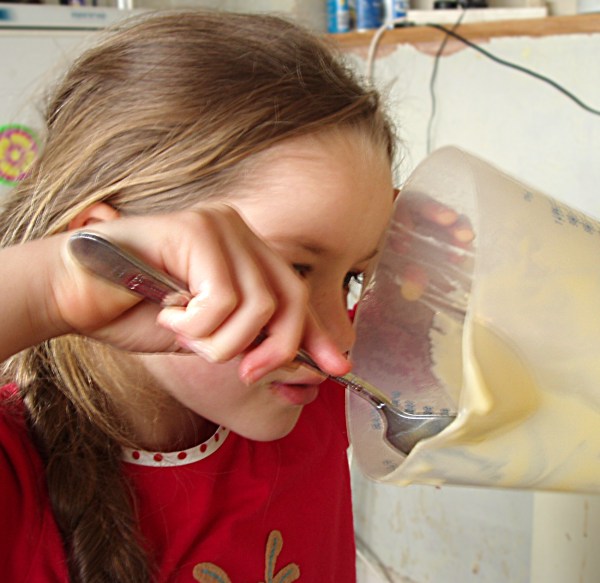
And when she made a trifle, I always got to lick The Custard Spoon. Mmmm. My girls (and probably T too, when he gets a chance), are following me in this tradition. For the best nostalgic effects, it really has to be an old-fashioned Rattail tablespoon in stainless steel from Sheffield … but as I don’t have one quite like Mum’s, we’ve found that any old spoon can be turned into a perfectly acceptable Custard Spoon.

custard spoon

Mum still makes her trifle for me, even now I’m all “growed up”. L says it’s a “Very, very good trifle and it’s really scrummy”.

When I made my own orange trifle this weekend, L and I fought over the jelly-soaked Swiss roll layer on the bottom … and I’m sure there wasn’t quite as much Flake on the top when I came to serve it as there was when I crumbled it onto the custard. Hmmm …

Mum's orange trifle

Mum’s Orange Trifle

1 Raspberry Swiss Roll
1 tin of mandarins, drained
1 Hartley’s orange jelly tablet
1/2 to 1 pint of Bird’s Custard
1 Cadbury’s Flake

(The exact amount of ingredients required varies according to the size of your dish – Mum probably uses a couple of tins of mandarins as her trifles are fairly sumptuous!)

Cut the Swiss roll into 1/2″ slices and use to line the bottom of a glass bowl or dish.

Cover with a layer of mandarins.

Make up the orange jelly according to the instructions on the packet (the microwave method is the easiest). Pour over the cake and fruit levels of the trifle until the jelly covers the mandarins (any remaining jelly can be poured into small bowls or jelly moulds). Place in the fridge and leave until the jelly is set.

Make up the custard according to the instructions on the packet. The custard needs to be thick enough to set when cold, so make sure that it boils. Leave it to cool slightly, then pour over the jelly layer. Enjoy any leftover custard with The Custard Spoon. Return the trifle to the fridge until the custard is set.

Before serving, crumble the Flake over the top of the custard.

Apple Custard Autumn: The Recipe

I’ve just been reminded that I promised the recipe for Apple Custard Cupcakes two whole months ago … so here it is (better late than never – sorry!). It’s a winning comfort-food if you were brought up on Bird’s custard powder, but I’m sure that your favourite custard recipe would be an ideal substitution for the filling if you haven’t the same homely associations as I have with licking clean the (Bird’s) custard spoon as a child (usually whenever my Mum was making an orange and Swiss Roll trifle).

applecustard

Apple Custard Cupcakes (adapted from The Australian Woman’s Weekly)

3 1/4 oz (90 g) butter, softened
1/2 tsp vanilla extract
4 oz (110 g) caster sugar
2 eggs
4 oz (110 g) self-raising flour
1 1/2 oz (30 g) custard powder
2 tbsp milk
1 apple, unpeeled, cored and finely sliced
1 1/2 oz (30 g) extra butter, melted
1 tbsp extra caster sugar
1/2 tsp ground cinnamon

Custard
1 tbsp custard powder
1 tbsp caster sugar
125 ml milk
1/4 tsp vanilla extract

Line a 12-hole muffin tray with paper cases. Preheat the oven to 180 degrees C.

Make the custard (if you’re going with Bird’s custard powder, mix a little of the milk with the powder, sugar and vanilla; heat the remaining milk until it begins to boil, then pour it onto the custard powder paste; stir to stop any lumps forming (unless you’re a traditional school dinner lady 😉 ), then pour it all back into the saucepan where it will thicken further with the residual heat).

In a large bowl, combine the butter, vanilla, sugar, eggs, sieved flour and custard powder. Mix at low speed until all ingredients are moistened, then beat at a medium speed until the mixture becomes a paler colour.

Divide half of the cake mixture among the paper cases. Spoon some custard onto each cake, then top with the remaining cake mixture. Spread the mixture to cover the custard.

Press the apple slices onto the tops of each cake.

Bake in the centre of the oven until golden – about 25 to 30 minutes.

Remove the cakes from the oven and brush the tops with melted butter while they are still hot. Sprinkle with a mixture of sugar and cinnamon. Transfer to a wire rack to cool.

Seasons of Light

A year ago, I wrote about the encroaching winter nights and the disappearing hours of sunlight. At the end of Autumn this year, we are once again closing our doors early in the evening and settling down in front of the warmth of our newly-installed woodburning stove.

From Devali, Ramadan, Sankta Lucia, Chanukah, Kwanzaa, Las Posadas, Christmas and the early European traditions of the Winter Solstice, people in Northern parts have long marked the shortest day. Although we no longer fear that the sun will disappear forever unless we succeed in persuading the gods to return it to the earth, we still celebrate the new beginnings or ‘birth’ of the sun at the winter solstice by lighting candles in the darkness and bringing evergreens and fruits into our homes as reminders of the coming Spring.

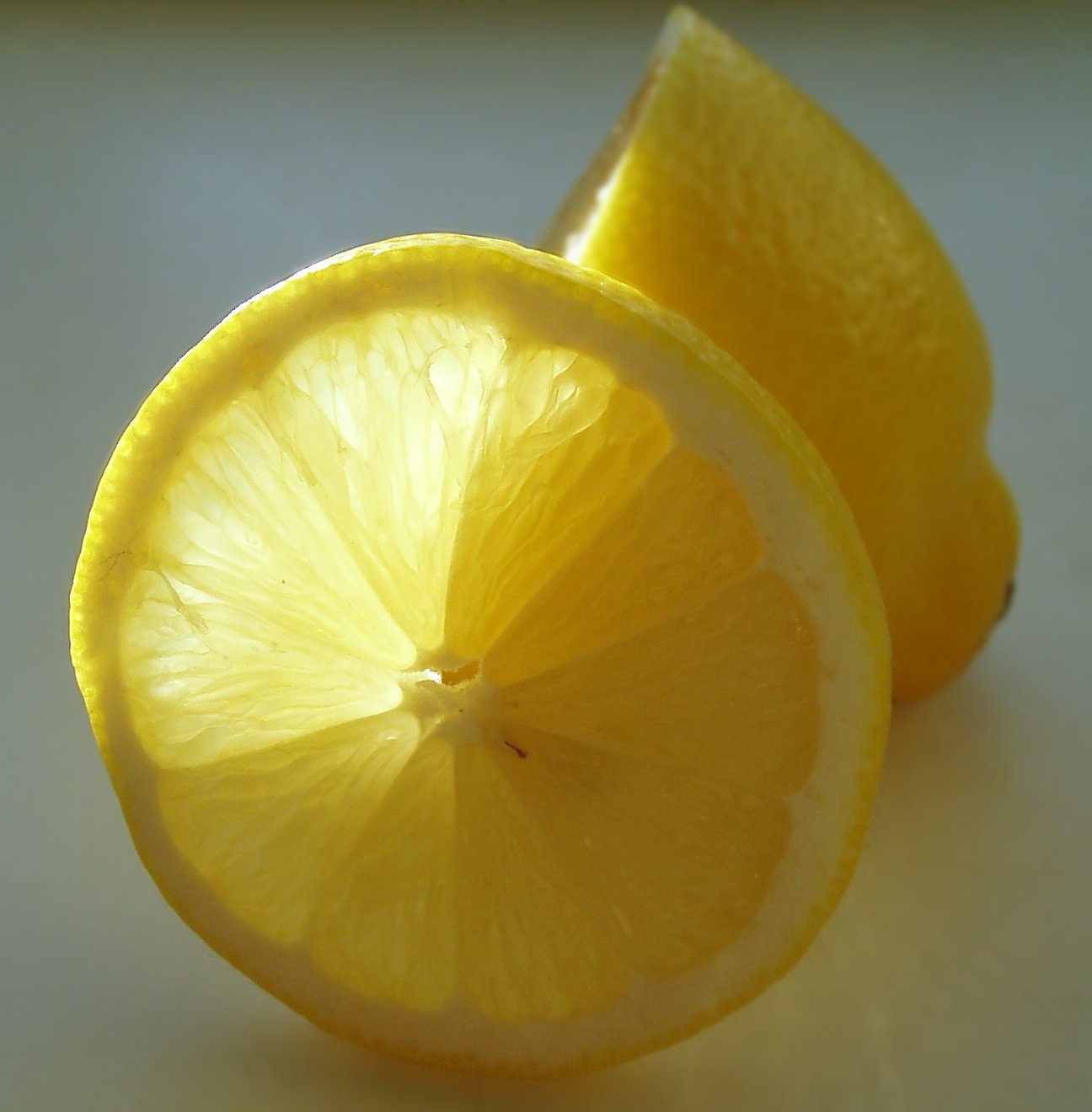
lemonlight

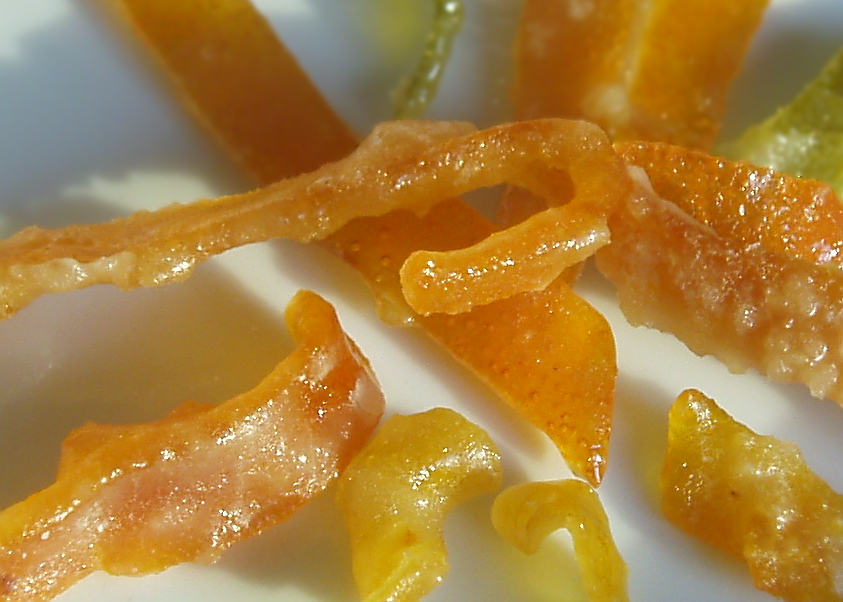
The theme for this month’s Sugar High Friday is very in tune with these Seasons of Light. Susan of The Well Seasoned Cook has asked us to celebrate all that glitters by making eye-catching, light-reflecting, irresistibly- dazzling, sweet creations. For my own contribution, I’d like to offer a recipe for candied peel with additional details this year on the easiest way I’ve found (so far) to separate the peel from the pith.

candied peel

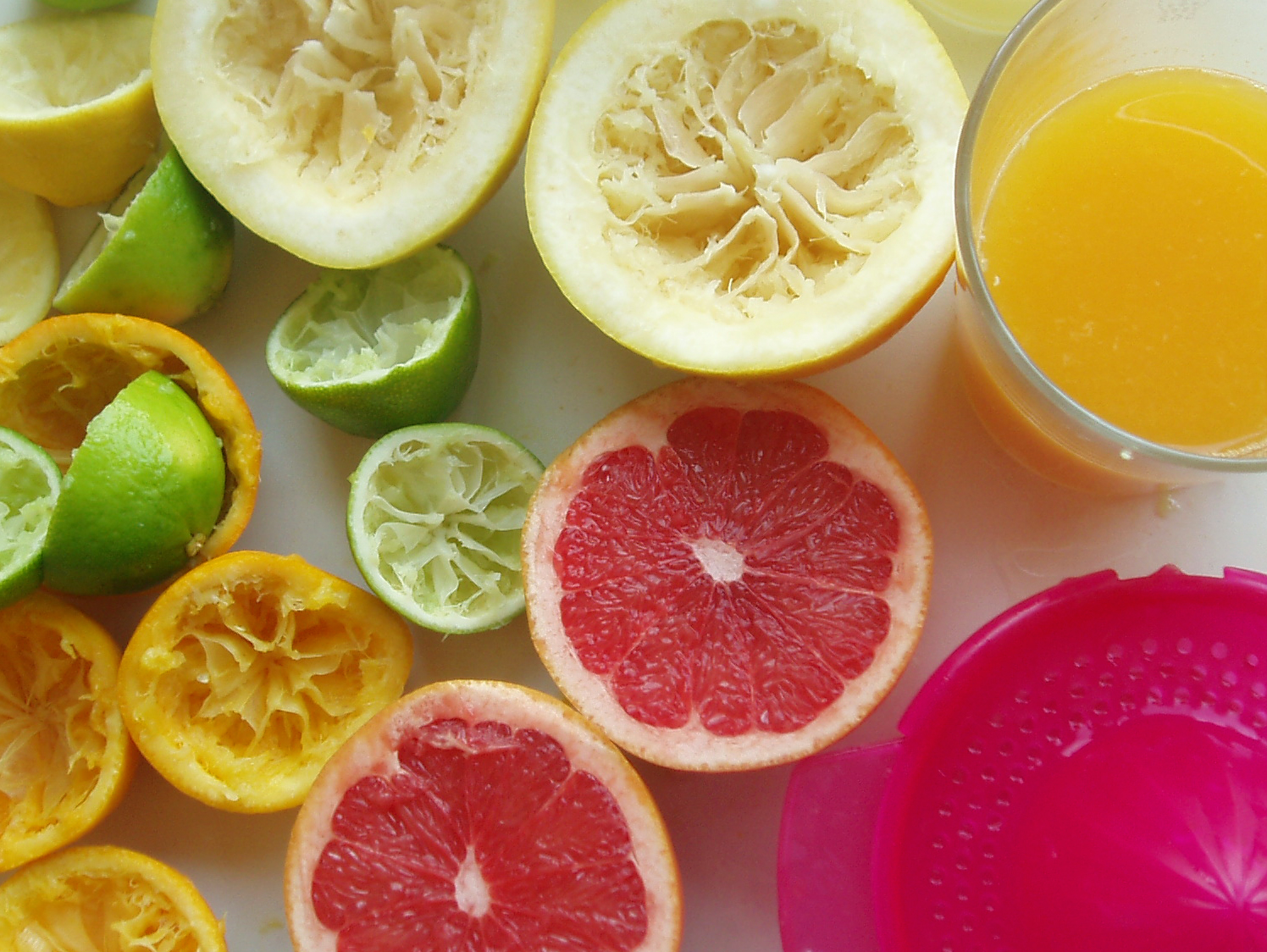
This year, I collected together an assortment of oranges, lemons, limes and grapefruits. Slicing these in half across their middles and juicing them was the easiest part of the task. The freshly-squeezed orange juice was quickly devoured by M and T. I still have to find takers for the lemon, lime and grapefruit juice mixture!

juice

I’ve made my own candied peel for three consecutive years now. In the first year, I gave most of the spoons and knives in my kitchen drawer a turn at attempting to separate the peel from the pith. I distinctly lacked the necessary technique and was lucky to be left with sufficient peel for candying after my rather heavy-handed dissection of the fruits. Last year, I gained a little in experience and realised that a pointed teaspoon was the most effective tool for the job. This year, I discovered that the larger grapefruits and oranges are easier to prepare than the smaller lemons. As well as being the smallest fruits, limes also turned out to be the most unwilling to release their peel from their pith.

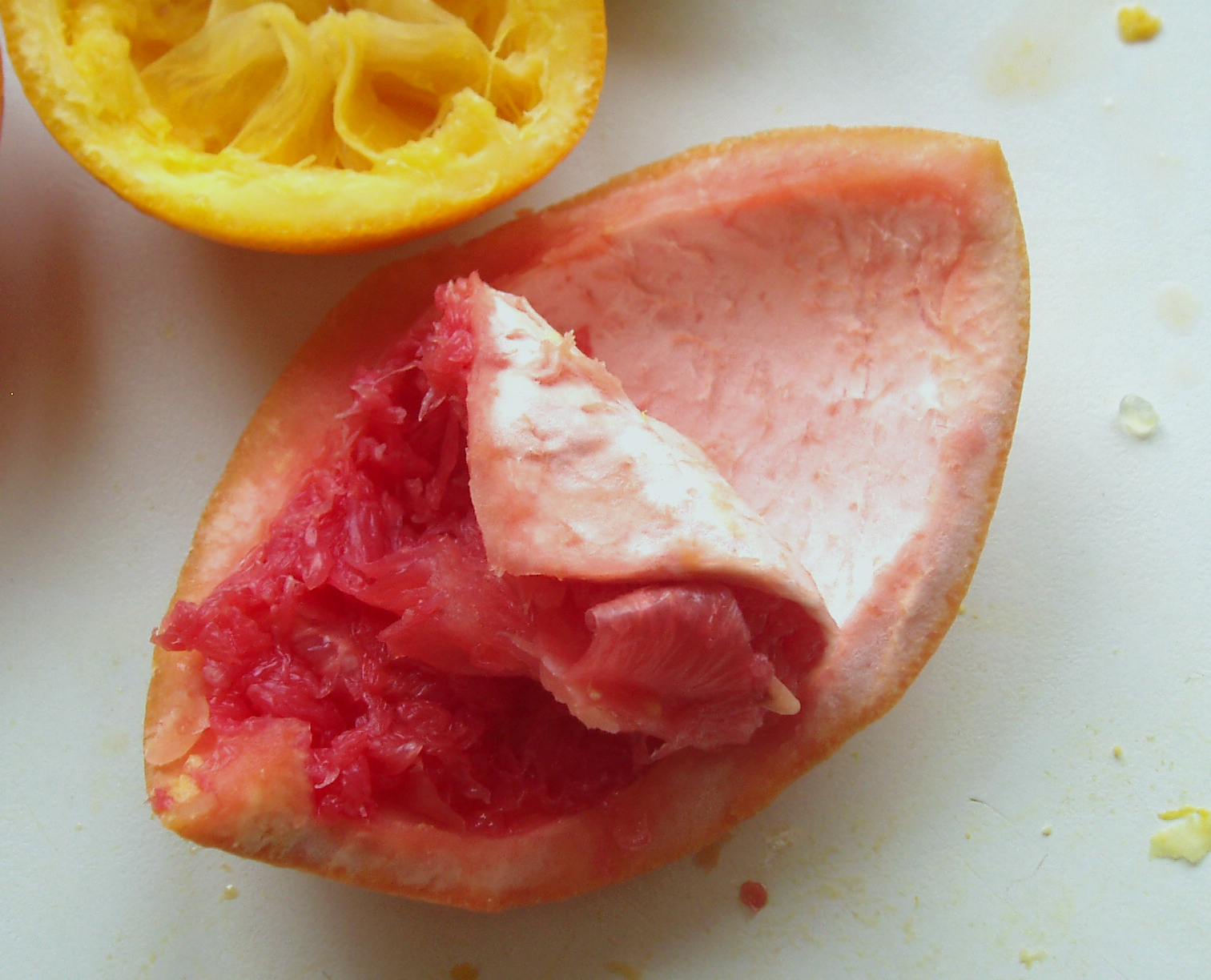
The trick seems to be to first prise away the juicy inner part from the skins (I found this easier when I first divided each fruit portion further into quarters and also cut out the knobbly, ‘tummy button’ bits):

pith

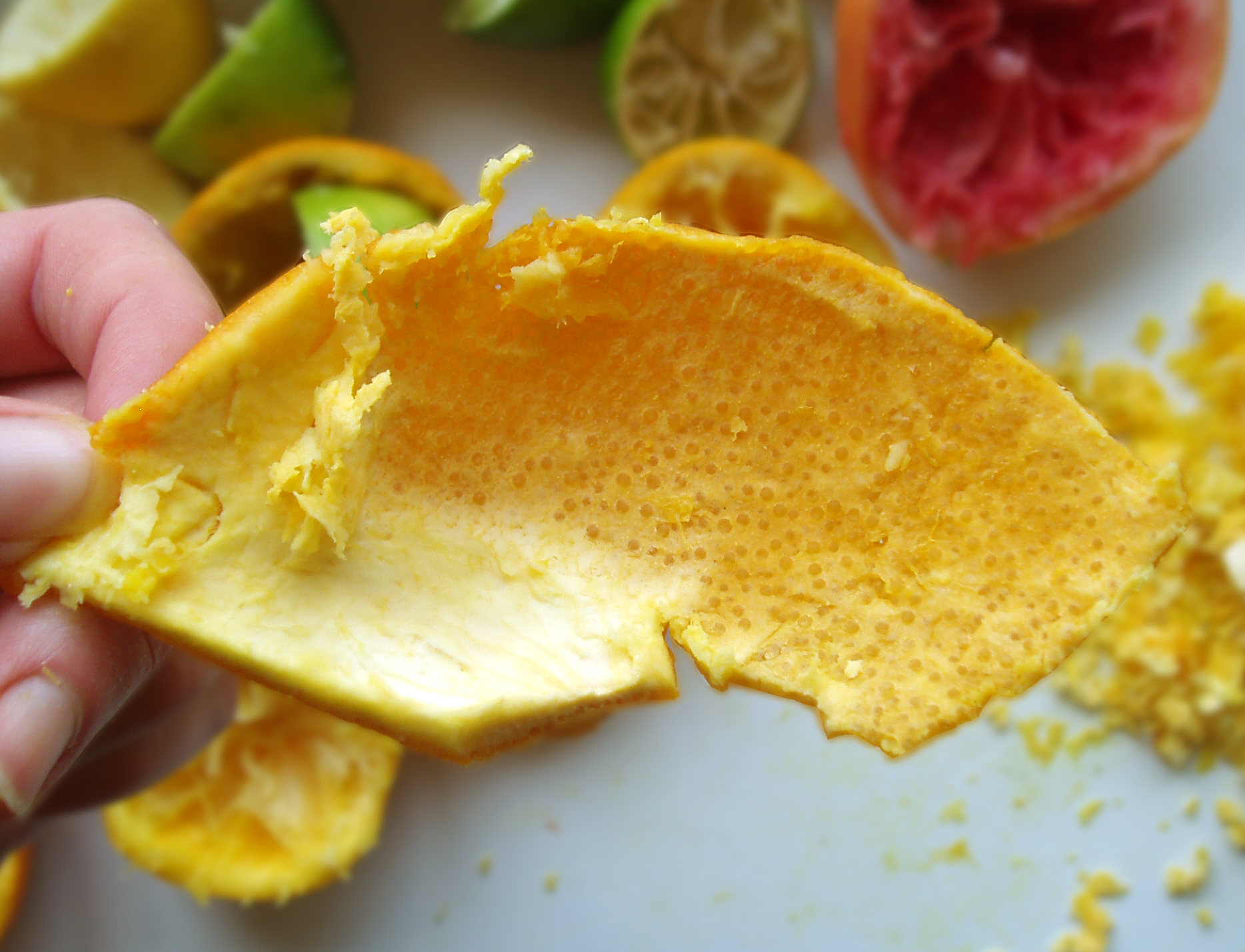
You can then use the pointed teaspoon (curved side upwards) to gently scrape away the remaining pith and reveal the underside of the dots on the fruit’s surface. It feels very much like approaching zesting from the position of being inside rather than outside the fruit!

seeingdots

Once you get this far, it really is the easiest thing in the world to boil the peel until it becomes translucent and to cut it into strips ready for candying in a sugary syrup (full details of this procedure are here).

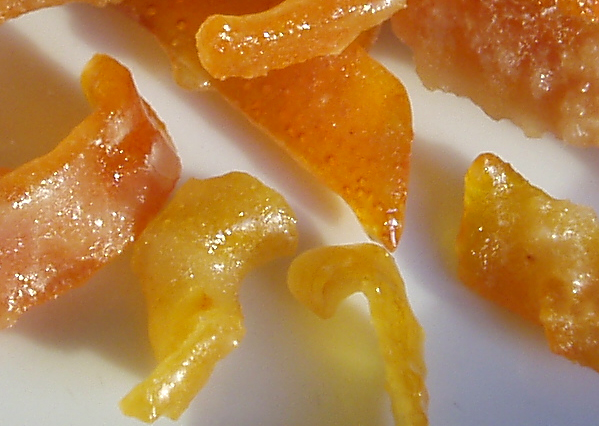
Anyone who believes (as I used to believe) that candied peel is the most disgusting thing ever, please do try some of your own. The difference between most shop-bought and homemade candied peel is quite extraordinary – instead of a soapy aftertaste, you’ll experience miniature explosions of exquisite citrus tang. I hope that you’d then agree with me that these sparkling jewels are a true celebration of all that glitters!

candiedpeel2

Mince Pies and Candied Peel

As I walked home with my children this dark evening, it was not difficult to imagine the fears of people long ago as they watched the disappearing hours of sunlight. The coming winter solstice was truly a time of celebration for them, bringing the promise of light to save their life-sustaining crops from darkness.

Here in Devon, ancient solstice festivities remain in the form of wassailing, or toasting the health of the orchard trees. Apples have long been an important part of the local economy in the West Country, so this is a serious event (despite its drunken appearance!). Gifts of cakes and cider are placed in the boughs and poured over the roots of the apple trees with much dancing and singing to safeguard the new crop of fruit.

“Apple tree prosper, bud, bloom and bear,
That we may have plenty of cider next year.
And where there’s a barrel, we hope there are ten,
That we may have cider when we come again.

With our wassail, wassail, wassail!
And joy come to our jolly wassail!”

The symbolic origins of fruits, nuts, oats and straw at this time of year can also be traced to yuletide attempts to ensure the protection of crops, fodder and grain. Fruit cake, plum pudding and mincemeat are modern-day cousins of Keltebrot, a celebratory solstice cake made from nuts, raisins, figs and dried pears.

It was only last year that I made mincemeat for the first time. All through my childhood, I had avoided mince pies believing them to be ‘Yuk’ (as my daughters say). However, with two children and a third on the way, I felt some maternal urge last December to make something ‘Chrismassy’ for my family. Fruit cakes were out – my husband’s not too keen on them. Christmas pudding? There were no takers. Mincemeat was the only option that met with approval, despite my own aversion to mince pies.

As I read through different recipes, I slowly began to wonder exactly what it was I disliked so intensely about mincemeat. The ingredients themselves posed no problem – indeed, they sounded truly delicious. Apples, raisins, sultanas, currants, spices, brandy … and then I realized. Candied peel. Store-bought, dry, soapy, sickly-sweet candied peel.

Last year, I made my own candied peel for the first time too (see my photo tutorial). And I discovered that I love mince pies!

It is now a year later and my unborn son-on-the-way of last year has just yummed up his first ever mince pie … with no left-overs. I have four jars of mincemeat (recipe by Delia Smith) in my cupboard and more to give away as presents.

And so, I am sending all my online friends my warmest holiday wishes with a batch of homemade mince pies (complete with zingy, citrusy, homemade candied peel).

Mince Pies

Candied Peel

3 oranges
2 lemons
1 1/4 cups sugar
1 1/2 cups water

Separate the peel from the oranges and lemons, reserving the juice for use as needed in mincemeat recipe.

Use a teaspoon to scrape as much of the white pith as possible away from the peel.

Place the scraped peel in a saucepan and fill with enough water to float the peel. Bring to the boil and simmer for 10 minutes.

Drain the peel, refill the saucepan with water, bring to the boil and simmer for a further 10 minutes.

Repeat this process a third time, then drain and leave the peel to cool.

Use scissors to cut the peel into thin strips.

Place the sugar and water in a saucepan, bring to the boil and simmer for 5 minutes. Add the strips of peel. Simmer on a low heat until there is no more than a couple of spoonfuls of syrup left in the saucepan. Watch carefully at this stage to ensure the peel does not burn.

Use a fork to spread the peel on wire racks to cool. These can be placed in an ever-so-slightly warmed oven to speed the drying.

The dried candied peel can be stored in airtight jars, dipped in chocolate or used in a multitude of different recipes, including those for mincemeat.

  • Enter your email address to subscribe to this blog and receive notifications of new posts by email.

    Join 289 other subscribers
  • Seasonal Recipes

    candied peel

    baileys chocolate truffles

    gingerbread men

    mince pies

    fudge

    smarties cookies

  • Freshly Made

  • Categories

  • Favourite Feasts

  • Awards

    DMBLGIT Award
  • Archives

  • wordpress visitor counter
  • Adventures in food by Kate Coldrick from Woodbury in Devon.