Couture Chocolate

I’m lucky – my husband hates chocolate. Unfortunately, my three children all have sweet teeth and I’ve been forced to watch my own share of all our chocolate bars dwindle over the years to become a paltry quarter of what it was in the days before weaning. The only upside to this state of affairs is that I now have an enthusiastic army of homegrown tasters on ever-ready standby from the instant I even begin to think about baking with chocolate.

My experiences with chocolate so far however have revolved mostly around the themes of brownies, chips in cookies and simple dipping projects. Despite spending an enjoyable morning with Zach Townsend at the top of the Tour Montparnasse, I was disappointed to find afterwards that none of his expert chocolatier skill had rubbed off on me when we shook hands. I still tremble at the thought of tempering and steadfastly avoid any form of moulding or modelling. It’s those temperamental sugar crystals that get me – the way they want to clump together at the slightest opportunity. My aversion to working with chocolate goes hand in hand with my fear of boiling sugary syrups. And as for seeding … well really, that’s something for gardeners, isn’t it?

And then I was invited to review William Curley’s new book, Couture Chocolate. I have to confess that I fell in love with this book from the moment I held it in my hands. Not only is it superbly illustrated with mouthwatering photography …. but it smells good too. Honestly, it does! Just bury your nose deep into the binding of the open pages and you’ll see what I mean. But best of all, this book does exactly what it says on the cover – more than just a coffee table book, this really is A Masterclass in Chocolate.
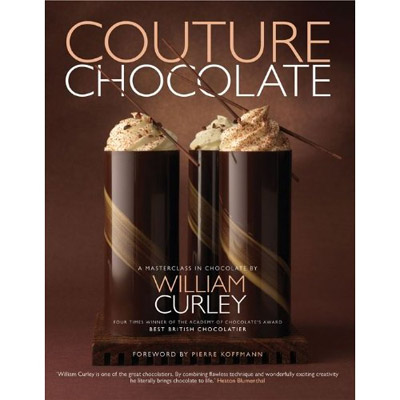
William Curley is uniquely placed to direct this masterclass. Four times winner of the Academy of Chocolate‘s Chocolatier of the Year Award, he trained in some of the world’s finest Michelin-starred kitchens and was the youngest appointed Chef Patissier at The Savoy. From the opening chapters on the history and production of chocolate, through clear instructions on techniques for tempering and decorating, and with exquisite recipes for truffles, couture chocolates, bars, bouchées, cakes, patisserie and ice cream, Curley’s expert guide provides insight into the ideas and inspirations behind his work.

The recipes aren’t quick and simple. Curley uses quality ingredients and an array of specialist equipment that will probably require a trip to Amazon for most home bakers like me. Far from appearing daunting however, the recipes are broken down into manageable chunks throughout and combine practical tips with step-by-step photography. Recipes are included for many of the flavours and chocolate creations on sale in his own William Curley shops in Richmond and Belgravia, such as the Florentine Sablés and Salted Butter and Muscovado Caramel Chocolates (the highest marked chocolate in the Academy of Chocolate Awards 2011).

Curley frequently draws on a Japanese palette of flavours to create new fusions in his work. There are recipes for Matcha and Dark Chocolate Entremet, Chocolate Financiers with Yuzu Ganache, Chestnut and Sesame Brownies, and Green Tea Couture Chocolates. He attributes the inspiration behind these creations to his partnership with Japanese patissier Suzue – they met while they were both working at The Savoy in London and later married and opened their first shop together.

Perhaps the thing that inspires me the most about this book however is the knowledge that the stunning chocolates and intricate patisserie displayed in William Curley’s London shops are created in much the same way as detailed in these recipes. Although Curley’s staff have the advantage of some time-saving bits of machinery, the emphasis is firmly on using craft skills. As Curley points out, “I don’t want to have big cooling tunnels or machines that pump the ganache into shells. I want my team to make the ganache and understand the quality of the ingredients, and for everything to have that hand-made finish.” So … the ultimate implication is that Curley-quality creations are within the reach of every home baker if they take the time and care to follow this masterclass in chocolate.

Well, everyone needs a dream, don’t they?
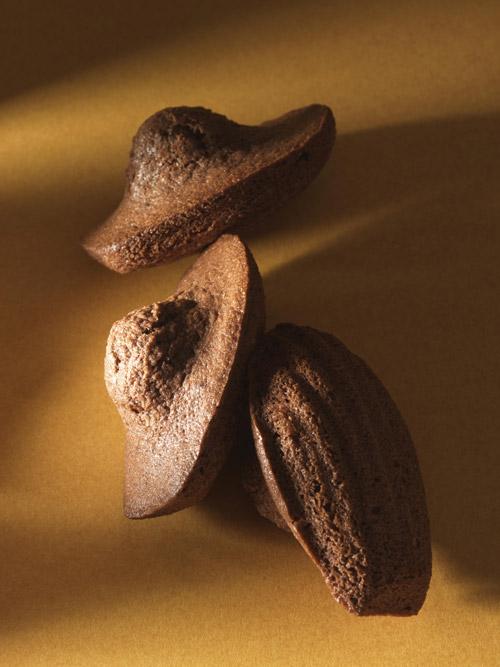
Chocolate Madeleines (reprinted from Couture Chocolate by William Curley with permission from the publishers)

When I worked for Marco we would bake these little French treats to order for petit fours as they are best eaten fresh as possible.

Makes about 20 cakes
15g (½oz) fine dark (bittersweet) chocolate (70% cocoa solids), roughly chopped
115g (4oz/ 1 stick plus 1 tbsp) unsalted butter, plus a little extra, softened, for greasing the mould
115g (4oz/¾ cup) plain (all-purpose) flour, plus a little extra for dusting the mould
20g (¾oz/1 tbsp) cocoa powder
3g (½ tsp) baking powder
135g (5oz/scant ⅔ cup) caster (superfine) sugar
175g (6oz) egg yolks (about 9 eggs), beaten

Note: You will need a 12-hole madeleine mould.

Grease with butter and lightly flour a 12-hole madeleine mould. Melt the chocolate over a bain-marie (water bath) until it reaches 45°C (113°F) and leave to cool. Melt the butter in a saucepan and also leave to cool. Sift the flour, cocoa powder and baking powder into a bowl and then mix in the sugar. Add the dry ingredients to the beaten egg yolks in a large bowl and mix with a wooden spoon until smooth. Gradually add the melted butter, being careful not to beat in air. Then mix in the melted chocolate. Cover the bowl with cling film (plastic wrap) and leave to rest for at least 30 minutes in a cool place.

When you are ready to cook the madeleines, preheat the oven to 220°C (400°F/Gas 6). Pipe or spoon the mixture into the prepared mould and bake in the preheated oven for about 12-15 minutes until risen and the cakes spring back when pressed.

Cookies for Uncle Mark

I’d like to talk to you for a moment about my brother-in-law, keeping my fingers crossed that he won’t mind too much that I’m doing so. The recipes I’m about to present won’t really make much sense without hearing just a little of his story.

Uncle Mark, as he is known by my children, has been seriously ill over the course of the last two years. A grueling combination of surgery, intensive chemotherapy and radiotherapy, whilst largely achieving its goals, has unfortunately also had some unwanted consequences. Considering Uncle Mark’s passion for cheese and chocolate, it seems to be especially cruel that he is now no longer able to digest fats.

Low-fat and fat-free cooking throws up its own challenges, none felt more keenly than in the area of baking. At Christmas last year, I made a fatless chocolate/raspberry cake that Uncle Mark (perhaps politely?) complimented by carrying home the left-overs. It may have been the brandy syrup with which I laced the cake … but Aunty Lucy emailed me to ask for the recipe.

Following this apparent success, I wondered whether he might also like a couple of low-fat cookie recipes and decided to do a spot of online research to discover the principles of fatless baking. I stumbled upon a goldmine of information on fruitful fat substitutes by Sandra Woodruff, excerpted from her book, The Best-Kept Secrets of Healthy Cooking. Rather than reproduce her insights here, I’ll leave you to find out which conversions give the best results, how to calculate the amount of fruit to use, how to avoid toughness when eliminating fats, how long to bake your fat-free goodies for and at what temperature by clicking on the links above.

And when you’ve done that, please do return here for some As-Fat-Free-as-Possible Banoffee Cookies and Melt-in-the-Mouth Gingerbread.

To Uncle Mark, with love.
xxx

Errr … yes, that photo does have chocolate chips in it, and no, they’re not fat-free. Sorry. It’s just that I wanted to test out the cookies on my children before offering the recipes to Uncle Mark, and T helped with the baking … I’m sure you get the picture. You could pretend that they’re brandy-soaked raisins, if that helps …

Banoffee Cookies

3 1/2 oz mashed banana
5 1/2 oz granulated sugar
6 1/2 oz light muscovado sugar
1 tsp vanilla extract
3 egg whites (3 1/2 oz without shells)
2 oz porridge oats, blitzed to a flour in a food processor
8 oz plain flour
4 oz rice flour
1 tsp baking soda/bicarbonate of soda
1 tsp salt
7 oz raisins, soaked for 10 mins in a little hot water or brandy, then strained

Preheat the oven to 180 degrees C.

Beat together the banana and sugars in a large mixing bowl.

Add the vanilla and egg whites gradually, beating to incorporate.

Stir in the dry ingredients, mixing until just combined. Add the drained raisins and stir to incorporate evenly.

Drop generous tablespoons of the dough onto parchment-lined baking trays (allow room for spreading). The dough is very sticky, so the parchment lining really helps here when removing the cookies after baking.

Bake for 8-9 minutes (8 minutes gives toffee pools, whilst 9 mins gives a drier cookie).

Remove with a spatula and allow to cool on wire racks.

Makes c. 23 cookies.

Gingerbread Cookies

1 oz pitted dates, finely chopped
2 1/2 oz sweet potato purée
5 oz castor sugar
7 oz dark muscovado sugar
1 tsp whisky
2 eggs (3 1/2 oz without shells)
2 1/4 oz porridge oats, blitzed to a flour in a food processor
9 oz plain flour
4 oz rice flour
1 tsp baking soda/bicarbonate of soda
1 tsp salt
1 tbsp ground ginger

Preheat the oven to 180 degrees C.

Beat together the dates, sweet potato and sugars in a large mixing bowl.

Add the whisky and eggs gradually, beating to incorporate.

Stir in the dry ingredients, mixing until just combined.

Roll generous tablespoons of the dough into balls. Place on an ungreased baking tray and squash to a 3/4  inch thickness with a spatula, the heel of your hand or the back of a fork.

Bake for 8 minutes.

Remove with a spatula and allow to cool on wire racks.

Makes c. 23 cookies.

Baked Beans for Cold Days

I have a cold. My head aches, my eyes are streaming and my nose is dripping. Drip, sniff, drip, sniff, sneeze.

L also has a bug, only she has managed to sing her way through her choir practice and leap about in her Grade 3 ballet exam this weekend. Oh – and keep me awake most of the night too. But we won’t talk about that.

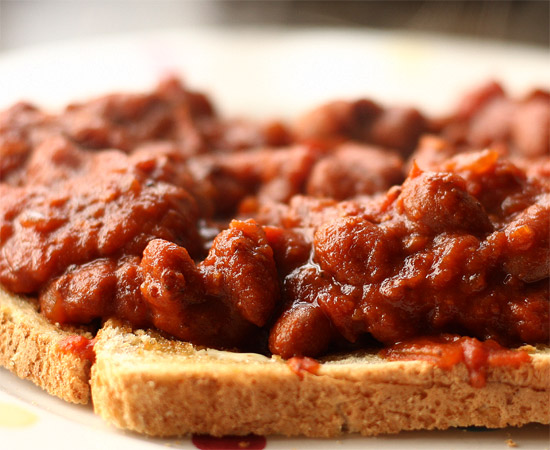
One of my favourite cookbooks for cold days like these is Ainsley Harriott’s Feel-Good Cookbook. And one of the ultimate feel-good, comfort foods has to be baked beans on toast.

Well, how lucky can I be? There’s a recipe for Best Boston Baked Beans on page 28 of Ainsley’s book. Only I can’t wait 8 hours for the beans to soak. And I don’t have any belly pork. And I want my comfort fix tonight, before my shivering limbs collapse me into a little heap on the kitchen floor and I can’t scrape together the energy to open a can let alone stir a large, simmering pot with a wooden spoon.

So you’ll see, if you have Ainsley’s cookbook, that I took a few shortcuts. And because I didn’t soak any beans, I didn’t have any soaking liquid, so I had to make a few alterations there, too.

Apologies in advance if anyone follows this recipe and thinks they have ended up with a huge stonking amount of baked beans. If you aren’t seeking as much comfort as I was when I doubled Ainsley’s recipe, feel free to halve the amounts below. But don’t blame me if you find yourself wishing you’d made more. I’m convinced the feel-good factor of this dish increases exponentially the more of it there is.

Baked Beans (adapted from a recipe by Ainsley Harriott)

4 tbsp olive oil
2 onions, diced
6 garlic cloves, crushed
4 tsp English mustard powder
4 tbsp light muscovado sugar
4 tbsp molasses sugar
1 tsp smoked paprika
2 tbsp tomato puree
800g (2 tins) chopped tomatoes
8 slices of unsmoked streaky bacon
470g (2 tins) tinned borlotti beans, drained
1 pint chicken stock
1/2 pint water
2 bay leaves
2 tsp dried thyme
salt and freshly ground black pepper

Preheat the oven to 160 degrees C/ 310 degrees F.

Heat the oil in a large casserole pan. Add the onion and cook gently until it softens and begins to caramelise.

Stir in the garlic, mustard powder, sugars, paprika and tomato puree. Cook gently for a minute, stirring to prevent the mixture sticking to the bottom of the pan.

Add the chopped tomatoes and stir.

Cut the bacon into small pieces and add to the pot.

Add the beans, stock, water, bay leaves and thyme. Stir thoroughly and bring to the boil. Cover the pot with a tight-fitting lid and cook in the oven for 3 1/2 to 4 hours until the beans are soft and the sauce has thickened (stir occasionally during this cooking time to make sure that the sauce doesn’t dry out).

Season and eat on thick slices of hot buttered toast.

His Hat Was Made of Good Cream Cheese

It is unusual for O to request a dessert. He’s more of a meat-and-two-veg sort of person really. By some quirk of genetic fate, none of his teeth are of the sweet variety.

I tend to forget this fact when planning a menu for guests and invariably end up asking him, “What should we have for dessert?” His disgusted expression as he then contemplates the various sugary options makes me wonder if perhaps I’d just asked him to choose from a range of particularly gruesome and bloody death scenarios by mistake.

“Should we torture our guests with a red hot poker or serve up their severed heads on the silver platters?”

“Don’t we need the silver platters for the fish course, darling? Perhaps the red hot pokers would save on the washing-up.”

Last weekend however, O surprised me. We were standing in the kitchen discussing the popular choices of pizza toppings in preparation for a dinner with family and friends when I inevitably forgot and asked THE question, “What should we have for dessert?”

“Cheesecake,” he replied.

I was stunned. Here was an endorsement more compelling than that of any celebrity chef. O had just requested cheesecake!

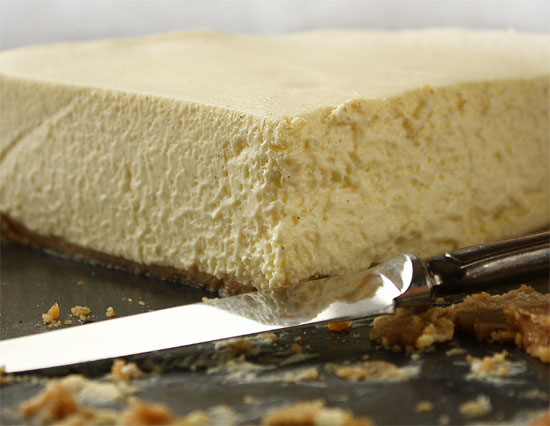
This is how we came to discover Rose’s superb No-Bake Whipped Cream Cheesecake from her latest book, Rose’s Heavenly Cakes.

When I was little and it was the 1970s, cheesecakes were apparently in fashion at dinner parties. I can remember standing on tiptoe to spot the berry-topped creations among the Black Forest Gateaux and cans of squirty cream adorning the dining room table.  Seeing the shining cherries and blackcurrants that smothered the entire surface of every cheesecake I saw back then, I naturally assumed these berries were an inescapable part of the tasting experience. I had an intense dislike of forest fruits and therefore refused to sample even the tiniest morsel of a cheesecake.

Then came that fateful dinner party when the hostess, disturbed at the thought of letting a small child go without dessert, remarked that there were some plain cheesecakes still waiting in the kitchen for their toppings. Would I like to try a slice of one of those, without the berries?

I didn’t try just one slice. Falling instantly in love with the smoothness of the filling and the saltiness of the biscuit-crumb base, I ate so many slices that I promptly felt very sick indeed.

My love affair with the cheesecake was swift and cruel. Unable to forget my self-induced nausea, I couldn’t bring myself to eat cheesecake again for at least another ten years.

Perhaps these memories saved me from a similar fate last weekend, for I would certainly have been far less restrained otherwise when serving myself extra slices of Rose’s no-bake cheesecake. A sublime lightness and creaminess elevate this cheesecake way beyond the sum of its parts. And when I tell you that those parts include a crème anglaise made with crème fraîche and an italian meringue laced with fresh lemon juice, you will know how serious I am about this cheesecake.

Of course, O hasn’t become a newly-converted, sweet-toothed fan of all things sugary following his uncharacteristic request. My hidden chocolate bars are still safe unless my secret hideaway is rumbled by my children. Whilst O certainly enjoyed his slice of cheesecake and appreciated its superior qualities, he’s a die-hard lover of cheese in its purest form at heart.

With three wild children and a long-haired cat running through the rooms, our house makes an unlikely dairy for cheesemaking. Scrupulously clean, we are not.

There is one form of cheese that is within our grasp however, and that is ricotta.

Creamy, rich and tangy, ricotta is traditionally made in Italy from the leftover whey after the process of cheesemaking. A simpler option for those with only a kitchen stove at hand is to heat a mixture of whole milk and acid gently until the curds separate from the whey. These can then be easily removed with nothing more technical than a colander and cheesecloth. Indeed, the most challenging part of the whole procedure is in resisting eating all of the warm, milky ricotta within a few minutes of its production.

I don’t think that I left the whey to drain from the curds for quite long enough this time though, which is a shame because I used whole goat’s milk for this ricotta and O was particularly looking forward to it. It was still quite delicious in a runny rather than fluffy sort of way, but you had to catch it quickly before it dribbled over the edges of the oatcakes!

O says that he’d prefer “more goat, less cream” next time, so the challenge has been set. I’ll try not to bore you too  much with news of my quest to produce a goat’s milk cheese that satisfies my husband’s exacting standards, but I do feel that I owe it to him as a reward for pushing me towards discovering my new favourite cheesecake recipe.

And his hat was made of good cream cheese …

Creamy Goat’s Milk Ricotta (adapted from a recipe by Julia Moskin)

1 litre whole goat’s milk
250ml double cream
190ml buttermilk
3/4 teaspoon salt

Prepare a sieve or colander lined with a cheesecloth or muslin (folded if necessary) over a large bowl.

Place all the ingredients in a large, heavy-bottomed, non-reactive (stainless steel or enameled – something that won’t react with acid or brine) pot and heat slowly to between 80 and 90 degrees C (175 to 200 degrees F). Stir frequently as the liquid warms but stop stirring once the curds have started separating from the whey.

Remove from the heat and pour into the cheesecloth-lined sieve.

Gather together the ends of the cheesecloth and twist to bring the curds together. Do not squeeze.

Allow to drain for 15 to 30 minutes more and then spoon the ricotta into airtight containers. Refrigerate and use within a week.

Don’t discard the whey! It can be used in many recipes (e.g. pancakes, muffins, sauces) in place of buttermilk or sour cream and will keep for up to a week in the fridge.

Oatcakes (adapted from ‘Scots Cooking‘ by Sue Lawrence)

175g/6oz medium oatmeal
50g/20z pinhead oatmeal
1/2 teaspoon salt
1/4 teaspoon baking powder
25g/10z butter, melted
about 50-75ml/2-3fl oz boiling water

Preheat the oven to 170 degrees C  (325 degrees F).

Combine all the ingredients together in a mixing bowl. Add the melted butter and enough boiling water to form a stiff dough when stirred.

Sprinkle some medium oatmeal over a board. Roll out the mixture gently to about 1/4 inch thickness (depending on how thin/thick you like your oatcakes). Use a biscuit cutter to cut out circles of the dough.

Use a spatula to transfer the rounds carefully to a buttered baking tray.

Bake in the oven until just firm (10 to 20 minutes depending on the size of your circles).

Transfer carefully to a wire cooling rack.

Store in an airtight container when completely cooled (you can keep them crisp by storing them buried in porridge oats).

Cupcake Hug

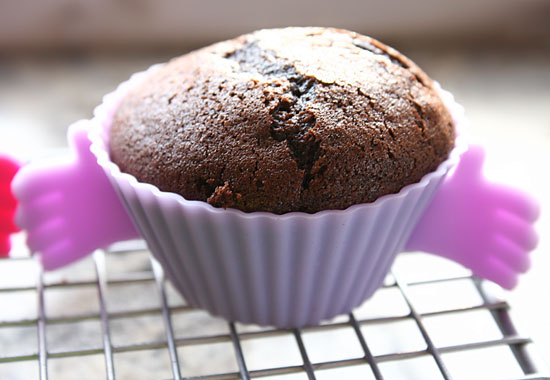
Here’s a celebratory cupcake hug for Rose, whose latest book, Rose’s Heavenly Cakes, has been named Cookbook of the Year by the International Association of Culinary Professionals 🙂 .

Congrats, Rose!

  • Enter your email address to subscribe to this blog and receive notifications of new posts by email.

    Join 289 other subscribers
  • Seasonal Recipes

    candied peel

    baileys chocolate truffles

    gingerbread men

    mince pies

    fudge

    smarties cookies

  • Freshly Made

  • Categories

  • Favourite Feasts

  • Awards

    DMBLGIT Award
  • Archives

  • wordpress visitor counter
  • Adventures in food by Kate Coldrick from Woodbury in Devon.