Cow Pat Crunch

My husband is almost entirely without a sweet tooth. He wishes I would devote my time to making cheese rather than cakes and cookies. Until my son came along, he was convinced that chocolate was a ‘girl thing’. However, he has recently been craving something he calls ‘Cow Pat Crunch’.

It turned out that ‘Cow Pat Crunch’ was a dessert from his childhood, boarding-school days. He described it to me as a chocolatey topping with dollops of cream on a crushed-biscuit base. Hmm.

Angel Delight?” I suspected.

“No, no, no,” he assured me.

“… a tasty and convenient powdered pudding that’s quick and easy to make – just add milk and whip!”

He would never have liked it if it had been Angel Delight … would he?

With friends coming for dinner yesterday evening, I decided to phone his former housemistress to discover this winning recipe. She was tickled pink to hear about my husband’s fond memories of her cooking. The ingredients … 6 to 8 oz of McVitie’s Digestive biscuits, 3 to 4 oz of butter … and a packet of Angel Delight, she confided!

Well, here we have a faithful reproduction of the original Cow Pat Crunch. Somewhat amusingly, it passed my husband’s (blind) taste test!

Cow Pat Crunch

Excellent Small Cakes

I am indebted to Jennifer Soucy (aka Lady Guenièvre de Monmarché) for wondering aloud about a recipe from the 17th century. The recipe is from a collection by Sir Kenelm Digby of his favourite pies, roasts, stews, jams, mead and cakes. Entitled The Closet of Sir Kenelm Digby Knight Opened, the culinary notebook was first printed in London in 1669. The fascinating part is that in Digby’s recipe for Excellent Small Cakes, he instructs the cook to “take three pound of very fine flower well dryed by the fire …”

It appears that Digby’s cakes are typically dense and tough when made today. Many modern redactions significantly alter the original proportions of ingredients in an attempt to lighten the texture of these cookie-like cakes. Having read about kate flour, Jennifer was reminded of Digby’s instruction to dry the flour well by the fire before using, and confessed that she had never followed this step in the procedure. Could this be the missing link?

I was intrigued. The implications are far-reaching … were the Elizabethans well-versed in the heat-treatment of flour? The food historian Alice Ross has described how baking in the 17th and 18th centuries often involved lengthy preparations:

“It must have required a few days just to get the ingredients ready – to pound the sugar into fine crystalline form, grind spices, stone raisins, cut imported candied citron fine, to cleanse the flour with several siftings, and to dry it at the hearth to remove excess moisture.”

It is easy to imagine that bakers were primed to pay specific attention to the level of moisture in the flour they were using. Did they discover that some recipes produced better results according to how well the flour had been dried? Looking through other recipes for cakes in Digby’s collection, it is noticeable that the only recipe requiring ‘flower well dryed by the fire’ is the recipe for ‘Excellent Small Cakes’. If he felt the need to include this instruction in a single recipe, he presumably considered it to be an important detail.

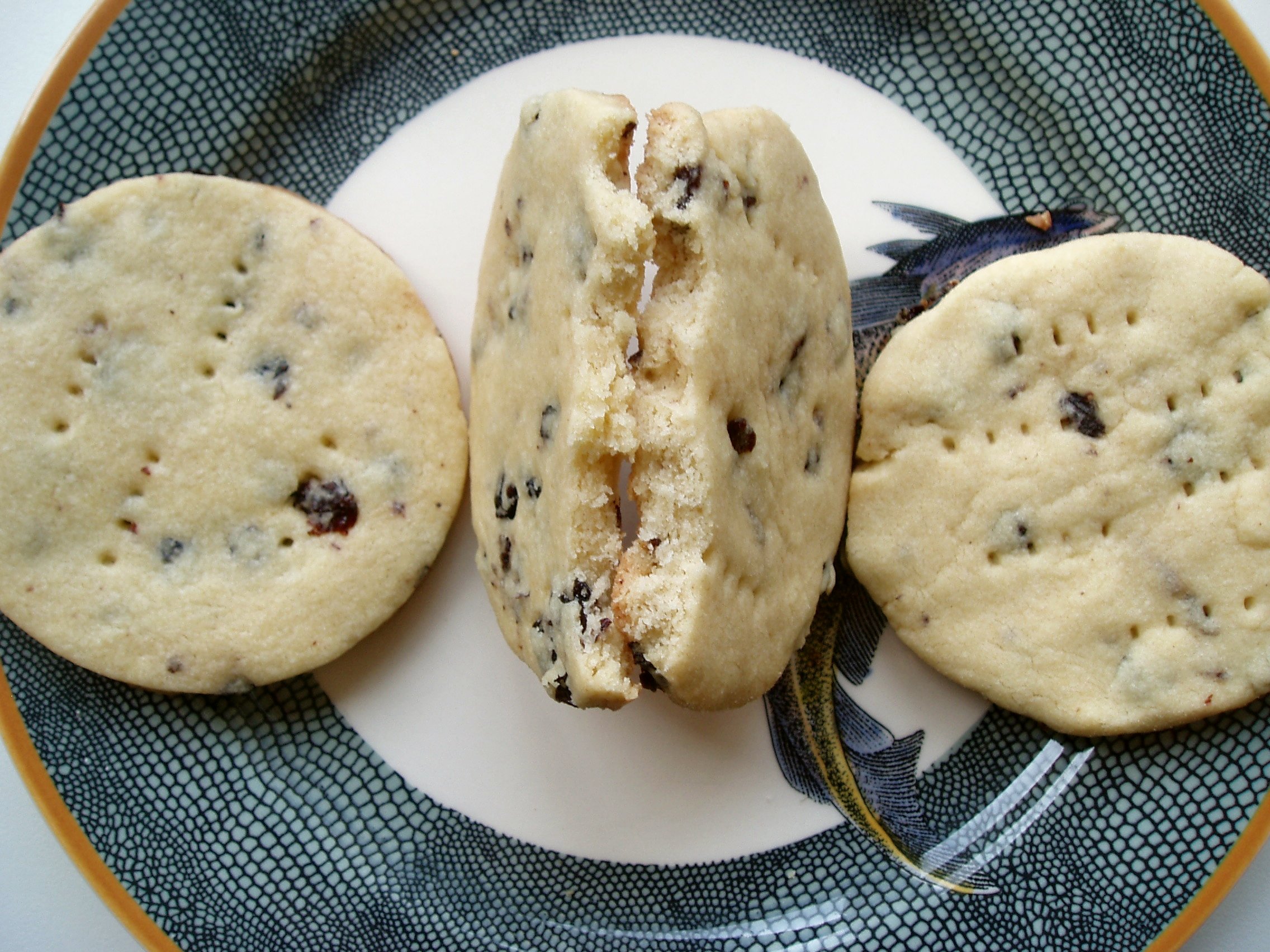
You can probably guess what happened next. Yup – I have just made two batches of Digby cakes, one using kate flour (far) and the other using untreated flour (near).

Excellent Small Cakes

The dough made with kate flour was less easy to work with than that made with untreated flour. I flattened it with my hands and then rolled it to about 1/4 inch thickness. I used a round cookie cutter to cut circles and picked them up by squeezing the edges slightly as I lifted them. The untreated-flour dough was moister. It rolled out better and the circles were less fragile. I was able to transfer these more easily than the kate-flour circles to a lightly greased baking sheet.

Although the untreated-flour dough certainly scored more points in terms of handling, the kate-flour ‘cakes’ (pictured on the right) won hands down when it came to taste and texture. They rose slightly higher than the untreated-flour cakes, had an open cake-like crumb and were meltingly delicious to eat. The untreated-flour cakes (pictured on the left) were dense, tough and chewy – hardly what I’d describe as either ‘excellent’ or ‘small cakes’.

Side by Side Comparison

Excellent Small Cakes
My scaled redaction of an original recipe by Sir Kenelm Digby

450g / 16 oz cake (or kate) flour
225g / 8 oz caster sugar
113g / 4 oz dried currants
225g / 8 oz butter, softened
3 tbsp + 1 tsp double cream
1 egg yolk
2 tsp grated nutmeg
3 tbsp dry white wine

Preheat the oven to 190 degrees C. Lightly grease a large baking sheet.

Combine the flour, sugar and currants in a large bowl and whisk to mix thoroughly.

Cut the butter into small pieces and add to the flour mixture. Beat to combine.

In a separate bowl, lightly combine the cream, egg yolk, nutmeg and wine. Stir into the flour/butter mixture to make a dough.

Flatten the dough with your hands on a clean surface. Roll to a 1/4 inch thickness. Cut into circles with a round cookie cutter and place on the baking sheet. Prick several times with a fork.

Bake in the centre of the oven for 8 to 10 minutes. Leave to cool slightly on the baking sheet before transferring to a wire rack.

When cool, the cakes may be iced with sugar. I didn’t ice my cakes, but I did find some references on sugar icing that provide recipe ideas from contemporary sources.

Christmas Cheese

My sister says that I’m a difficult person to buy presents for. I’m not into ‘girly’ things like cosmetics, jewellery, handbags, shoes, perfume and aromatherapy. It’s funny, but I never had a clue that I was as difficult until she told me so at the weekend. To me, I’m simple. Books, baking … I never find it difficult to buy presents for myself 😉 .

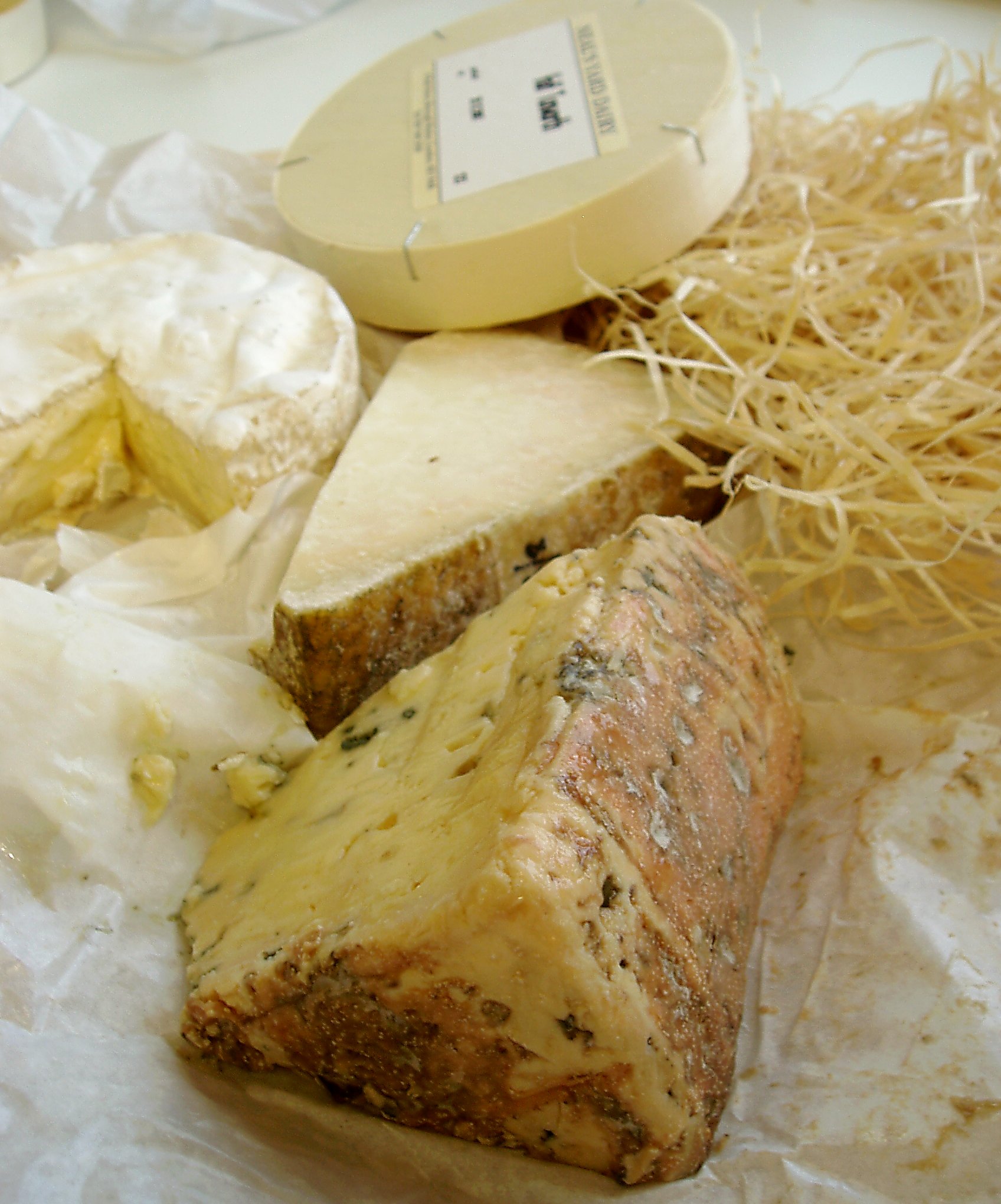
Despite my sister’s protestations however, I’m apparently not that troublesome to please after all – for she managed to bring with her the perfect present. Cheese. To be more specific, a beautifully packaged parcel from Neal’s Yard Dairy containing three pieces of farm cheese wrapped in waxed paper. Stathdon Blue, Half Tunworth and Crockhamdale. Heaven!

Cheeses

Gingerbread Wonderland

The girls and I spent a very enjoyable afternoon yesterday rolling out our gingerbread dough and using our Christmas cookie cutters to make a winter wonderland scene. L took her job very seriously and decorated her cookies with precision:

Decorations by L

M tried hard to copy her older sister, but she was just soooo tempted to eat those shiny candy balls …

Decorations by M

We have entered our finished tableau into Baking Bites’ Gingerbread Cookie Contest (although it was a very transient work of art – the pieces had mostly been devoured by this morning!).

Gingerbread Wonderland

This particular gingerbread recipe has been a big hit with the girls. Not too sweet, not too tooth-shatteringly hard … eminently munchable. It stated out in life as a recipe by Harpavan Singh Kapoor in The Telegraph, India. I didn’t want to make such industrial quantities, so I halved the recipe. I also substituted Golden Syrup for honey and added some ground ginger. When it came to the point where the dough is supposed to stick together, it didn’t … stick, that is. I had a nice bowl of spicy breadcrumbs, but the smooth, stiff dough I was supposed to be forming was nowhere in sight. So I added an extra egg and bingo!

Gingerbread

12 oz/1 cup Golden Syrup
3 1/2 oz castor sugar
2 tablespoons groundnut oil
2 tablespoons water
1 lb 10 1/2 oz plain flour
5 1/4 oz ground almonds
4 teaspoons ground ginger
2 teaspoons cocoa powder
2 teaspoons ground cinnamon
6 teaspoons baking powder
1 egg + 2 egg yolks
1/8 teaspoon lemon extract

Heat the Golden Syrup, sugar, oil and water in a saucepan until the sugar has dissolved. Set aside to cool to room temperature.

In a very large bowl, mix together the flour, ground almonds, ginger, cocoa, cinnamon and baking powder. Stir in the egg, yolks and lemon extract.

Add the syrup and stir well to make a smooth, stiff dough. Wrap in cling-film and refrigerate for at least 2 hours.

Pregeat the oven to 180 degrees C. Lightly butter a large baking tray. Roll out the dough to 1/2 cm thickness and cut into shapes. Bake for 8 to 10 minutes until golden (small shapes bake very quickly, so keep an eye on them). Transfer to a wire rack to cool, then decorate as desired.

Mince Pies and Candied Peel

As I walked home with my children this dark evening, it was not difficult to imagine the fears of people long ago as they watched the disappearing hours of sunlight. The coming winter solstice was truly a time of celebration for them, bringing the promise of light to save their life-sustaining crops from darkness.

Here in Devon, ancient solstice festivities remain in the form of wassailing, or toasting the health of the orchard trees. Apples have long been an important part of the local economy in the West Country, so this is a serious event (despite its drunken appearance!). Gifts of cakes and cider are placed in the boughs and poured over the roots of the apple trees with much dancing and singing to safeguard the new crop of fruit.

“Apple tree prosper, bud, bloom and bear,
That we may have plenty of cider next year.
And where there’s a barrel, we hope there are ten,
That we may have cider when we come again.

With our wassail, wassail, wassail!
And joy come to our jolly wassail!”

The symbolic origins of fruits, nuts, oats and straw at this time of year can also be traced to yuletide attempts to ensure the protection of crops, fodder and grain. Fruit cake, plum pudding and mincemeat are modern-day cousins of Keltebrot, a celebratory solstice cake made from nuts, raisins, figs and dried pears.

It was only last year that I made mincemeat for the first time. All through my childhood, I had avoided mince pies believing them to be ‘Yuk’ (as my daughters say). However, with two children and a third on the way, I felt some maternal urge last December to make something ‘Chrismassy’ for my family. Fruit cakes were out – my husband’s not too keen on them. Christmas pudding? There were no takers. Mincemeat was the only option that met with approval, despite my own aversion to mince pies.

As I read through different recipes, I slowly began to wonder exactly what it was I disliked so intensely about mincemeat. The ingredients themselves posed no problem – indeed, they sounded truly delicious. Apples, raisins, sultanas, currants, spices, brandy … and then I realized. Candied peel. Store-bought, dry, soapy, sickly-sweet candied peel.

Last year, I made my own candied peel for the first time too (see my photo tutorial). And I discovered that I love mince pies!

It is now a year later and my unborn son-on-the-way of last year has just yummed up his first ever mince pie … with no left-overs. I have four jars of mincemeat (recipe by Delia Smith) in my cupboard and more to give away as presents.

And so, I am sending all my online friends my warmest holiday wishes with a batch of homemade mince pies (complete with zingy, citrusy, homemade candied peel).
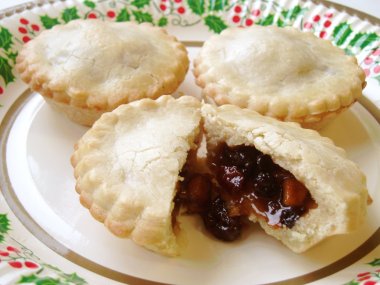
Mince Pies

Candied Peel

3 oranges
2 lemons
1 1/4 cups sugar
1 1/2 cups water

Separate the peel from the oranges and lemons, reserving the juice for use as needed in mincemeat recipe.

Use a teaspoon to scrape as much of the white pith as possible away from the peel.

Place the scraped peel in a saucepan and fill with enough water to float the peel. Bring to the boil and simmer for 10 minutes.

Drain the peel, refill the saucepan with water, bring to the boil and simmer for a further 10 minutes.

Repeat this process a third time, then drain and leave the peel to cool.

Use scissors to cut the peel into thin strips.

Place the sugar and water in a saucepan, bring to the boil and simmer for 5 minutes. Add the strips of peel. Simmer on a low heat until there is no more than a couple of spoonfuls of syrup left in the saucepan. Watch carefully at this stage to ensure the peel does not burn.

Use a fork to spread the peel on wire racks to cool. These can be placed in an ever-so-slightly warmed oven to speed the drying.

The dried candied peel can be stored in airtight jars, dipped in chocolate or used in a multitude of different recipes, including those for mincemeat.

  • Enter your email address to subscribe to this blog and receive notifications of new posts by email.

    Join 289 other subscribers
  • Seasonal Recipes

    candied peel

    baileys chocolate truffles

    gingerbread men

    mince pies

    fudge

    smarties cookies

  • Freshly Made

  • Categories

  • Favourite Feasts

  • Awards

    DMBLGIT Award
  • Archives

  • wordpress visitor counter
  • Adventures in food by Kate Coldrick from Woodbury in Devon.