Broccoli Quiche for Earth Day

Today is the 40th Anniversary of Earth Day, a global campaign to raise awareness of environmental issues. Whilst not without its critics, Earth Day is an opportunity to reflect on our individual contributions to the core issues of environmental sustainability and to consider ways in which we could take action by changing aspects of our lifestyles.

Apparently, these changes don’t come naturally to us humans. According to an interesting article in the New York Times, our brains are not wired-up to be green:

You might ask the decision scientists, as I eventually did, if they aren’t overcomplicating matters. Doesn’t a low-carbon world really just mean phasing out coal and other fossil fuels in favor of clean-energy technologies, domestic regulations and international treaties? None of them disagreed. Some smiled patiently. But all of them wondered if I had underestimated the countless group and individual decisions that must precede any widespread support for such technologies or policies. “Let’s start with the fact that climate change is anthropogenic,” Weber told me one morning in her Columbia office. “More or less, people have agreed on that. That means it’s caused by human behavior. That’s not to say that engineering solutions aren’t important. But if it’s caused by human behavior, then the solution probably also lies in changing human behavior.” …

There are some unfortunate implications here. In analytical mode, we are not always adept at long-term thinking; experiments have shown a frequent dislike for delayed benefits, so we undervalue promised future outcomes. (Given a choice, we usually take $10 now as opposed to, say, $20 two years from now.) Environmentally speaking, this means we are far less likely to make lifestyle changes in order to ensure a safer future climate. Letting emotions determine how we assess risk presents its own problems. Almost certainly, we underestimate the danger of rising sea levels or epic droughts or other events that we’ve never experienced and seem far away in time and place …

A few years ago Weber wrote a paper for the journal Climatic Change that detailed the psychological reasons that global warming doesn’t yet scare us; in it, she concluded that the difficulties of getting humans to act are inherently self-correcting. “Increasing personal evidence of global warming and its potentially devastating consequences can be counted on to be an extremely effective teacher and motivator,” she wrote, pointing to how emotional and experiential feelings of risk are superb drivers of action. “Unfortunately, such lessons may arrive too late for corrective action.”

I don’t think however that Earth Day should be a time when we make ourselves feel as guilty as possible about the things we aren’t doing for the environment – that television we left on standby the other night, the apple core we didn’t compost and the egg carton we didn’t recycle. Instead, I believe it is far more useful if we let ourselves feel good about the things we are doing now, things that perhaps we didn’t do a few years ago or that would have been entirely alien to our way of life when we were children. Then perhaps it will be easier to think about one small extra way in which we could make a difference from today onwards.

I can remember a time when I put glass bottles, teabags and banana skins into the household rubbish bags without a second thought, when our cars were filled with leaded petrol and when our clothes weren’t washed in Ecover products. It wasn’t difficult to make those small changes – it just required a slight shift in thinking. And, far from being tedious, it was even exciting and rewarding to change to cooking on an induction cooktop!

Another small way of living in a more environmentally sustainable way is by growing some of your own food. You don’t need to have a large garden for this. As my children’s current favourite book shows, many edible plants can be grown in containers and window-boxes. We have successfully (and sometimes not quite so successfully!) grown peas, beans, garlic, spinach, potatoes, courgettes, sweetcorn, tomatoes, strawberries and pumpkins over the last three years in our small garden plot. Our huge success so far this year however is purple sprouting broccoli (do click on that link, BTW – it’s full of interesting information on how easy it really is to grow and how much tastier it is than anything you’ve ever found in the supermarket).

We didn’t really expect the plants to be much of a success at all. As they were first sprouting almost a year ago, the plants attracted a large number of beautiful, white butterflies.

“How pretty,” we thought, failing to make the connection between butterflies and caterpillars (despite having read the story of The Very Hungry Caterpillar to M on countless occasions over the course of the last four years). Needless to say, the butterflies departed and the large, juicy, green leaves of the plants were soon finding their way into the tummies of an interminable army of caterpillars.

January then arrived and covered whatever hadn’t become caterpillar nosh with a glistening frost and, just to be sure of finishing off the plants properly, a layer of icy snow.

Miraculously, the plants survived. And flourished … and continue to flourish.

I think M has more in common with a caterpillar than she’s letting on as she likes to sneak into the garden and nibble on a tender stem of the broccoli without even waiting for it to be cooked.

Yesterday evening, we delivered bunches of purple sprouting florets to friends in the village before returning home to a deliciously homegrown Purple Sprouting Broccoli Quiche for our own dinner.
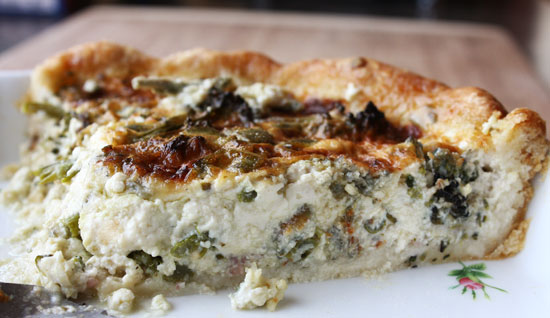
Homegrown Purple Sprouting Broccoli Quiche

Pastry

4 oz plain flour
2 oz self-raising flour
1 tsp salt
3 oz unsalted butter
1 tbsp cider vinegar
2-3 tbsp cold milk

Filling

4 egg yolks + 2 eggs
milk (see recipe)
1 tbsp fresh sage, chopped
1 onion, chopped
6 slices streaky bacon (optional), chopped
1 tbsp green pesto
6-7 stems of purple sprouting broccoli
3 oz Blue Stilton cheese, crumbled
salt and pepper

Note: these quantities are for a 9 1/2″ tart tin and should be scaled up or down for other sizes.

Make the pastry by combining the flours and salt, rubbing in the butter and mixing with the cider vinegar and enough milk to form a soft dough. Wrap in clingfilm and leave to rest in the fridge for at least 30 minutes.

Roll out the pastry and use to line the base of your tart tin. Blind-bake if you wish (confession time – I don’t always do this; yesterday, I brushed the unbaked pastry base of the quiche with a little melted butter, then covered it with clingfilm and popped it back in the fridge. The butter hardens again in the fridge so that it forms a protective layer between the pastry and the sloppy filling in the oven, which allows the pastry just enough time to get a head start in the cooking process before the butter melts and the bottom comes into contact with the filling).

Preheat the oven to 200 degrees C.

Put the egg yolks and whole eggs into a measuring jug. Fill with milk up to the level of 1 1/4 pints for both the eggs and milk. Stir in the chopped sage.

Fry the onions (and bacon) in a little olive oil to soften. Stir in the pesto and leave to cool.

Spread the onion/pesto mixture over the base of the quiche. Arrange the purple sprouting broccoli over the top (I placed them loosely in a grid pattern), then sprinkle with the crumbled cheese. Season.

Pour the egg/milk mixture into the filled pastry case until just before it reaches the top (add a little extra milk if needed). Poke any sticky-uppy florets into the egg mixture to coat them.

Bake in the oven for 20 minutes, then turn the temperature down to 180 degrees and bake for a further 20 to 30 minutes until the quiche is puffed and golden.

Remove from the oven and leave for 10 minutes before serving.

Barbie Pasta

It was the last evening that Rose and I spent together. I had promised to make something for our dinner that I was sure she would never have experienced before …

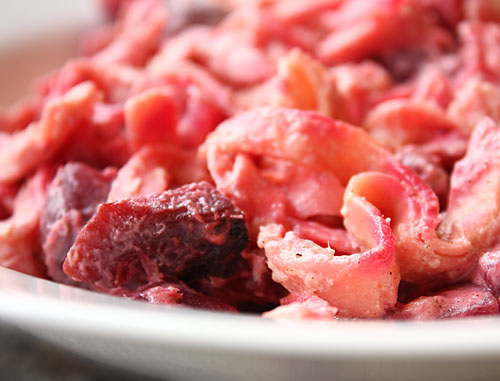
Simon Rimmer‘s recipe sounds innocuous enough. It’s simply called Tagliatelle with Beetroot and can be found on page 123 of  his cookbook, Rebel Cook. However, as Simon writes,

Any dish that looks like Barbie made it and tastes as fantastic as this has to be tried. What you’ll get is a spicy, vibrant and yes, pink but scrummy pasta, with a wicked kick. Bring it on!

(which is also why it’s known as Barbie Pasta in our household).

Rose emailed me recently to ask for the recipe – so this blog post is entirely Rose’s fault 😉

I have to tell you, Rose is a super-speedy pasta roller. Seriously, Tommy Zoom has nothing on this. Just look at that pasta whizz!

Okay – only kidding. But I’m not joking about this recipe. It really is truly pink. And it really is truly scrummy.

Barbie Pasta (adapted from The Rebel Cook)

2 shallots
1 garlic clove, crushed
125ml/4fl oz white wine
225ml/7 1/2fl oz chicken stock
8 fresh beetroot, cooked and diced (not the pickled-in-vinegar sort)
1 tsp ground cinnamon
250ml/8fl oz sour cream
1 tbsp horseradish cream
400g/13oz cooked fresh tagliatelle
salt and freshly ground black pepper

Fry the shallots and garlic in olive oil until softened. Add the wine. Bring to the boil and reduce by two-thirds.

Add the chicken stock and bring back to the boil. Reduce by about half.

Stir in the diced beetroots, cinnamon and sour cream. Reduce until the sauce is thick.

Fold in the horseradish cream (Simon Rimmer also adds dill here).

Stir in the pasta and serve immediately with grated Parmesan.

Look and Cook Vegetable Soup

My children think that their Aunty Lucy always brings the most wonderful presents for them. They adore the glittery, shiny stickers that decorate the cards she writes and the luxurious ribbons that tie up her carefully wrapped packages. Tearing off the colourful, glossy paper, they are delighted to find all kinds of imaginative toys and gifts … magnetic fridge gears, candy floss makers, zoingo boingos, black holes.

Last month on her seventh birthday, L read proudly to us all from her new, special Aunty-Lucy present – Look and Cook, a gloriously vintage cookbook for children by Tina Davis. Not only does this superbly illustrated book provide recipes for such evocative things as popcorn balls and forgotten cookies, L was also captivated by the various sections that name each different kitchen utensil, discuss safety in the kitchen and describe how to measure, chop, dice, boil, steam and sauté with skill.

“Now I can cook dinner for all of us,” L announced, feeling sophisticated and grown-up.

She took her job very seriously. In her role as Mummy, she knew that cakes and cookies, however tempting, were not what she should be serving to her children as their main source of nourishment. I watched as she slowly thumbed her way from the delicious puddings and sweet treats at the end of the book, through the pasta and rice of the middle sections, towards the vegetables and main dishes in the opening chapters.

Then her eyes lit up as she spotted a recipe for vegetable soup.

“Just like at Granny and Grandpa’s house,” she smiled, thinking of how much she had enjoyed eating the soup that my Mum had made for us during our recent visit there.

Having made her decision, she set to, rummaging through the cutlery drawers to find the tools she needed for her task.

Of course, if L is busy in the kitchen, then so too are M and T. It’s a matter of sibling pride.

And this is how our quiet, end-of-summer evening became a little (but only slightly!) more chaotic than usual.

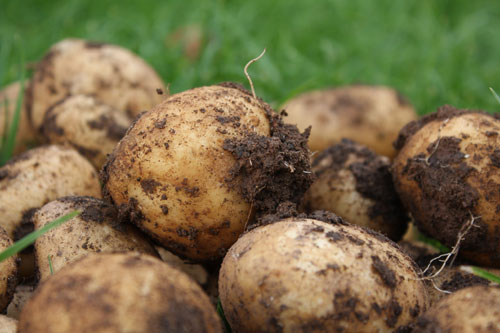
First, there were potatoes to be dug up from the garden ….

potatoes

… and green beans to be picked …

green-beans

… and chopped.

chopping beans

The vegetables were stirred …

vegetables

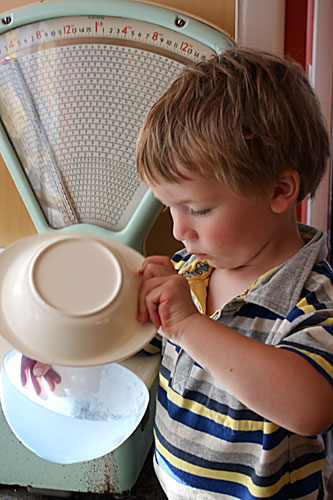
… while M mixed the dough for some flatbreads to dip into the eagerly anticipated soup.

mixing-dough

T did something he thought would be useful that involved flour …

useful

… and M kneaded the dough.

kneading

L stirred the soup …

lstirs

… and then M stirred the soup.

mstirs

T swept flour onto the floor …

floury-floor

… and into the dustpan.

dustpan

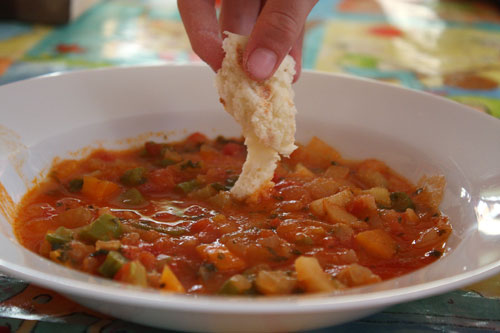
As if by magic (which is, after all, how most things take place in the kitchen), a hot pan of steaming vegetable soup …

steaming-soup

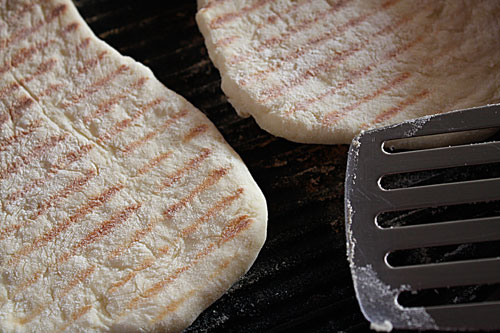
… and a plate of griddled flatbreads …

flatbreads

… appeared at the table.

The unanimous verdict?

“Mmmm, it’s sooooo good!”

vegsoup

Vegetable Soup (adapted from a recipe by Tina Davis)

2 tbsp olive oil
1 onion, diced
3 carrots, diced
2 sticks of celery, diced
1 clove of garlic, minced
3 to 4 potatoes, diced
a handful of green beans, chopped
1 tin of chopped tomatoes
1 bay leaf
1 tsp salt
1/4 tsp sugar
1/4 tsp ground black pepper
2 tbsp fresh parsley, chopped

Heat the oil in a large pot and stir in the onion, carrot, celery and garlic. Cook over medium heat until softened.

Add 800 ml of water together with the tomatoes, potato, green beans and bay leaf. Boil then lower to a gentle simmer for about 40 minutes.

Season (to taste) with salt, pepper and sugar.

Stir in the parsley and then serve immediately.

Strawberries and Rhubarb

It’s the beginning of the school Easter holidays and Spring is well underway here in Devon. We have watched the furry-covered magnolia buds bursting into full blossom in the gardens at the University where O works, and L and M have collected the fallen ‘fairy blankets’ from the ground beneath the trees. We have blue skies at last, too!

magnolias

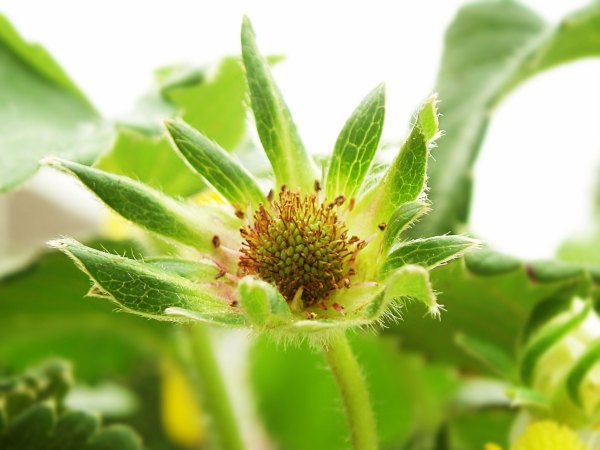
Back at home, our garden is picking itself up after being cruelly assaulted by winter’s frosts and builders’ footsteps. Whilst I generally throw in a few suggestions of things I’d like for my kitchen pots, the main planting and sprouting of any fruit and vegetables in our garden is O’s province. However, O is in Cambridge taking exams this week, so I’ve been left in charge of the nursery. And it’s a very different kind of nursery from the one that has been my own domain for the past seven years. Instead of changing nappies and spreading cream on sore baby bottoms, I’ve found myself piling soil around newly sprouting potato plants and making sure the strawberries have just the right amount of water to drink.

spring strawberry

Come back soon, O – having sole responsibility for these babies is terrifying me!

strawberry and flower

Although it will be a while before our strawberries are ripe and juicy-red, this time of year brings an abundant supply of strikingly rosy forced and blanched rhubarb. Not a fruit as such, it still bridges the period between autumnal apples and sweet summer berries when it comes to puddings and desserts. It may not be truly seasonal, but the warm, dark conditions in which forced rhubarb is grown produce a stem that is more tender and less stringy than the outdoor variety of later months. And the rhubarb is also an almost disconcertingly vivid pink.

rhubarb

I have fond memories of rhubarb from my childhood in the North-East of England. There are photos of my sister and me hiding under our gigantic umbrellas of rhubarb leaves whilst playing in our parents’ garden (I must note here that the leaves are toxic if consumed due to overconcentration of oxalic acid – fortunately, we never felt in the remotest way inclined to munch on a rhubarb leaf when we were little). I do remember biting into the raw stem however, dipping it into a bowl of sugar to take away the tartness of its taste. It might have been relatively unfashionable until recently in the South of England, but I wouldn’t mind betting that rhubarb never lost its popularity during those years in the allotments and gardens of the North.

So when I encountered this season’s first homegrown rhubarb yesterday at Dart’s Farm, I just couldn’t resist buying a bunch. One thing led to another … the children wanted to bake cookies, they clamoured for gingersnaps, ginger is a classic flavouring for rhubarb …

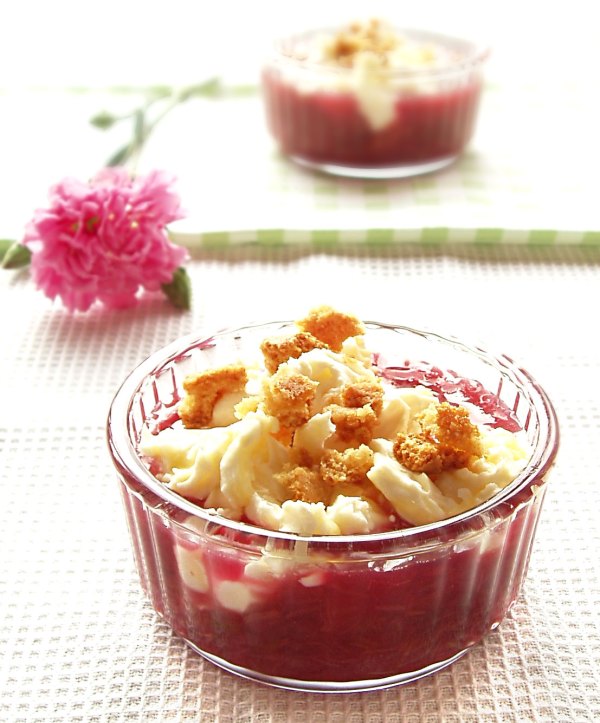
Our rhubarb pudding was inspired by a recipe from Wicked Desserts (Delicious) for simple roasted rhubarb and lemon curd pots. We made our own gingersnaps for the topping and poached rather than roasted the rhubarb pieces.

rhubarb poaching

Although orange and rhubarb are a match made in heaven, I prefer the sublime combination of rhubarb, pomegranate juice and rosewater. Divine. So that’s what I used.

rhubarb lemon mascarpone

Rhubarb and Lemon Curd Pots

7 oz caster sugar
200 ml pomegranate juice
200 ml water
3 tbsp rosewater
1 lb forced rhubarb, cut diagonally into thin slices
1/2 oz butter
6 tbsps lemon curd
250g tub of mascarpone
4 gingersnaps (recipe here)

Place the sugar, pomegranate juice, water and rosewater in a large pan and bring to the boil. Add the rhubarb and simmer for 10 to 15 minutes to reduce. Stir in the butter. Leave to cool.

Swirl the lemon curd into the mascarpone with a knife.

Divide the poached rhubarb between 6 serving pots. Spoon the lemony mascarpone on top.

Crush the gingersnap biscuits and sprinkle the crumbs over the mascarpone.

This post is my entry to CLICK: Spring/Autumn.

Snappy, Snacky Pizza Bread

I confess openly and whole-heartedly to having a certain single mindedness when it comes to pursuing a goal. If you’re looking for someone who’s prepared to stand in front of a microwave, fork and thermometer in hand, stirring a bowlful of flour every ten seconds for half an hour, then yes, I’ll be the one to do it!

I make my own puff-pastry, I bake my own loaves for bread sauce and my children enjoy eating our homemade chicken nuggets. Quirky, obsessive, nerdy? Perhaps I’m all of these … and happy to be so!

Having builders working in our house again has moved the goalposts slightly, however. The gloopy plaster that they carried through my kitchen in a large bucket yesterday was the closest I’ve come to seeing anything resembling a cake batter in there these last two weeks! Whilst I’m reaching cloud nine on dreams of my soon-to-be-installed Rangemaster Induction cooker, my actual opportunities for baking much this side of Christmas are severely limited.

Taking advantage of this enforced hiatus in my baking obsession, my elder daughter and I have become huge fans of a super-easy ‘pizza’ bread. It takes about as long to prepare as cheese-on-toast, but it’s oh so much tastier.

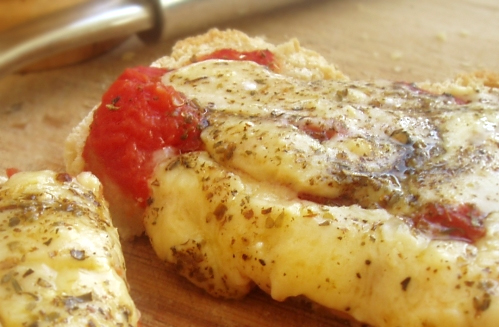
It seems absurd to talk about a recipe for this – we basically spoon some tinned tomatoes over a slice of bread (err, yes, I did make the bread …), top with slices of cheddar cheese and sprinkle with dried oregano and freshly-ground black pepper.

pizza bread preparation

Pop it in a hot oven until the cheese melts and oozes over the edges. Mmmm … delicious!

pizza bread

  • Enter your email address to subscribe to this blog and receive notifications of new posts by email.

    Join 289 other subscribers
  • Seasonal Recipes

    candied peel

    baileys chocolate truffles

    gingerbread men

    mince pies

    fudge

    smarties cookies

  • Freshly Made

  • Categories

  • Favourite Feasts

  • Awards

    DMBLGIT Award
  • Archives

  • wordpress visitor counter
  • Adventures in food by Kate Coldrick from Woodbury in Devon.