And the wind sprang up and the sky grew dark … and it rained …

and rained …

and rained …

and rained …

and rained.

But small children never seem to mind the rain. They eagerly pull on their welly boots and rush outside to splash and jump in muddy puddles. Soaked through and dripping, they are unconcerned by such grown-up worries as colds and coughs and sneezes, and are unburdened by the practicalities of ensuring they have a dry change of clothing packed safely away in rucksacks on every outing.
Which is perhaps just as well, since our visit to the annual Apple Day hosted by the Royal Horticultural Society gardens at Rosemoor last weekend was certainly a wet one.
I had only been to Rosemoor once before, nearly five years ago when we first moved to Devon. Back then, we were a family of three, although we were only a few months away from becoming a family of four. In my heavily pregnant state, I waddled around the gardens one afternoon with L while O was busy in his new job. There was little to see – it was March and the beauty of the gardens was still deep in its winter sleep. Only the name tags marking places in the soil gave a hint of what the gardens would become in the Spring.
On that visit, I was particularly intrigued by the fruit and vegetable gardens. Although they were seemingly populated by nothing more than empty, dead twigs, my imagination was kindled by the sheer variety of fruits that were planted there. With each step I took, I discovered apples and pears with magical, evocative names that never appear on the supermarket shelves. Barnack Beauty, Shenandoah, Lady Sudeley, Yellow Ingestrie.
Last weekend, I finally had an opportunity not only to see these fruits growing at Rosemoor, but also to taste them. Despite the steady rain that poured persistently throughout the day, we joined the damp, waterproofed crowds at the garden’s annual Apple Day. Inside a large, dry marquee, tables were stacked high with a myriad of different varieties of apple. Slices for tasting were laid out on paper plates alongside tasting notes and harvesting information. Some apples were soft and sweet while others were crisp and tart. Each variety left a different aftertaste, from nutty to aniseed.

There were dessert apples, cooking apples, juicing apples and apples for making cider. Stalls around the sides of the marquee provided a platform for producers and artists from Devon to show their apple-related products. At one stall, rivers of the purest apple juice gushed from a noisy mulching machine.
“Four parts Cox to one part Bramley,” the producer proudly told us. Whatever the secret, this was the most glorious apple juice I have ever tasted. Its sweetly crisp aromas filled my senses with apple even as the juice was being sloshed from the jug into my glass. It was as if I’d buried my nose deep into the apple blossom and drunk from the very essence of the fragrant fruit.

And then out into the rain to the orchards where the bare patches of soil of my last visit were now bursting abundantly with redolent apples of all varieties.
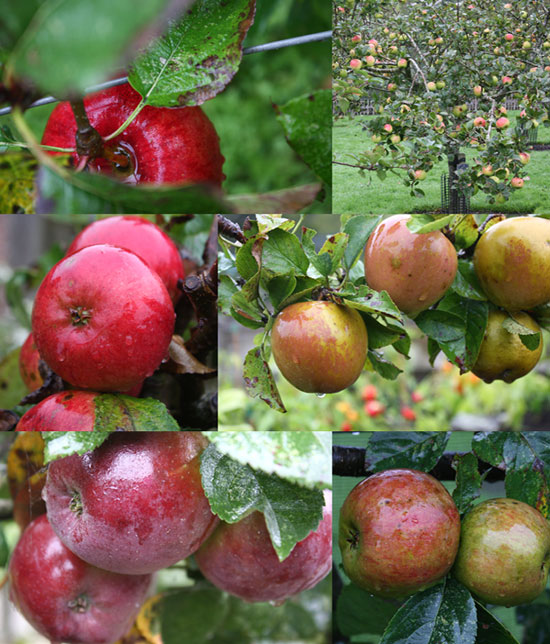
That evening as the geese flew overhead on their journey out to sea, I made a spiced autumnal apple cake in celebration of this rainy Apple Day.

Apple Day Cake
3 ounces seedless sultanas
100 milliliters dark rum
2 ounces unsalted butter
5 ounces castor sugar
2 ounces light muscovado sugar
7 ounces peeled, cored and diced apple (1 medium Bramley apple)
1 tablespoon grated orange zest
1 teaspoon vanilla extract
6 ounces eggs, weighed without shells (3 medium eggs)
5 ounces plain (all purpose) flour
1/4 teaspoon baking powder
1/2 teaspoon bicarbonate of soda (baking soda)
1/2 teaspoon salt
1/2 teaspoon ground cinnamon
Put the sultanas in a small bowl and cover with the rum. Leave to soak for at least 30 minutes.
Preheat the oven to 180 degrees C / 350 degrees F / gas mark 4 with a rack set in the centre of the oven.
Grease and base-line a 20 cm (8 inch) round cake pan.
Melt the butter and sugars together in a small saucepan (or in the microwave, stirring frequently) until smooth and runny.
Place the melted butter and sugars together with the apple, grated orange zest and vanilla in a large bowl. Beat to combine.
Add the eggs gradually, beating after each addition to incorporate. Scrape down the sides of the bowl.
Place the flour, baking powder, baking soda, salt and cinnamon in a separate bowl and whisk to combine thoroughly. Add the dry ingredients to the wet ingredients and stir until well incorporated.
Drain the sultanas well and reserve the rum (set aside). Add the sultanas to the apple mixture and stir to combine.
Pour the mixture into the prepared pan. Bake in the centre of the preheated oven for 45 to 50 minutes. A tester inserted into the centre of the cake should have few crumbs attached when removed (it is a moist cake, so the tester will not be completely clean). Remove from the oven.
Let the cake stand in the pan for 10 minutes before removing from the pan and placing on a wire rack.
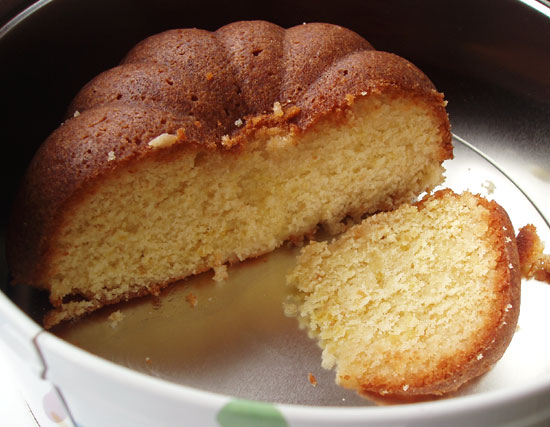
Brush the top of the cake with a small amount of the reserved rum. Cool on the wire rack before slicing and serving.















 amerrierworld.com