To Arthur (or a Celebration of Guinness)

I was invited to join the worldwide celebration of a man named Arthur and a beer named Guinness just before St Patrick’s day a few weeks ago.

Even as an intermittent food blogger, I regularly receive emails from PR companies asking me to post their latest press releases or promote the newest kitchen gadgets on my blog. Unfortunately for them, my blog is a very personal space that I keep deliberately free from paid advertising and ‘freebie’ giveaways. I dislike reading the same official spiel repeated across countless food blogs and find boredom setting in very quickly when I find yet another incredulously rave declaration of the generosity of such-and-such a brand in providing the free samples that inevitably form the basis of an ensuing favourable blog review (the ubiquity of posts on a certain pomegranate juice comes to mind …).

Additionally, I often find that the emails I receive from PRs are impersonal and demanding – “Write this text, post this image, post by this deadline!” – as well as poorly matched to my interests in food blogging. I know that it’s all part of wider, on-going relationship misunderstandings between PRs and food bloggers, as each are confronted by the hitherto unknown workings of the other, so I don’t take offense. I just don’t usually find much to inspire me in these PR emails, that’s all.

However, I try to keep an open mind on these things and I’ve never yet deleted a PR email without having read it through first. So when I received an email from Stephanie about an official Guinness cookbook, I was genuinely interested.

I already have several treasured recipes that include Guinness among their list of ingredients. There’s a sticky gingerbread cake, Rose’s beer bread, a beef stew … Would I like to learn more about the cookbook, Guinness ®: An Official Celebration of 250 Remarkable Years? Well, yes actually – I would!

Stephanie forwarded two recipes from the book for me to try at home – Steak and Guinness Burgers and an Iced Chocolate, Guinness and Orange Cake (recipes below) – and explained that the book had been published to celebrate the 250th anniversary of the founding of Arthur Guinness’ brewery in Dublin. I also contacted Paul Hartley, the author of the recipes in the book, and he kindly agreed to answer a few of my questions about their development.

This post was supposed to happen on St Patrick’s day (or at least in the week following March 17th), but it obviously didn’t. I was planning to bake the cake on the same day that I made the burgers to enjoy the recipes as a two-course Guinness extravaganza, but the slight issue of 173 cupcakes got in the way (more about that story another day). I therefore had to wait until Easter Sunday before finally being able to complete my plans.

The verdict?

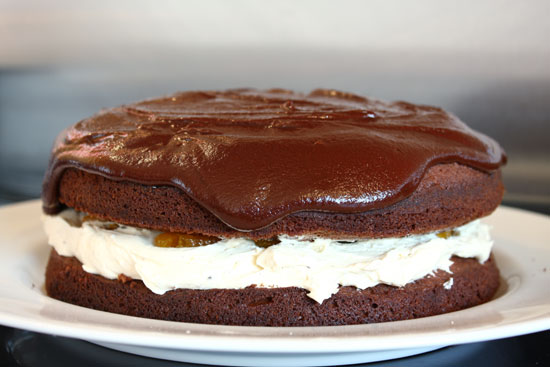
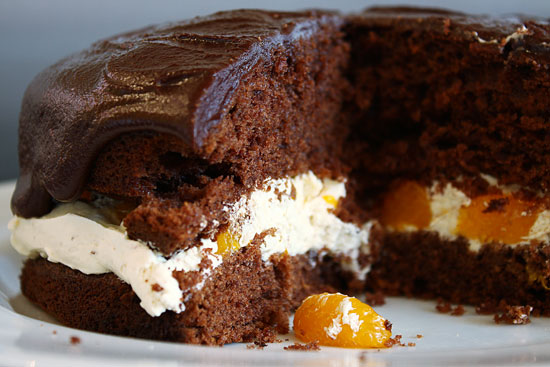
Everybody loved the cake at dinnertime on Easter Sunday. In fact, it was even a real success with O, who my regular reader [sic] will know generally dislikes anything sweeter than a pint of beer. I have to confess that I sandwiched the cake layers together with a white chocolate buttercream rather than whipped cream, but that was purely because the major cake-eaters in my family dislike cream with a vengeance. I’m sure any cream lovers out there would find it beautiful with lashings of whipped cream, too.

The burgers had a smaller audience than the cake but were also unanimously declared to be tasty. We found that we needed to cook them for longer than stated in the recipe, but I usually cook meat slightly on the longer side when I’m serving it to kids anyway. Or perhaps our burgers were over-generously sized …

Here’s my conversation with Paul Hartley about the book and his recipes in general …

First of all, how many of your recipes are included in this book?

18 different recipes – some sweet, some savoury.

Are the recipes traditionally Irish in any way (apart from the inclusion of Guinness, that is!)?

Yes, Galway Oyster Bisque. Have you ever been to the Galway oyster festival? I haven’t but am planning to go. Sausages with Guinness gravy and colcannon (which is traditional Irish potato cakes). Beef and Guinness pie is a very traditional Irish dish.

Did you use Guinness in any of your cooking before you developed these recipes?

I’ve cooked with Guinness for years – whenever a recipe called for stout I would reach for the Guinness. Having already been a great fan of cooking with Guinness made this book a real treat for me.

What aspects of Guinness did you have in mind when you set out to develop these recipes?

Cooking savoury dishes was always my favourite so this was a chance to develop sweet Guinness creations in our kitchen.

How does Guinness work in the recipes to create something that is more than just a plain old chocolate cake, for example – does it truly make a difference or is it just there as a gimmick for the anniversary?

Certainly no gimmick – these dishes are definitely taste enhanced by adding Guinness. For as long as recipes were written, Guinness has been used to add depth of flavour to rich fruitcakes, and a heartiness to rich meat stews. Guinness added to batter produces a light and crisp result.

Which do you believe is the most successful recipe?

Steak & Guinness burgers with rosemary & garlic butter.

Did you try anything that really didn’t work out at all?

Whenever you are pushing the culinary boundaries there will always be dishes that just don’t work. Luckily these were few.
How many pints of Guinness did you get through while you were working on these recipes for the book?

Lots, just didn’t keep count…

And finally, do you now cook any of these recipes regularly at home?

I am a partner in Hartleys Café Bistro in Somerset and we regularly include one of the Guinness book recipes on our menu. As for cooking at home, yes sometimes but I’m currently writing the Horlicks cookbook so that’s the cut and thrust of most home cooking right now.

Thank you, Paul 🙂
Steak & Guinness burgers with rosemary & garlic butter (reprinted from Guinness ®: An Official Celebration of 250 Remarkable Years with permission from the publishers)

Minced beef is marinated overnight in Guinness, then mixed with roasted red onions, griddled and served topped with rosemary and garlic butter to make a memorable burger.

Preparation time 20 minutes, plus marinating, chilling & freezing
Cooking time 10 minutes
Makes 6 burgers

500 g (1 lb) top-quality lean minced beef, ideally from grass-fed Irish beef
150 ml (¼ pint) draught Guinness
1 large red onion, finely diced
olive oil, for drizzling and oiling
3 smoked streaky bacon rashers, finely diced
1 teaspoon creamed horseradish
1 free-range egg, beaten
½ teaspoon paprika
2 heaped tablespoons plain flour
1 rosemary sprig
75 g (3 oz) butter, softened
1 garlic clove, finely chopped
salt and pepper

step 1   Lay the minced beef out in a shallow dish and cover with the Guinness. Using your hands, massage the Guinness into the meat, cover with clingfilm and leave to marinate in the bottom of the refrigerator for at least 12 hours.

step 2   When ready to make the burgers, spread the onion out in a baking dish, sprinkle lightly with salt and drizzle with oil. Scatter the bacon on top. Roast in a preheated oven, 150°C (300°F), Gas Mark 2, for 15 minutes. Leave to cool.

step 3   Lift the beef out of its marinade, gently squeeze out any excess liquid and put the beef in a large bowl. Add the roasted onion and bacon, the horseradish, egg and paprika, season with pepper and sprinkle the flour over. Using your hands, mix together well. Divide the mixture into 6 equal portions and form into round patties about 2.5 cm (1 inch) thick. Carefully lay the patties on a baking sheet lined with greaseproof paper, cover with a second sheet of greaseproof paper and chill in the refrigerator for at least 1 hour and up to 6 hours to firm up.

step 4   Meanwhile, pluck the rosemary leaves from the stem and plunge into boiling water for 30 seconds. Drain, then chop as finely as possible. Add to the softened butter and garlic in a small bowl and beat together well. Lay a piece of clingfilm on a flat surface, form the butter into a sausage about 3.5 cm (1½ inches) in diameter and roll up in the clingfilm. Freeze for 20 minutes until set.

step 5   Lightly oil a griddle pan. Heat until just beginning to smoke, add the burgers and cook over a high heat for about 5 minutes on each side, or until well browned on the outside and just pink inside. Serve immediately, each burger topped with a slice of the rosemary and garlic butter.

Iced chocolate, Guinness and orange cake (reprinted from Guinness ®: An Official Celebration of 250 Remarkable Years with permission from the publishers)

This sumptuous cake is perfect for a special occasion. The recipe may seem a little involved, but it’s easy to accomplish if tackled stage by stage.

Preparation time 45 minutes
Cooking time 1 hour
Serves 8

2 large oranges
250 g (8 oz) caster sugar
175 g (6 oz) unsalted butter, plus extra for greasing
150 g (5 oz) self-raising flour
25 g (1 oz) cocoa powder
2 teaspoons baking powder
3 free-range eggs, beaten
25 g (1 oz) ground almonds
5 tablespoons draught Guinness
150 ml (¼ pint) double cream

Icing
20 g (¾ oz) unsalted butter
50 g (2 oz) caster sugar
3 tablespoons draught Guinness
100 g (3½ oz) plain dark chocolate (70% cocoa solids), finely chopped

step 1   Peel one orange. Finely grate the zest of the other orange and set aside. Using a sharp knife, pare away the pith from both oranges. Cut the oranges into 5 mm (¼ inch) slices. Put them in a small saucepan and just cover with cold water. Bring to the boil, then reduce the heat and simmer for 10 minutes. Add 50 g (2 oz) of the sugar and continue to simmer until all the liquid has boiled away, watching carefully to ensure that the oranges don’t burn. Leave to cool.

step 2   Beat together the butter and the remaining sugar for the cake in a large bowl until very pale and fluffy. Sift together the flour, cocoa and baking powder, then beat into the butter mixture alternately with the eggs. Add the ground almonds, reserved grated orange zest and Guinness and beat for 3–4 minutes until you have a soft dropping consistency.

step 3   Grease and line the base and sides of 2 x 20 cm (8 inch) round cake tins, then divide the cake mixture equally between the tins, smoothing the surface. Bake the cakes in a preheated oven, 190°C (375°F), Gas Mark 5, for 25 minutes until risen and firm to the touch. Leave to cool in the tins for 5 minutes before carefully turning out on to a wire rack to cool completely.

step 4   Whip the cream in a bowl until soft peaks form, then spread over one of the cakes. Arrange the cooled orange pieces over the cream and carefully place the other cake on top.

step 5   To make the icing, put the butter, sugar and Guinness in a small saucepan. Stir over a gentle heat until the sugar has dissolved, then bring to the boil. Remove from the heat and add the chocolate. Leave to soften, then beat gently with a wooden spoon. Leave to cool and thicken. While still warm but not too runny, pour the icing over the cake and use the back of a spoon or a palette knife to spread it evenly.

The Great Pumpkin Cake

great-pumpkin-cake

Goblins and ghosts are one thing at Hallowe’en, but a full-page glossy photo of Rose’s Great Pumpkin Cake is in quite a separate realm of terror. If you plan to make it, that is. Or, more specifically, if you’ve rashly promised to take that very cake to a Hallowe’en party in full knowledge of the fact that you have never before made either a caramel crème anglaise or an Italian meringue, and that these very tasks now lie between you and the burnt orange silk meringue buttercream that covers this cake so smoothly and so beautifully in that horrifyingly daunting photo on page 127 of Rose’s Heavenly Cakes.

Not only did I promise this cake to my friends and hosts for Hallowe’en this year, but I felt doubly bound to attempt this cake in gratitude to Rose for having very kindly lugged the pumpkin-shaped cake pan halfway across the world in her baggage for me earlier this year.

“I can’t wait to see the look on your children’s faces when they see this cake,” she told me. What she didn’t tell me was that I would be required to boil a supersaturated sugar solution not only once but twice during the process of making the cake’s burnt orange silk meringue buttercream.

Well, there wouldn’t be much for my children to look at unless I somehow managed to overcome my fear of boiling sugary syrups.

When broken apart and concentrated in a supersaturated solution, sugar molecules are unstable. They want to come back together again at any chance to return to their previous crystalline structure. An unclean pot, any jarring or stirring of the supersaturated solution at the wrong time, can send them back to their original crystalline pattern and dry state, crystallizing the mixture and ruining the whole candy batch. (From Baking 911)

I am in awe of anyone who can successfully make fudge and toffee in their home kitchen. When I phoned my Mum several months ago for a bit of motherly sympathy after yet another batch of my fudge crystallized and crumbled, she helpfully told me about the wonderfully shiny, brittle toffees and smooth, creamy fudges she remembers her Gran making for her when she was a little girl. Thanks, Mum! Grrrr.

Perhaps I have the wrong sort of sugar. My sugar has either overly-friendly or pathologically co-dependent molecules that stubbornly stick together regardless of the care I take to keep them apart. I must have sticky sugar. Yes, that’s it – I definitely have the wrong sort of sugar.

Or perhaps I have the wrong sort of weather …

It was procrastination rather than thoroughness that led me to read and re-read Rose’s instructions multiple times through on Saturday morning. The cake itself had baked beautifully the day before and I even tried to convince myself that it would look fine just sandwiched together with a bit of marmalade. After all, once it was covered in buttercream, you wouldn’t be able to see those lovely pumpkin grooves anymore.

In my heart of hearts though, I knew what I had to do. With trembling fingers, I carefully placed my super-sensitive sugar into the centre of a saucepan and poured the water around it. I drew an ‘X’ through the sugar and ensured that not even one single crystal dared to venture stickily towards the edges of the pan. I stirred as the sugar dissolved, I held my breath as the solution boiled … and I watched helplessly as the caramel crystallized.

“Icantdothisitsnotfairwhydoesthisalwayshappentome
nobodylovesmeeverybodyhatesmeguessIllgoeatWORMS!”

Some kindly spirit must have had the worms’ best interests at heart because the whole thing wasn’t quite such a disaster the second time around and I was finally able to set aside my burnt sugar crème anglaise and turn to the Italian meringue.

This time, I managed to snatch defeat from the jaws of victory by knocking the saucepan as my super-clear, supersaturated solution was boiling. Despite being so depressingly frustrating, it was actually quite a mesmerising sight watching the crystals starting to form so insidiously in one section of the pan, then rising and falling on the boiling crest of the sugary bubbles as they linked hands with increasingly more of their crusty friends.

How time flies when you’re boiling sugar. I had donned my apron that morning at 10.30 am. It had only taken me five hours to successfully get my burnt orange silk meringue buttercream ready for slapping on the cake!

pumpkin-cake-assembly

As I painstakingly applied lines of darker orange to mark the segments of the pumpkin’s outer skin, M watched me thoughtfully.

“Is it supposed to look like a pumpkin, Mummy?” she eventually queried. I think she must have inherited her knack for saying the right thing at the right time from her Granny 😉 .

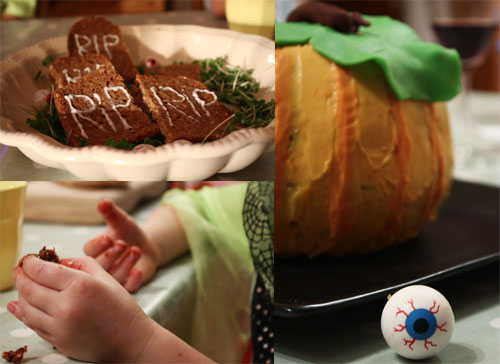
I only had a short time left now before the witching hour, which was when I risked having my pumpkin turn back into a coach if it was still unfinished (magic can be a tricky thing at Hallowe’en). My twirling cocoa tendrils and garish, green marzipan leaves were still a little floppy, but I arranged them artlessly on top of the cake before jumping into my witch’s dress and cape. I grabbed hold of my broomstick, a couple of little witches and an even smaller warlock, and we all set off together down the street with the Great Pumpkin Cake in tow.

witching-hour

No Hallowe’en party would be complete without an unearthly danse macabre …

halloween-dance

… and a suitably ghoulish feast.

halloween-feast

And the Great Pumpkin cake?

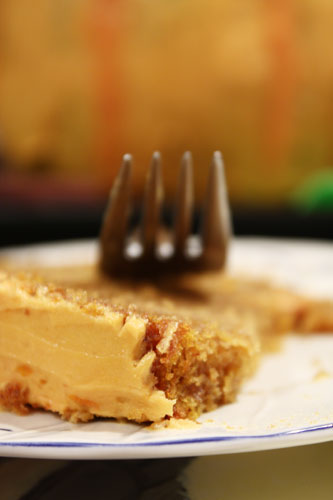
It was delicious – moist, subtly spiced and perfectly complemented by the smoothest buttercream I have ever had the pleasure of rolling around my tongue. Every forkful was savoured with relish …

pumpkin-fork

… right down to the last crumbs.

pumpkin-last-crumbs

Although Melinda and I are self-confessed Fallen Angel Bakers, you can see further renditions of the Great Pumpkin Cake by members of the Heavenly Cake Bakers group this month as they work their way through all of the cakes in Rose’s book. My thanks go to Marie for steering the project – it was certainly encouraging to know that I wasn’t alone in my buttercream trepidation!

You might also like:

Rocky Road

Rainbow Cake

Fairy Cakes

Look and Cook Vegetable Soup

My children think that their Aunty Lucy always brings the most wonderful presents for them. They adore the glittery, shiny stickers that decorate the cards she writes and the luxurious ribbons that tie up her carefully wrapped packages. Tearing off the colourful, glossy paper, they are delighted to find all kinds of imaginative toys and gifts … magnetic fridge gears, candy floss makers, zoingo boingos, black holes.

Last month on her seventh birthday, L read proudly to us all from her new, special Aunty-Lucy present – Look and Cook, a gloriously vintage cookbook for children by Tina Davis. Not only does this superbly illustrated book provide recipes for such evocative things as popcorn balls and forgotten cookies, L was also captivated by the various sections that name each different kitchen utensil, discuss safety in the kitchen and describe how to measure, chop, dice, boil, steam and sauté with skill.

“Now I can cook dinner for all of us,” L announced, feeling sophisticated and grown-up.

She took her job very seriously. In her role as Mummy, she knew that cakes and cookies, however tempting, were not what she should be serving to her children as their main source of nourishment. I watched as she slowly thumbed her way from the delicious puddings and sweet treats at the end of the book, through the pasta and rice of the middle sections, towards the vegetables and main dishes in the opening chapters.

Then her eyes lit up as she spotted a recipe for vegetable soup.

“Just like at Granny and Grandpa’s house,” she smiled, thinking of how much she had enjoyed eating the soup that my Mum had made for us during our recent visit there.

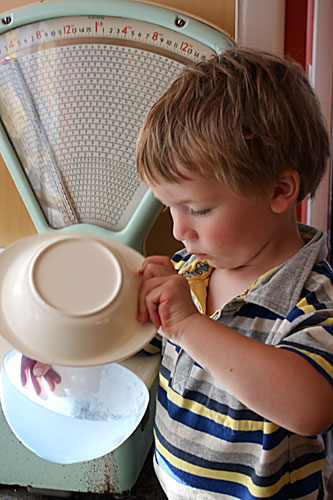
Having made her decision, she set to, rummaging through the cutlery drawers to find the tools she needed for her task.

Of course, if L is busy in the kitchen, then so too are M and T. It’s a matter of sibling pride.

And this is how our quiet, end-of-summer evening became a little (but only slightly!) more chaotic than usual.

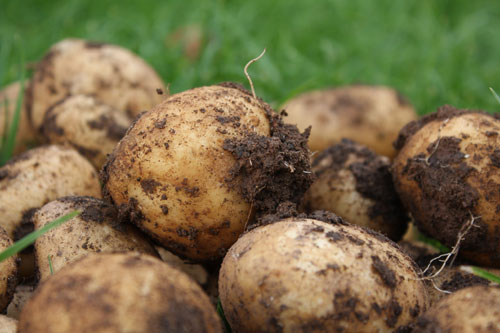
First, there were potatoes to be dug up from the garden ….

potatoes

… and green beans to be picked …

green-beans

… and chopped.

chopping beans

The vegetables were stirred …

vegetables

… while M mixed the dough for some flatbreads to dip into the eagerly anticipated soup.

mixing-dough

T did something he thought would be useful that involved flour …

useful

… and M kneaded the dough.

kneading

L stirred the soup …

lstirs

… and then M stirred the soup.

mstirs

T swept flour onto the floor …

floury-floor

… and into the dustpan.

dustpan

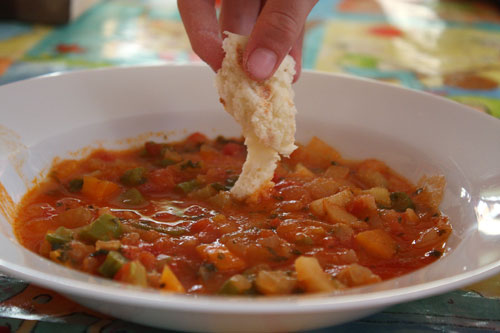
As if by magic (which is, after all, how most things take place in the kitchen), a hot pan of steaming vegetable soup …

steaming-soup

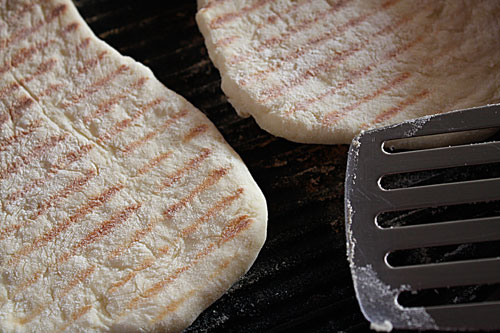
… and a plate of griddled flatbreads …

flatbreads

… appeared at the table.

The unanimous verdict?

“Mmmm, it’s sooooo good!”

vegsoup

Vegetable Soup (adapted from a recipe by Tina Davis)

2 tbsp olive oil
1 onion, diced
3 carrots, diced
2 sticks of celery, diced
1 clove of garlic, minced
3 to 4 potatoes, diced
a handful of green beans, chopped
1 tin of chopped tomatoes
1 bay leaf
1 tsp salt
1/4 tsp sugar
1/4 tsp ground black pepper
2 tbsp fresh parsley, chopped

Heat the oil in a large pot and stir in the onion, carrot, celery and garlic. Cook over medium heat until softened.

Add 800 ml of water together with the tomatoes, potato, green beans and bay leaf. Boil then lower to a gentle simmer for about 40 minutes.

Season (to taste) with salt, pepper and sugar.

Stir in the parsley and then serve immediately.

Excellent Small Cakes

I am indebted to Jennifer Soucy (aka Lady Guenièvre de Monmarché) for wondering aloud about a recipe from the 17th century. The recipe is from a collection by Sir Kenelm Digby of his favourite pies, roasts, stews, jams, mead and cakes. Entitled The Closet of Sir Kenelm Digby Knight Opened, the culinary notebook was first printed in London in 1669. The fascinating part is that in Digby’s recipe for Excellent Small Cakes, he instructs the cook to “take three pound of very fine flower well dryed by the fire …”

It appears that Digby’s cakes are typically dense and tough when made today. Many modern redactions significantly alter the original proportions of ingredients in an attempt to lighten the texture of these cookie-like cakes. Having read about kate flour, Jennifer was reminded of Digby’s instruction to dry the flour well by the fire before using, and confessed that she had never followed this step in the procedure. Could this be the missing link?

I was intrigued. The implications are far-reaching … were the Elizabethans well-versed in the heat-treatment of flour? The food historian Alice Ross has described how baking in the 17th and 18th centuries often involved lengthy preparations:

“It must have required a few days just to get the ingredients ready – to pound the sugar into fine crystalline form, grind spices, stone raisins, cut imported candied citron fine, to cleanse the flour with several siftings, and to dry it at the hearth to remove excess moisture.”

It is easy to imagine that bakers were primed to pay specific attention to the level of moisture in the flour they were using. Did they discover that some recipes produced better results according to how well the flour had been dried? Looking through other recipes for cakes in Digby’s collection, it is noticeable that the only recipe requiring ‘flower well dryed by the fire’ is the recipe for ‘Excellent Small Cakes’. If he felt the need to include this instruction in a single recipe, he presumably considered it to be an important detail.

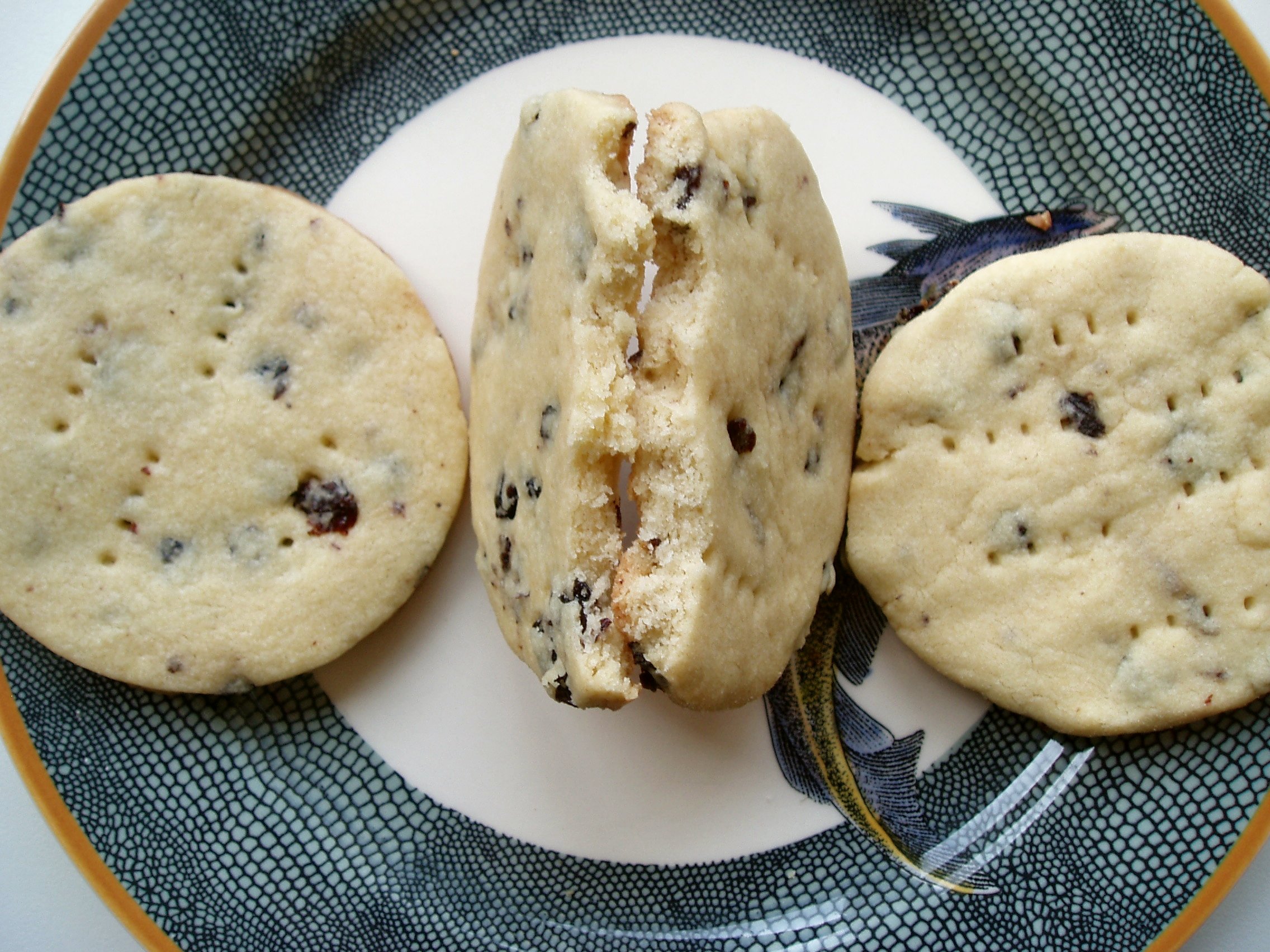
You can probably guess what happened next. Yup – I have just made two batches of Digby cakes, one using kate flour (far) and the other using untreated flour (near).

Excellent Small Cakes

The dough made with kate flour was less easy to work with than that made with untreated flour. I flattened it with my hands and then rolled it to about 1/4 inch thickness. I used a round cookie cutter to cut circles and picked them up by squeezing the edges slightly as I lifted them. The untreated-flour dough was moister. It rolled out better and the circles were less fragile. I was able to transfer these more easily than the kate-flour circles to a lightly greased baking sheet.

Although the untreated-flour dough certainly scored more points in terms of handling, the kate-flour ‘cakes’ (pictured on the right) won hands down when it came to taste and texture. They rose slightly higher than the untreated-flour cakes, had an open cake-like crumb and were meltingly delicious to eat. The untreated-flour cakes (pictured on the left) were dense, tough and chewy – hardly what I’d describe as either ‘excellent’ or ‘small cakes’.

Side by Side Comparison

Excellent Small Cakes
My scaled redaction of an original recipe by Sir Kenelm Digby

450g / 16 oz cake (or kate) flour
225g / 8 oz caster sugar
113g / 4 oz dried currants
225g / 8 oz butter, softened
3 tbsp + 1 tsp double cream
1 egg yolk
2 tsp grated nutmeg
3 tbsp dry white wine

Preheat the oven to 190 degrees C. Lightly grease a large baking sheet.

Combine the flour, sugar and currants in a large bowl and whisk to mix thoroughly.

Cut the butter into small pieces and add to the flour mixture. Beat to combine.

In a separate bowl, lightly combine the cream, egg yolk, nutmeg and wine. Stir into the flour/butter mixture to make a dough.

Flatten the dough with your hands on a clean surface. Roll to a 1/4 inch thickness. Cut into circles with a round cookie cutter and place on the baking sheet. Prick several times with a fork.

Bake in the centre of the oven for 8 to 10 minutes. Leave to cool slightly on the baking sheet before transferring to a wire rack.

When cool, the cakes may be iced with sugar. I didn’t ice my cakes, but I did find some references on sugar icing that provide recipe ideas from contemporary sources.

Getting Warm

I don’t like it when things get complicated. The most eloquent ideas are usually the simplest. Even although this ‘kate flour’ seems to work, I’ve been uneasy about its formulation. Would we really have to work through each available flour from every different country, specifying by means of trial-and-error the best microwaving times for each and including consideration of all the different powers at which different microwaves function? On a scale of one to complicated, this seemed … well … intolerably complicated.

Time to think again. How could I tell when the flour had been microwaved for long enough? I couldn’t think of a way of assessing its moisture content without knowing its starting moisture content, and waiting until it went black wasn’t really an option either. The only vaguely scientific-looking piece of equipment that I hadn’t yet used in my kitchen was a probe thermometer. So … water evaporation … temperature … I returned to my original Dove’s Farm pasta flour, heated it in the microwave for the time I already knew gave good results in baking and then took its temperature.

132 degrees C.

I scoured my cupboards. 10 0z of McDougall’s 00 grade flour took 5 minutes to reach 138 degrees C. The same amount of McDougall’s plain flour reached 134 degrees C after 6 minutes. And then, just because it fell out of my cupboard when I squashed the plain flour back in, 10 oz of Francine’s bread flour took 7 minutes to reach 136 degrees C. Now I was running out of bowls if not flour, so I decided to start baking.

First I turned each of my microwaved flours into ‘kate-flour’, substituting 1/8 of a cup with 1/2 oz of cornflour. I then made 3 Yellow Butter Cakes (thank you for the recipe, Rose 🙂 ), one for each of my ‘kate flours’.

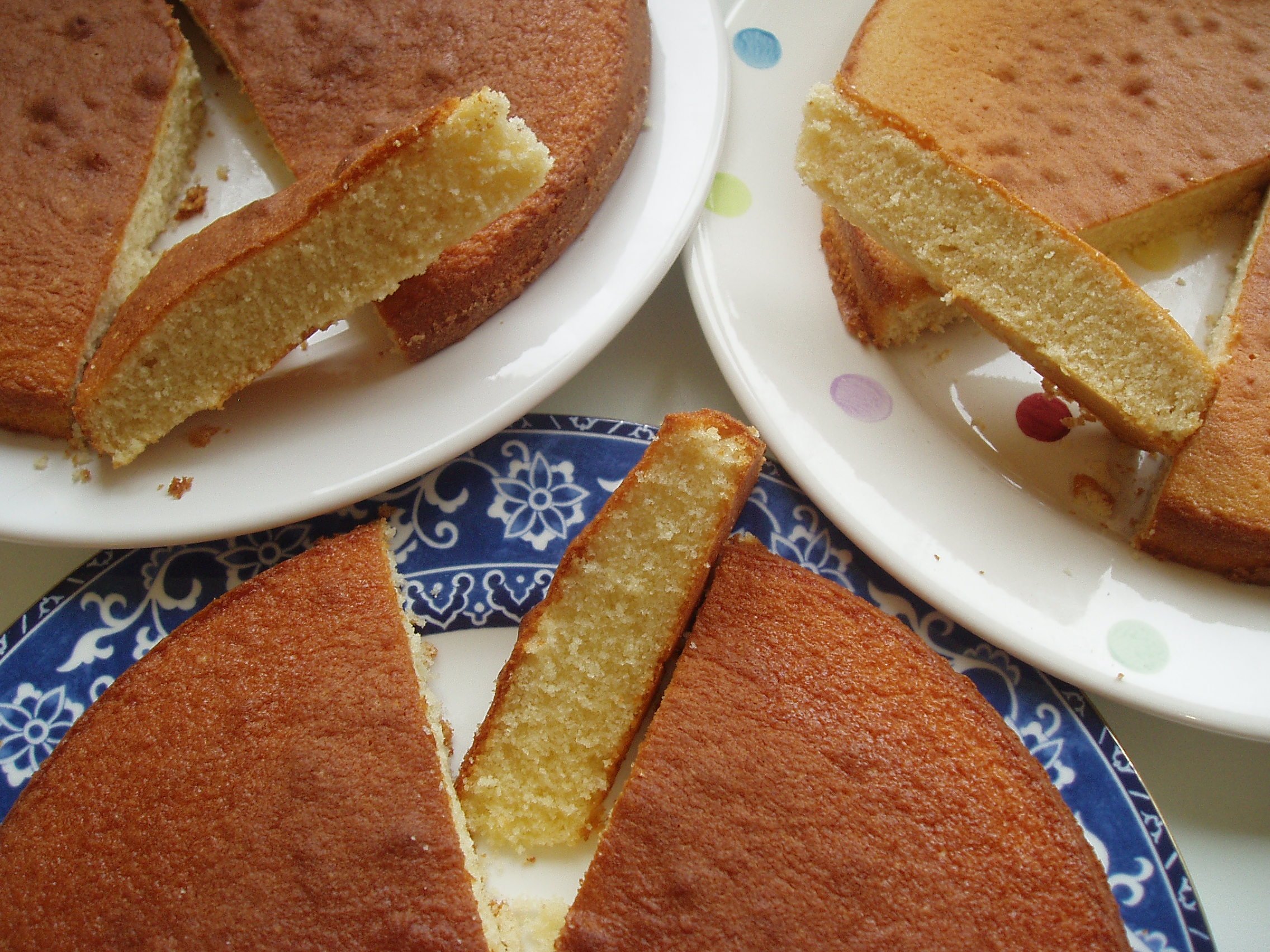
Guess what? They all worked! Yes, even the bread flour came in as a better alternative to bog-standard, unbleached plain flour.

Insides of all the cakes

The plain four cake is on the top left, the bread flour cake on the top right and the 00 grade flour cake is on the centre at the bottom of this photo.

Feel free to skip this bit, but here are some specific details 😉

For each flour, I weighed 10 0z and spread this on a pyrex plate (10″ diameter) to give a bed depth of between 18mm and 20mm. I microwaved the flour for 1 minute at a time at 750W. After each minute, I took a temperature reading and then stirred the flour to break up any lumps. I continued heating the flour by successive minutes until I obtained a reading that was at least 130 degrees C.

I removed the flour from the microwave and allowed it to cool to room temperature. I then sieved the flour and discarded any residue. I spooned the flour into a measuring cup (250 ml) and leveled the top with a palette knife. I weighed the flour in the measuring cup, then calculated 7/8 of this amount to obtain a weight for the flour component of 1 part of kate flour (10 0z of flour before microwaving generally yields at least 2 parts of kate flour).

McDougall’s 00 grade flour (microwaved to 138 degrees C)
1 cup = 4 1/4 oz
1 part kate flour = 3 3/4 oz flour + 1/2 oz cornflour

McDougall’s plain flour (microwaved to 134 degrees C)
1 cup = 4 oz
1 part kate flour = 3 1/2 oz flour + 1/2 oz cornflour

Francine bread flour (microwaved to 136 degrees C)
1 cup = 3 1/2 oz
1 part kate flour = 3 oz flour + 1/2 oz cornflour

  • Enter your email address to subscribe to this blog and receive notifications of new posts by email.

    Join 289 other subscribers
  • Seasonal Recipes

    candied peel

    baileys chocolate truffles

    gingerbread men

    mince pies

    fudge

    smarties cookies

  • Freshly Made

  • Categories

  • Favourite Feasts

  • Awards

    DMBLGIT Award
  • Archives

  • wordpress visitor counter
  • Adventures in food by Kate Coldrick from Woodbury in Devon.