Excellent Small Cakes

I am indebted to Jennifer Soucy (aka Lady Guenièvre de Monmarché) for wondering aloud about a recipe from the 17th century. The recipe is from a collection by Sir Kenelm Digby of his favourite pies, roasts, stews, jams, mead and cakes. Entitled The Closet of Sir Kenelm Digby Knight Opened, the culinary notebook was first printed in London in 1669. The fascinating part is that in Digby’s recipe for Excellent Small Cakes, he instructs the cook to “take three pound of very fine flower well dryed by the fire …”

It appears that Digby’s cakes are typically dense and tough when made today. Many modern redactions significantly alter the original proportions of ingredients in an attempt to lighten the texture of these cookie-like cakes. Having read about kate flour, Jennifer was reminded of Digby’s instruction to dry the flour well by the fire before using, and confessed that she had never followed this step in the procedure. Could this be the missing link?

I was intrigued. The implications are far-reaching … were the Elizabethans well-versed in the heat-treatment of flour? The food historian Alice Ross has described how baking in the 17th and 18th centuries often involved lengthy preparations:

“It must have required a few days just to get the ingredients ready – to pound the sugar into fine crystalline form, grind spices, stone raisins, cut imported candied citron fine, to cleanse the flour with several siftings, and to dry it at the hearth to remove excess moisture.”

It is easy to imagine that bakers were primed to pay specific attention to the level of moisture in the flour they were using. Did they discover that some recipes produced better results according to how well the flour had been dried? Looking through other recipes for cakes in Digby’s collection, it is noticeable that the only recipe requiring ‘flower well dryed by the fire’ is the recipe for ‘Excellent Small Cakes’. If he felt the need to include this instruction in a single recipe, he presumably considered it to be an important detail.

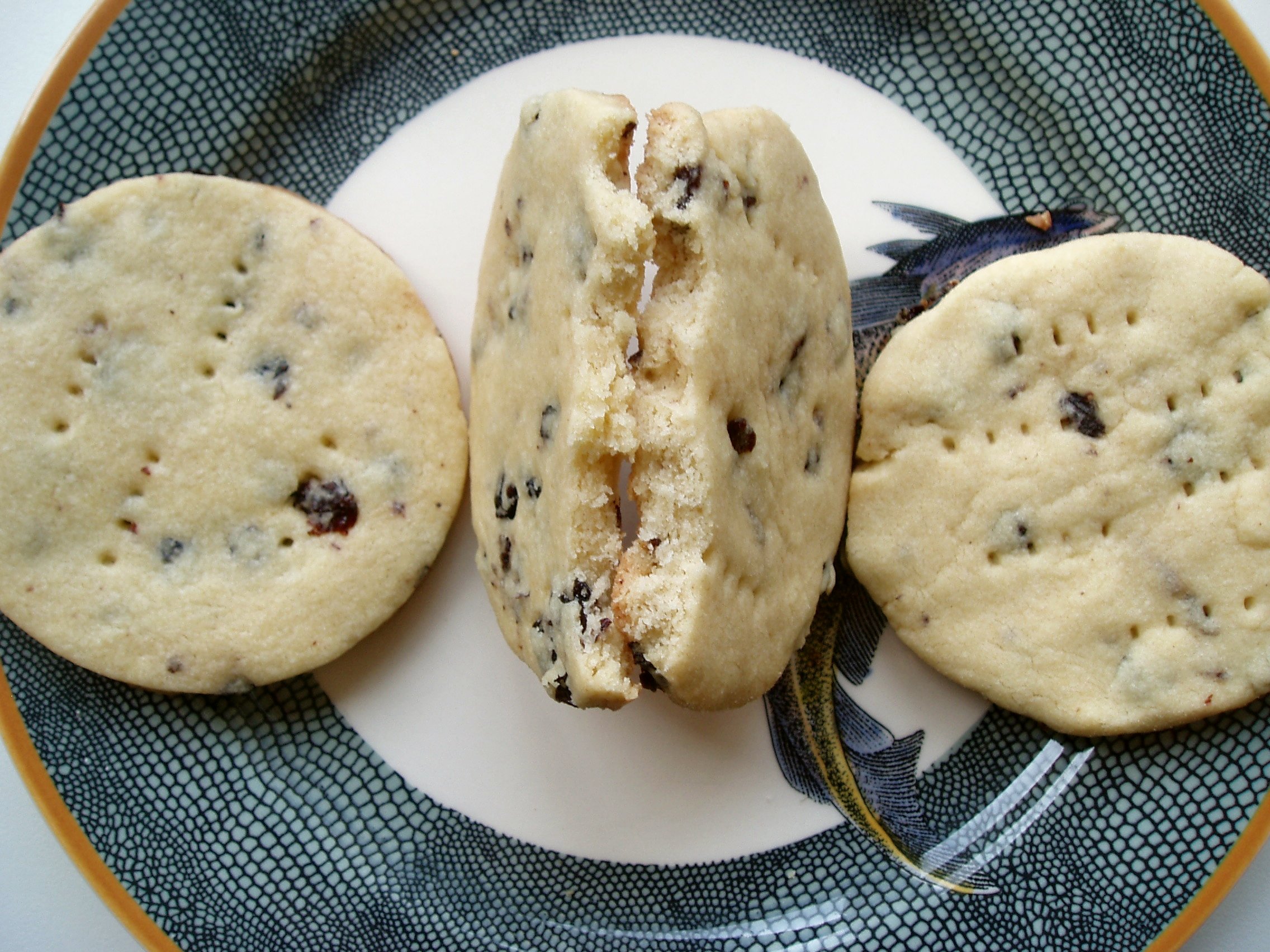
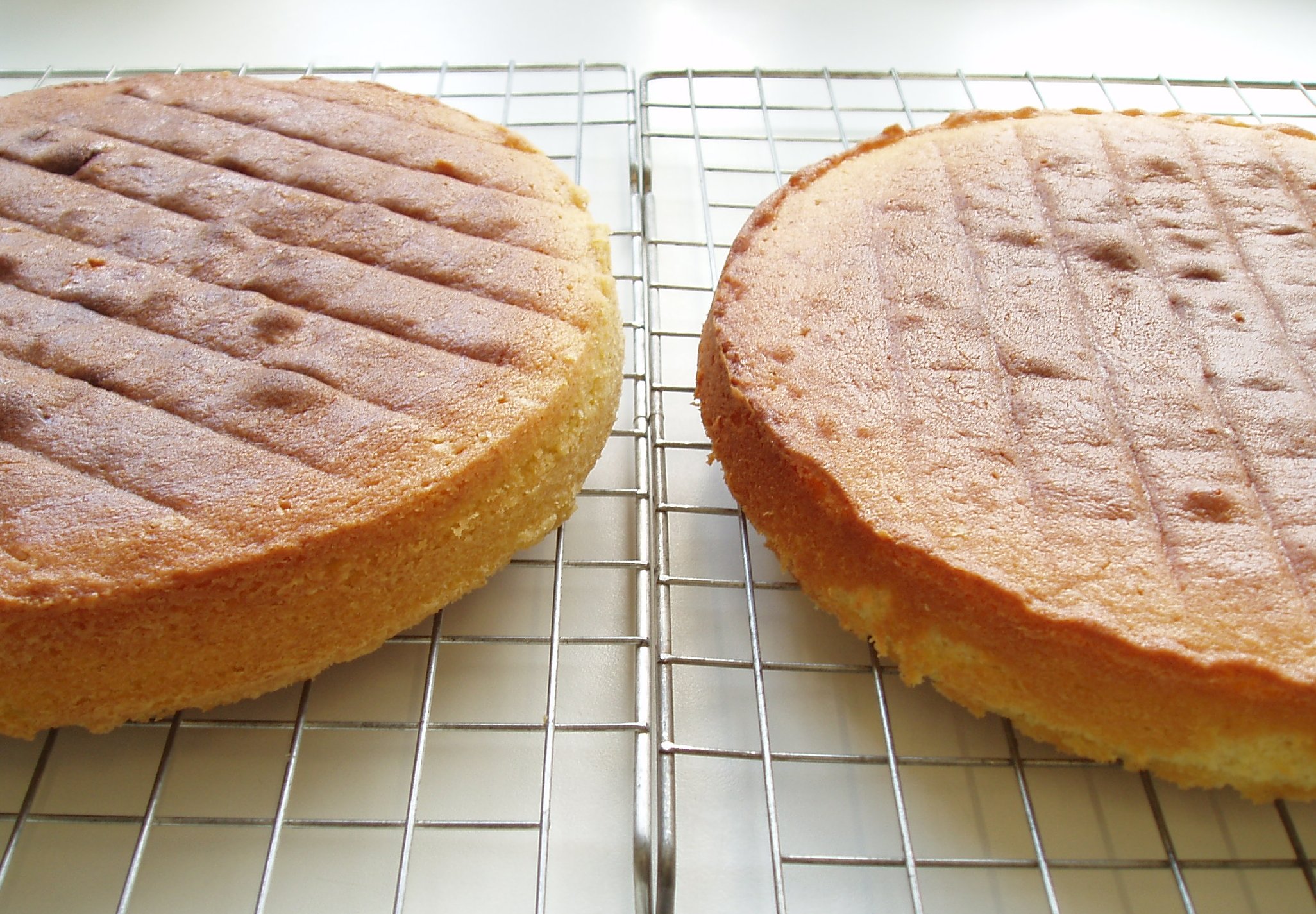
You can probably guess what happened next. Yup – I have just made two batches of Digby cakes, one using kate flour (far) and the other using untreated flour (near).

Excellent Small Cakes

The dough made with kate flour was less easy to work with than that made with untreated flour. I flattened it with my hands and then rolled it to about 1/4 inch thickness. I used a round cookie cutter to cut circles and picked them up by squeezing the edges slightly as I lifted them. The untreated-flour dough was moister. It rolled out better and the circles were less fragile. I was able to transfer these more easily than the kate-flour circles to a lightly greased baking sheet.

Although the untreated-flour dough certainly scored more points in terms of handling, the kate-flour ‘cakes’ (pictured on the right) won hands down when it came to taste and texture. They rose slightly higher than the untreated-flour cakes, had an open cake-like crumb and were meltingly delicious to eat. The untreated-flour cakes (pictured on the left) were dense, tough and chewy – hardly what I’d describe as either ‘excellent’ or ‘small cakes’.

Side by Side Comparison

Excellent Small Cakes
My scaled redaction of an original recipe by Sir Kenelm Digby

450g / 16 oz cake (or kate) flour
225g / 8 oz caster sugar
113g / 4 oz dried currants
225g / 8 oz butter, softened
3 tbsp + 1 tsp double cream
1 egg yolk
2 tsp grated nutmeg
3 tbsp dry white wine

Preheat the oven to 190 degrees C. Lightly grease a large baking sheet.

Combine the flour, sugar and currants in a large bowl and whisk to mix thoroughly.

Cut the butter into small pieces and add to the flour mixture. Beat to combine.

In a separate bowl, lightly combine the cream, egg yolk, nutmeg and wine. Stir into the flour/butter mixture to make a dough.

Flatten the dough with your hands on a clean surface. Roll to a 1/4 inch thickness. Cut into circles with a round cookie cutter and place on the baking sheet. Prick several times with a fork.

Bake in the centre of the oven for 8 to 10 minutes. Leave to cool slightly on the baking sheet before transferring to a wire rack.

When cool, the cakes may be iced with sugar. I didn’t ice my cakes, but I did find some references on sugar icing that provide recipe ideas from contemporary sources.

Getting Warm

I don’t like it when things get complicated. The most eloquent ideas are usually the simplest. Even although this ‘kate flour’ seems to work, I’ve been uneasy about its formulation. Would we really have to work through each available flour from every different country, specifying by means of trial-and-error the best microwaving times for each and including consideration of all the different powers at which different microwaves function? On a scale of one to complicated, this seemed … well … intolerably complicated.

Time to think again. How could I tell when the flour had been microwaved for long enough? I couldn’t think of a way of assessing its moisture content without knowing its starting moisture content, and waiting until it went black wasn’t really an option either. The only vaguely scientific-looking piece of equipment that I hadn’t yet used in my kitchen was a probe thermometer. So … water evaporation … temperature … I returned to my original Dove’s Farm pasta flour, heated it in the microwave for the time I already knew gave good results in baking and then took its temperature.

132 degrees C.

I scoured my cupboards. 10 0z of McDougall’s 00 grade flour took 5 minutes to reach 138 degrees C. The same amount of McDougall’s plain flour reached 134 degrees C after 6 minutes. And then, just because it fell out of my cupboard when I squashed the plain flour back in, 10 oz of Francine’s bread flour took 7 minutes to reach 136 degrees C. Now I was running out of bowls if not flour, so I decided to start baking.

First I turned each of my microwaved flours into ‘kate-flour’, substituting 1/8 of a cup with 1/2 oz of cornflour. I then made 3 Yellow Butter Cakes (thank you for the recipe, Rose 🙂 ), one for each of my ‘kate flours’.

Guess what? They all worked! Yes, even the bread flour came in as a better alternative to bog-standard, unbleached plain flour.

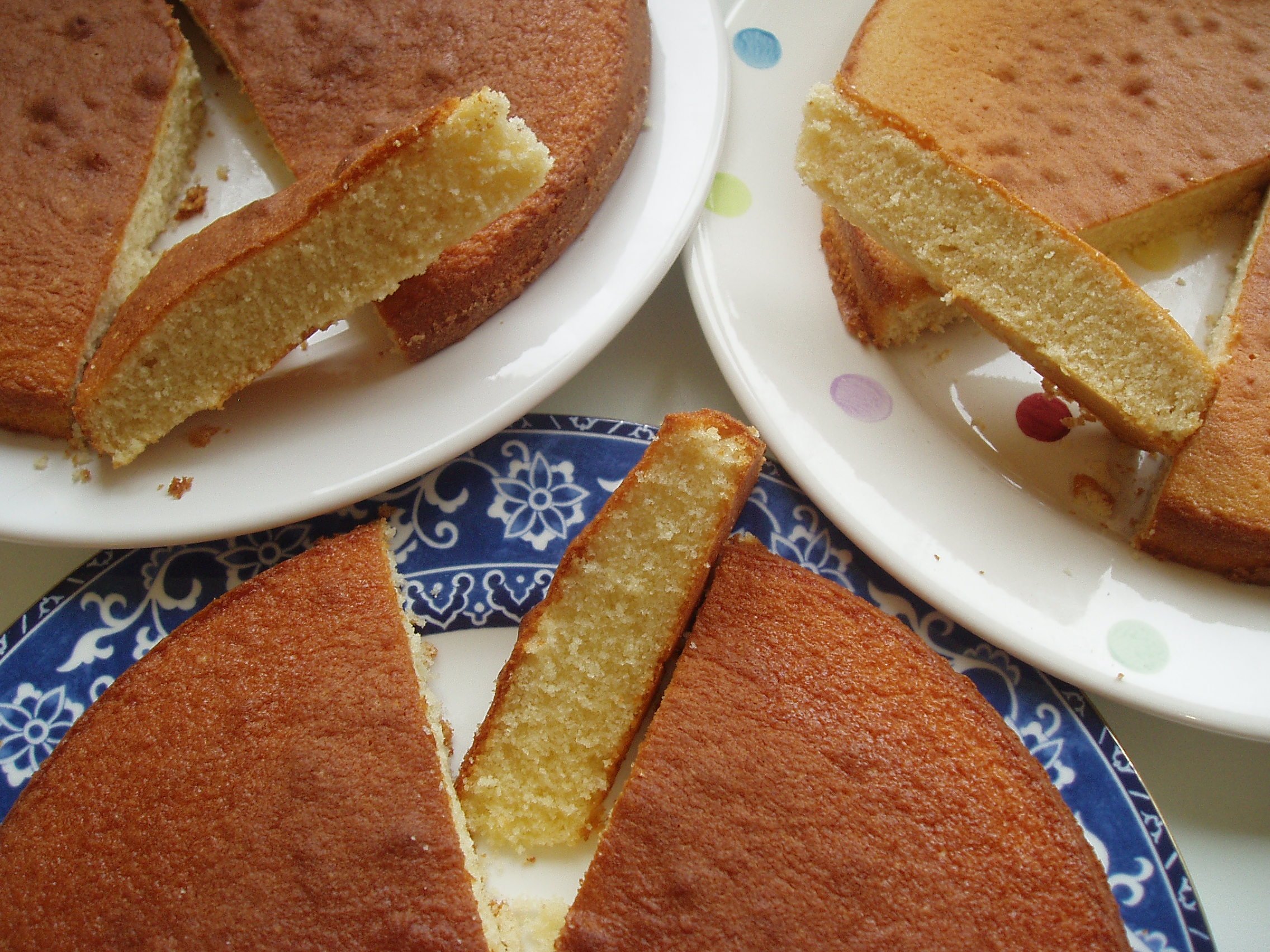
Insides of all the cakes

The plain four cake is on the top left, the bread flour cake on the top right and the 00 grade flour cake is on the centre at the bottom of this photo.

Feel free to skip this bit, but here are some specific details 😉

For each flour, I weighed 10 0z and spread this on a pyrex plate (10″ diameter) to give a bed depth of between 18mm and 20mm. I microwaved the flour for 1 minute at a time at 750W. After each minute, I took a temperature reading and then stirred the flour to break up any lumps. I continued heating the flour by successive minutes until I obtained a reading that was at least 130 degrees C.

I removed the flour from the microwave and allowed it to cool to room temperature. I then sieved the flour and discarded any residue. I spooned the flour into a measuring cup (250 ml) and leveled the top with a palette knife. I weighed the flour in the measuring cup, then calculated 7/8 of this amount to obtain a weight for the flour component of 1 part of kate flour (10 0z of flour before microwaving generally yields at least 2 parts of kate flour).

McDougall’s 00 grade flour (microwaved to 138 degrees C)
1 cup = 4 1/4 oz
1 part kate flour = 3 3/4 oz flour + 1/2 oz cornflour

McDougall’s plain flour (microwaved to 134 degrees C)
1 cup = 4 oz
1 part kate flour = 3 1/2 oz flour + 1/2 oz cornflour

Francine bread flour (microwaved to 136 degrees C)
1 cup = 3 1/2 oz
1 part kate flour = 3 oz flour + 1/2 oz cornflour

Water, Water Everywhere

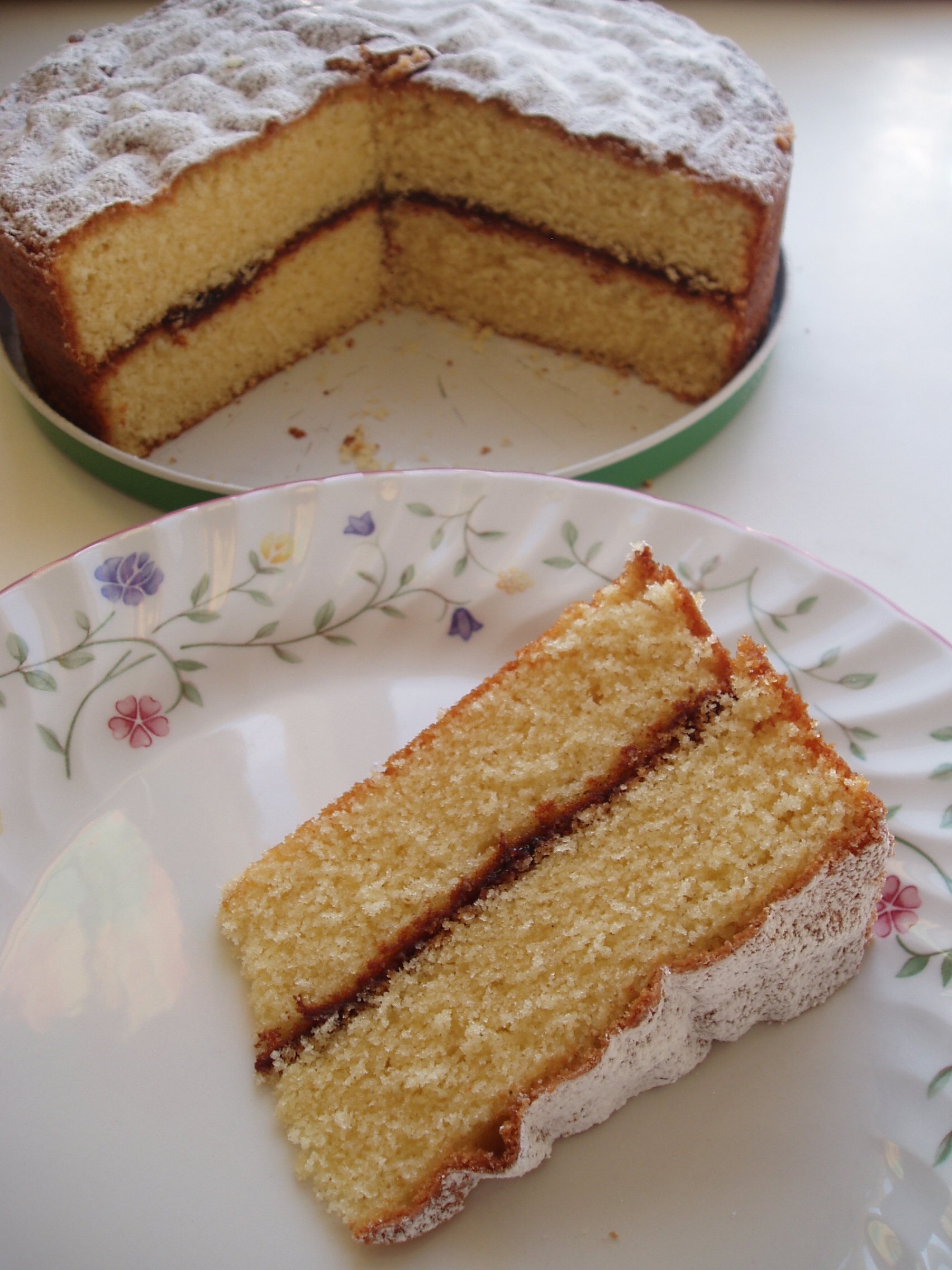
My so-called ‘kate-flour‘ has miraculously transformed my entire experience of baking from The Cake Bible this last week. Witness my Golden Luxury Butter Cake, formerly known as a soggy, dense lump of play-dough.

Golden Luxury Butter Cake

However, it appeared that Dove’s Farm speciality pasta flour was key to this success … and also that some people were having difficulty sourcing this in their local supermarkets. Rose asked me if the microwaving/cornflour method might work for plain flour too. If so, this would make it virtually universally possible to create ‘kate-flour’ in place of ‘cake-flour’.

Unfortunately, my baking results yesterday didn’t suggest that plain flour would work. Substituting plain flour for pasta flour in the ‘kate-flour’ treatment hailed a return to sogginess. It was disappointing, but at least we knew …

Or did we …?

Thinking things through once again in the early hours of this morning (my 6 month old doesn’t yet ‘sleep through’), I remembered that the whole point of microwaving was to reduce the moisture content of the flour being treated to about 1% to 5%. This apparently makes the starch less impervious to water and allows it to gelatinize and swell. What if I had simply failed to reduce the moisture content of the plain flour sufficiently? If my plain flour had a higher starting moisture content than my pasta flour, wouldn’t it then require a longer treatment time in the microwave to reduce the moisture content to within the desired levels?

First thing this morning, I rushed out to buy some more McDougall’s plain flour. I weighed out 10 oz, spread this on a pyrex plate and blasted it on high in the microwave for 3 bouts of 2 minutes each, stirring the flour in between. I then substituted 2 tablespoons per cup of microwaved flour with 2 tablespoons of cornflour, and used this mix to bake yet another Sour Cream Yellow Butter Cake.

It worked!

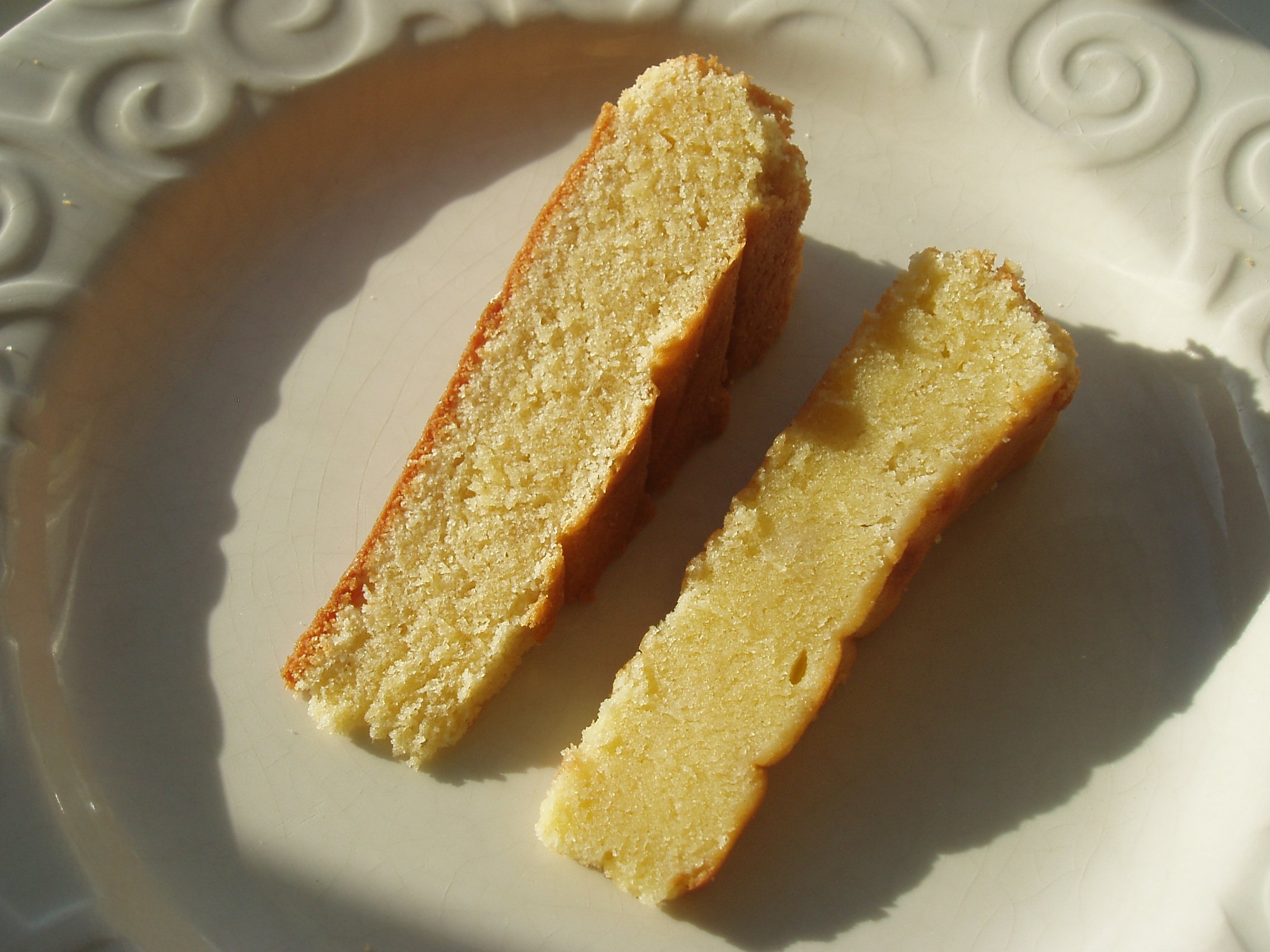
Cakes made with plain flour

The soggy, dense lump I made yesterday with plain flour that had been microwaved for a total of only 3 minutes is on the right. The soft, melting creation I baked this morning with plain flour that had been microwaved for a total of 6 minutes is above, on the left.

More Questions of Flour

Following the success of my microwaved flour as a substitute for cake flour, I was prompted by comments from fellow bloggers into thinking further about cornflour mixes. As ellaella suggested, a common method for making cake flour at home is to remove 2 tablespoons of bleached, plain (all purpose) flour per cup and to replace these with 2 tablespoons of cornflour (cornstarch). Would this still work if the plain flour was unbleached, however? And how would cakes made with a mix of plain flour and cornflour compare with cakes baked from microwaved flour?

At about 5 o’clock this morning, I was struck by a further question. What would happen if I microwaved some flour first and then replaced 2 tablespoons per cup with 2 tablespoons of cornflour? Would the microwaving be enough to compensate for the lack of bleaching?

Well, there was only one way to find out. Back to the kitchen I went.

It just so happens that yesterday I made Rose’s Favorite Yellow Layer Cake using microwaved pasta flour in place of cake flour. It turned out beautifully. Could I really improve on this?

I decided to bake two more of these butter cakes today. For the first, I microwaved 7 oz + a couple of spoonfuls of Doves Farm Organic speciality pasta flour for a total of 3 minutes on high (I have an ancient set of shop scales standing in my kitchen, so I tend to think and work in Imperial measurements). At this point, the whole experiment very nearly ended in disaster. I suddenly thought it would be easier to make up the cornflour mix if I had more microwaved flour on hand … so I popped a few more spoonfuls on a plate of their own into the microwave … and proceeded to burn the flour and melt a large hole in the bottom of the plastic plate. I guess microwaving such small amounts of flour isn’t such a good idea – be warned!

Luckily, my kitchen was still relatively unburnt (despite the smell) andI had just sufficient microwaved flour to be able to prepare a cornflour mix nevertheless. I then used 7 oz of this microwaved-cornflour-mixed flour (which seemed a bit of a mouthful, so I was coming to regard this as ‘kate flour’ instead) to make my first cake.

The flour mix for the second cake was more straightforward. I simply weighed the pasta flour straight from the bag and replaced 2 tablespoons per cup (spooned, 4.25 oz) with 2 tablespoons of cornflour.

What happened? Well, just when things were looking good, they suddenly started looking even better! The cake made with ‘kate flour’ rose beautifully and behaved exactly as Rose said it would in The Cake Bible. The cake made with pasta flour+cornflour didn’t rise quite so high and then retired to below the rim on cooling.

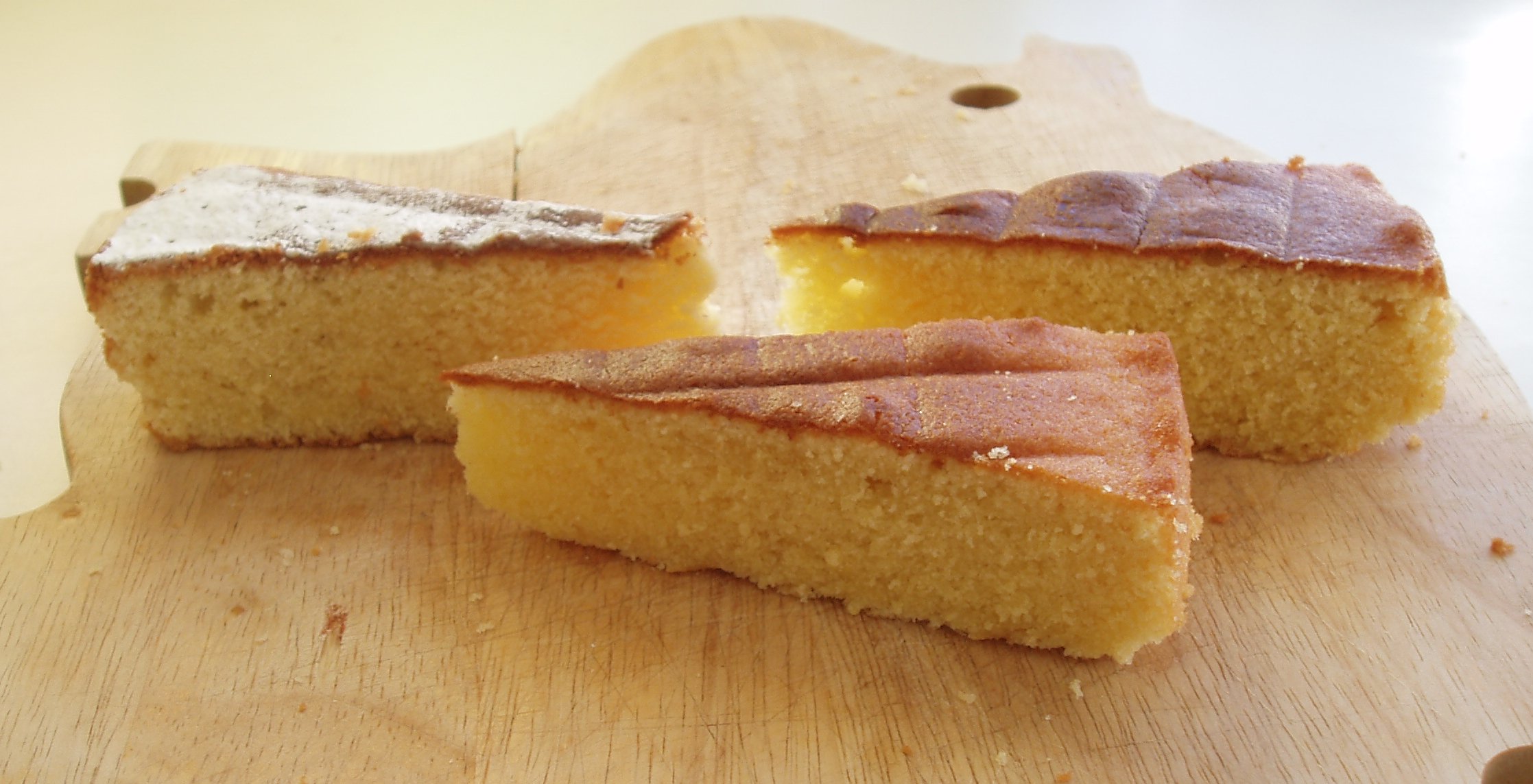
Cakes from the side

Inside, the ‘kate-flour’ cake (behind, on the right) had a finer texture and was lighter than either the pasta flour+cornflour (front) or all-microwaved-flour (behind, on the left) cakes.

Side view of cakes

More importantly, the ‘kate-flour’ cake definitely got my vote for taste. The pasta flour+cornflour cake was simply stodgy and … well … floury. The ‘kate-flour’ cake, on the other hand, was moister than the all-microwaved-flour cake and had even more of a melting, soft feel in the mouth. Each bite brought a delicate flavour of vanilla and left behind a subtle, lingering tang.

Perhaps with these new results, I might feel brave enough one day to use my ‘kate flour’ to bake another Golden Luxury Butter Cake … but that will be a story for another day.

A Question of Flour

“Because it provides the fundamental functionality in a baked product, flour has the ability to either make or break a product.”

So writes Scott Heganbart in an article for Food Product Design. I have recently had a startling glimpse into the full significance of this deceptively simple statement.

Ever since my discovery of The Cake Bible by Rose Levy Beranbaum, I have been intrigued by this thing called ‘cake flour’. Until then, I had always assumed that flour was divided between plain (or all purpose) and self-raising, with a more macho variety of plain for breadmaking. But here was someone who had devoted a huge amount of time and energy ensuring that bakers in the UK could achieve the same results as those in the US using only the ingredients that were available to them … which didn’t include cake flour.

What then is cake flour? Beranbaum gives a detailed description of this ingredient in a section entitled ‘Understanding Butter Cakes’. From this, I learned that cake flour is low in protein because it is milled from soft winter wheat. It is also less acidic and able to absorb more water than other flours because it has a finer granulation and is bleached by chlorination. Apparently, the whole success of Beranbaum’s recipes for butter cakes relies on the structural advantages made possible by these properties of cake flour.

At first, I filed these differences away as a quirky curiosity and launched into following the UK-specific recipes. However, it soon became apparent to me that whilst tasting delicious, the butter cakes I was producing were not matching their descriptions. And then, one day, there was the disaster of the Golden Luxury Butter Cake. A velvety grain?? More like a soggy, dense lump of play-dough. Even the ducks were disdainful as they watched it sinking to the bottom of the pond.

What was going wrong? I decided to take a second look at this question of flour.

Back in 1992 when the UK edition of The Cake Bible was first published, self-raising flour in the UK was bleached. It was this bleaching process that allowed Beranbaum to create her solution of mixing plain and self-raising flour in recipes for butter cakes. Now, here comes the important part … I discovered that self-raising flour in the UK is no longer bleached. In fact, the Flour Advisory Bureau states that the process was not permitted after 1997. In other words, the work-arounds developed by Beranbaum have had the carpet swept from under their feet!

I’m not known for giving up easily. I wondered about the possibilities of obtaining cake flour from the US. However, there are now regulations about this that I suspect were not in place when Beranbaum suggested importing American ‘Softasilk’ cake flour as a possible solution to the problem in 1992. As reported in this United States Patent:

“Notwithstanding the acceptance in the United States of chlorinated cake flour, chemical treatments and chemical additives to foods have become suspect and it is desirable to avoid such treatments and additives wherever possible. In addition, most foreign countries prohibit the use of chlorinated cake flour in their cake products. As a result, these countries do not allow importation of American dry mix products such as cake mixes and the like which contain chlorinated flour.”

Sherlock Holmes taught, once you eliminate the impossible, whatever remains, no matter how improbable, must be the truth. Well, the only remaining course of action seemed to be to create my own alternative form of cake flour using processes and products available in the UK! I really wasn’t expecting to find any success along this route. After all, I have a flawed and very incomplete awareness of cake theory, little understanding of biochemistry or molecular science, and a kitchen full of children and their paintings rather than scientists and their laboratory equipment. Foolishly undaunted, I set out nevertheless to discover my own cake flour.

I needed something finely milled and low in protein. I found this in the Italian 00 grade flour that is widely available in UK supermarkets. At 9.9g of protein per 100g of flour, Doves Farm Organic speciality pasta flour was the most suitable that I could find (contrary to its claim to be high in protein, this flour is not only more finely milled but also has a lower protein content per 100g than all other brands of plain flour that I could find on the supermarket shelves).

Now I needed to apply an alternative treatment to chlorination that would yield similar results. After further research I came across a proposed method for the microwave treatment of unchlorinated cake flour:

“Microwave treatment of unchlorinated cake flour restores the ability of starch to gelatinize and swell … the swollen, gelatinized starch granules provide the honeycomb open-celled structure of the finished cake, which stabilizes it against collapse upon cooling. Starch gelatinization also contributes to crumb tenderness, slightly dry texture and development of fine-grained cells.”

It seemed too good to be true. Would this work in my own kitchen? Apparently, best results were obtained using flour with a protein content between 4% and 9%. My pasta flour was slightly above this at nearly 10%. Also, it appeared to be very important to use undehydrated flour so it has sufficient moisture to be able to interact with the microwave field and so reduce the moisture content to less than about 6%. My pasta flour? I really didn’t have a clue about its moisture content or whether it was already dehydrated or not. I could only cross my fingers!

Taking an enormous leap of faith, I set to work in the kitchen. I decided to bake two versions of Beranbaum’s Perfect All-American Chocolate Butter Cake. In the first, I followed the original US recipe and replaced the cake flour with my own microwaved flour. In the second, I followed the UK recipe and used McDougall’s Supreme Sponge flour. This is a self-raising flour milled specifically from soft wheats. The packaging claims that it can absorb more moisture and sugar than standard flour and will produce a very light, soft texture.

To make my own cake flour for the first version, I carefully weighed out 235g of pasta flour. I spread this on a plate to give a bed depth of 2cms and blasted it on high in the microwave for 1.5 minutes (half of my total alloted time of 3 mins). When I opened the door, a great amount of steam escaped from the microwave and the flour had started to clump together. I fluffed it up a bit with a fork and put it back in for its second blast. It then occurred to me that, with all this moisture evaporating, the finished flour might not weigh 235g anymore … so in my best scientific practice, I quickly spooned on a couple of extra tablespoons of flour and blasted this mix for the remaining 1.5 minutes! I now had a reserve of ‘cake flour’ that I could weigh out and sieve.

The results?

Despite having carefully researched and concocted my own version of cake flour, I had remarkably little faith that I could produce anything remotely edible with it. I certainly wasn’t anticipating the startling effect that my flour had made when the two cakes were out of the oven.

Cake Tops

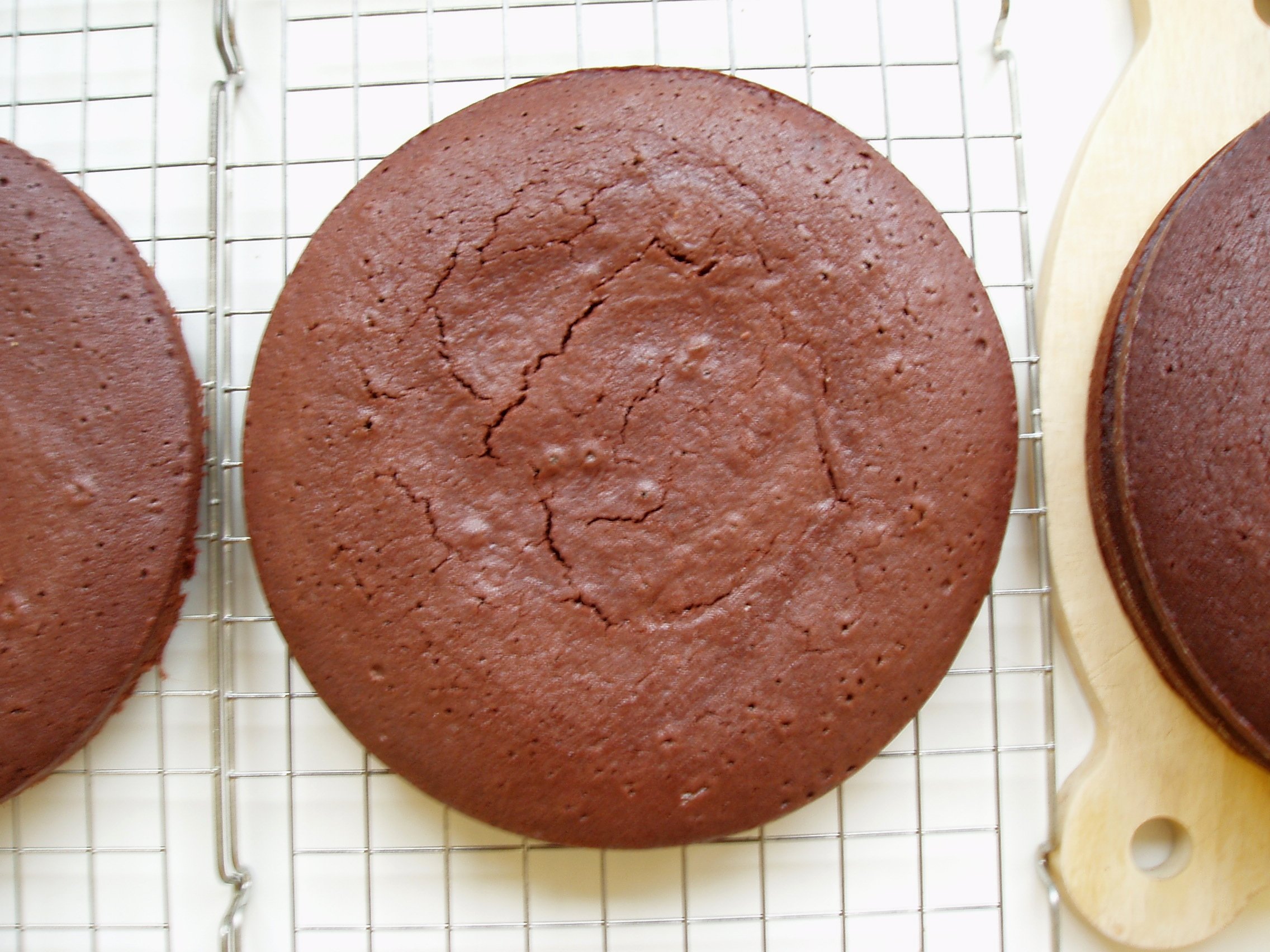
The cake layers (on the left and centre) made with the UK self-raising flour were good illustrations of what had happened so far every time I tried a butter cake recipe from The Cake Bible. They were bubbled on the top and dense inside. The cake layers made with my microwaved flour (cooled and stacked on the right) were beautiful! Smooth tops with a wonderfully light, fine texture inside. I was so excited!

Here are closer views of the layers:

UK-specific recipe with self-raising flour …
First close view of UK cake

and …

Second close view of UK cake

US recipe with microwaved flour

Close view of US cake

Not only did my microwaved flour have a dramatic effect on appearance, but it also had a comparable effect on the taste of the cake. The UK/self-raising flour version was quite delicious but also heavily moist and buttery. The US/microwaved flour version was quite another story – light, chocolatey, soft and exceptionally exquisite.

I can’t provide tasting samples online, but the difference is clear in this photo. The UK/self-raising flour cake is on the left in the foreground; the US/microwaved flour cake is behind.

Inside the cakes

The next day, the UK/self-raising flour cake seemed to have a buttery strip running through the centre of each layer whilst the US/microwaved flour version had retained its lightness. If anything, the US/microwaved flour cake had become even more meltingly chocolatey.

I can only say, “Mmmmmmm” as I now have something to think further about … and some delicious chocolate cake to eat as well!

  • Enter your email address to subscribe to this blog and receive notifications of new posts by email.

    Join 289 other subscribers
  • Seasonal Recipes

    candied peel

    baileys chocolate truffles

    gingerbread men

    mince pies

    fudge

    smarties cookies

  • Freshly Made

  • Categories

  • Favourite Feasts

  • Awards

    DMBLGIT Award
  • Archives

  • wordpress visitor counter
  • Adventures in food by Kate Coldrick from Woodbury in Devon.