Let Them Eat Chicken: The Round-Up

What better way to celebrate my birthday than by posting this round-up of entries to Let Them Eat Chicken? It has been wonderful to see the enthusiastic responses arriving in my mailbox. Chicken welfare is very clearly high on the agenda for many of us.

A huge thank you to everyone who took part in this event to raise awareness of conditions in the broiler chicken industry. Without further preamble (apart from to say that I’ll make it prettier with photos later – family are arriving now to celebrate my birthday 😉 ), here then are your favourite chicken recipes (ordered loosely according to date of entry):

Marie from A Year To Oak Cottage posted the very first entry in which she shared this tasty recipe for Chicken with Parsley and Capers. Marie describes how she and her husband made a decision last year to eat only free-range and organic meat, even although it means they eat meat less often now. However, this has allowed them to “eat with a conscience”.

David Hall, a BBC MasterChef finalist and food writer, buys Northumbrian free-range chickens from his local butcher, Gordons in South Tyneside. They are “utterly delicious and simply no substitute for the fatty, poor tasteless intensively reared birds that everybody buys from the local HUGE Asda!” Here’s the recipe he sent me for Moroccan Stuffed Chicken with Roasted Fennel.

Carol Wilson is a food writer and Jury member for the Slow Food Awards. She wrote to me about the “Fowl Play” of intensive chicken rearing and contributed a delicious recipe for Chicken Satay.

Rona Amiss from Higher Fingle Farm offered her children’s favourite recipe for chicken sticks. She recommends sourcing chicken reared to high standards from local producers for a less expensive option than buying organic meat in the supermarkets.

Fiona Bird from Stirrin’ Stuff works in partnership with schools and nurseries across the UK to educate children and young people about food. You might have seen her demonstrating this recipe for Poached Chicken and Couscous Salad at the Royal Highland Show earlier this year! Fiona devised this recipe for the Co-operative to showcase the higher-welfare Elmwood chicken standards that are now the minimum requirements for all their fresh chicken. She says that poaching “really is child’s play and keeps the chicken moist as well as being a quick and healthy method of cooking.”

Sarah Hartley reflects on the Chicken Out campaign on her blog of ‘Life Through Food’ at the Manchester Evening News. She offers a scrumptious recipe from a friend for Sharon’s Chicken Enchilada Pie. A tasty way to use up any chicken leftovers, this pie is ideal for serving to groups of hungry party guests.

Fiona Beckett of The Frugal Cook describes an intriguing procedure for a barbeque show stopper she calls Beer-Can Chicken. You might need a sous-chef to help with this in the final stages, but Fiona believes it’s “the best chicken recipe of all”.

Joelen of Joelen’s Culinary Adventures agrees and gives us a variation on Beer-Can Chicken from across the the Atlantic. She emailed me to say, “the free range chicken I used for this recipe is from Trader Joes and it was incredibly moist and flavorful.”

If you’re looking for something that uses chicken stock and thighs, Anna’s Avgolemono is the perfect treat at Morsels and Musings. This flavoursome Greek chicken and lemon soup can be served as either a starter or a main course.

As a contributing editor to Living Earth, Elisabeth Winkler from Real Food Lover wants her food to be grown “without chemicals and with respect.” She gives some valuable advice on how to eat organic chicken on a budget and includes a recipe for Roast Organic Chicken from Sheepdrove Farm, Half Price!

Jamie Oliver sends his wishes for the best of luck and provides tasty ideas for using up a whole chicken, including poaching, salads and chicken broth.

Henrietta Green and the team from Food Lovers Britain supported this event by posting a delicate summer chicken recipe in their newsletter, Food Scoop. Although it may sound strange, the accompanying lettuce sauce is perfect for using bolted lettuce.

Alex, undoubtedly the Princess of The Princess and the Recipe, uses free-range chicken breasts from Tesco* to make a wonderful Thai Green Chicken and Mango Curry with Spiced Cauliflower. She always buys free-range chicken and believes “it really does pay off in terms of taste and texture”.

An incredible Sticky Lemon Chicken from the Antics of a Cycling Cook is “simple to prepare and tastes great.” Sam is passionate about this event and urges everyone to think carefully before buying their next chicken.

Leemei from My Cooking Hut hits home about taking responsibility for choice when allocating your shopping budget in a post on Free-Range Chicken. With beautiful photos, she describes how she uses a Label Rouge chicken from France to create a late Sunday lunch of Maple Roast Chicken.

Cakelaw from Laws of the Kitchen selects a scrumptious recipe for Spanish Roast Chicken to bring awareness to the plight of broiler hens. She roasts a free-range, “lovely, plump large bird” from Prahran Market in Melbourne on a bed of lemon and chorizo flavoured potatoes – superb!

For an easy meal that looks like a lot of effort but is heavenly, try Leigh’s Easy Moroccan Chicken with Sweet Potato and Garlic Mash from The Good Stuff. He also offers a beer match. As he says, without our independent food and drink producers, “we’d be in a really depressing state”.

Despite struggling against software problems, Kadeeae from Consuming the Harvest secured her entry by emailing me her recipe for Creamy Chicken Tagliatelle. She uses free-range chicken thighs from Tesco* and serves her dish with garlic bread and salad.

A Sceptical Cook, author and food-columnist for the New Statesman, Nicholas Clee bravely shows us how to achieve a spatchcocked chicken for laying flat on the barbeque. His chicken is a Label Anglais, a special slow-growing breed that thrives in free-range pastures.

Ning from Heart and Hearth writes movingly about the difficulty she faces in sourcing a free-range or “native” chicken in her home-town of Manila in the Philippines. She offers a cherished, nourishing soup made originally for the family by her grandmother that uses four Chinese herbs to comfort and nourish the body.

Mallika posted an entertaining account of an encounter with thighs in A Thigh For Your Conscience at Quick Indian Cooking. She was very serious about her recipe for chicken curry however, and used an organic chicken from Waitrose that “rocked” and was served with “a content smile”.

Mark, who specialises in growing Mediterranean crops and forgotten fruits at Otter Farm, has been extremely helpful and supportive of this event. He searched for a recipe but confessed that, “to be honest there’s not much else I like to do with a chicken than roast it with herbs and butter pushed under the skin and eat as much of it as I can!” That sounds more than good enough to me!

Elaine from A Series of Kitchen Experiments uses grain-fed chicken drumsticks from the farmers’ market in March Atwater to cook a spectacular Ayam Masak Merah Madu, or Honeyed Red Chicken. She finds that the taste is excellent in comparison to that of cheaper, supermarket chicken – more tender and sweet.

For a worrying moment, I thought I might be at risk of missing my own event! But I managed to fit in a post between the school-runs and the nappy-changing offering my own recipe for Garlic Chicken Kiev.

At Feast With Bron, an expensive, Old Fashioned chicken is transformed into an economical purchase. Bron was inspired to cook with devotion to match the care she knew had been taken in the rearing of this bird. Her final meal provided this recipe for Chicken and Tarragon Soup.

Kitty from Boring History Girl offers a special-occasion recipe for Roast Chicken Spaghetti – a true birthday treat! She invites comments on her opinion that “basic, nutritional, sustainable food cooked into simple to prepare meals is within reach of all but most unlucky of western society.”

Nick from The Tracing Paper works for East Anglia Food Link to increase the availability of local and sustainable food. He takes us on an investigation to decode the origins of the chicken he buys in Where’s That Chicken From? and concludes with an illustrated guide to jointing and a recipe for chicken tagine.

Let me wish a Happy Birthday also to Jules, a Domestic Goddess in Training! She uses a tasty, succulent chicken “that doesn’t leach water when you cook it” to rustle up this fantastic Coconut Chicken Masala.

And finally, Derek Armstrong contributed a last-minute entry for Coq à la Pêche – something that certainly sounds simple but different!

… but wait, that’s not quite all! Warren Murray has squeezed in an extra entry this morning over at Word of Mouth. He questions readers’ shopping habits and casts a vote for the RSPCA’s Freedom Food standards in Chicken Check-Up. He gives not one but several recipe suggestions for ensuring that the chicken’s better-than-average life didn’t go to waste.

UPDATE

Joining the after-dinner party is Jeanne from Cook Sister! Lamenting the drizzly summer, she nevertheless offers a sizzling barbeque recipe for Smoked Chicken with a Curried Stuffing with leftovers that lasted at least 6 delicious adult meals. As she says, “show me the battery bird that can do that!”

Meeta from What’s For Lunch, Honey? has returned from her vacation with promises of a wonderful, creamy Indian chicken dish. Meeta’s process of cooking with care, thought and love starts from the moment she considers which products will be on her shopping list.

*When Tesco raise their minimum welfare standards, I’ll add a link to their website 😉 .

The Chicken of Tomorrow

In 1951, 45 contestants from 25 states converged on the University of Arkansas for the national Chicken-of-Tomorrow finals. These were the culmination of a program throughout the 1940s to encourage “the development of superior meat-type chickens … a broad-breasted bird with bigger drumsticks, plumper thighs and layers of white meat” (as the narrator, Lowell Thomas proclaims in this 1948 documentary of the contests).

Chicken Head

The Chicken-of-Tomorrow contests were sponsored by America’s dominant grocery retailer at that time, the Atlantic and Pacific (A&P) Company. A collection of 1951 contest papers includes advertising materials, brochures and promotional souvenirs from suppliers of feed, drugs, stock and equipment for poultry growers. Chicken meat was indeed big business. And bigger chickens meant bigger profits.

An article from 1951 in the World’s Poultry Science Journal describes the significant effect the breeding contests were having on the economy:

In 1948 broilers contributed over $18,000,000 in gross profits to the poultry industry in North Carolina … Last year there was a difference of 0.7 pound in weight between the highest and lowest rating strains whose body weight was taken at 12 weeks of age. These strains had been taken from the same hatches, fed the same feed, and managed in the same manner. On the basis of 1,000 broilers, a farmer who selected the highest rating strain by weight for broiler production, would have 700 more pounds of meat to market at 12 weeks of age than if he had chosen the lowest rating strain. (Vol. 7 Issue 02)

Bigger certainly appeared to be better, not only for producers but also for consumers. Selective breeding with an emphasis on growth rate, feed efficiency and amount of breast and thigh meat maintained a steady supply of inexpensive poultry products for the nation’s booming supermarket industry.

Fast-forward fifty years and yesterday’s chicken-of-tomorrow is our chicken tonight. Intensive genetic selection has created a bird type that has little in common with earlier generations of broilers. Studies of the metabolism of these chickens suggest that such high demands on their energy resources for growth seriously compromise the resources they are able to direct towards other processes like fighting disease. An increased need for oxygen to support their rapid development leaves them prone to heart failure and ‘waterbelly’, or ascites. The impact that the gross weight of these chickens has on their ability to walk is recognised as a primary concern in broiler welfare. Additionally, these birds may be faster-growing but this means that they are also fattier than the chickens of yesterday – between 13-18% of the body weight of a commercial broiler chicken is ether-extractable fat.

The inevitable conclusion is that these man-made, fast-growing broilers are genetically, physically and physiologically different from slow-growing strains of chicken.

What happens when these man-made birds are reared intensively in farming sheds? Here, the chickens are kept on litter in direct contact with their droppings and are stocked at a density that provides little room for movement. As they grow, the environmental conditions in the shed tend towards becoming warm, wet and under-ventilated unless they are adequately monitored and regulated. The chickens’ feed is normally processed to make it easier for the digestive enzymes to access the nutrients (heat-processing is often used, which also gelatinizes part of the starch and promotes feed conversion efficiency – note the links to kate flour!). However, heat-processing of feed pellets increases the chances of wet litter … so enzymes are combined with the feed to control wet droppings.

These factors all combine to create a ripe breeding ground for the development of coccidiosis, one of the most important diseases among poultry. Although coccidiosis is common among all bird populations, the Food Standards Agency reports that intensive farming methods make the routine treatment of poultry with veterinary drugs “indispensable”. In the UK, intensively-reared chickens are therefore given a coccidiostat feed additive from placement up to around 28 days of age. The only approved drug for this is Nicarbazin, currently available in the form of the feed additive, Maxiban. It is interesting to note that the same drug is also registered as an oral contraceptive in Canada geese!

This doesn’t come without risks. The producers of Maxiban, Elano Animal Health, provide a material safety data sheet for the product, which states:

Maxiban Premix contains narasin and nicarbazin, may cause burns or permanent tissue damage to the eyes, and may be irritating to the skin and respiratory tract. Effects of exposure may include reduced activity, nerve tissue changes, changes in heart rate/rhythm, heart tissue changes, decreased red blood cell count, kidney tissue changes, and muscle tissue changes.

It is possibly for these reasons that a high proportion of feed mixes used by the poultry industry are classified as dangerous and needing special transport arrangements under the Chemicals (Hazard Information and Packaging for Supply) Regulation 2002.

However, this poster from the Veterinary Medicines Directorate also underlines the high levels of care that need to be taken by poultry producers to avoid residues of nicarbazin occurring in chicken meat. A governmental report published on May 14th 2008 showed that nicarbazin residues are still being found in British chicken. This is believed to be “due, at least in part, to poor feed management practices on-farm”:

The study highlighted that although it is best practice advice to empty bulk bins between feed deliveries, this does not always happen in practice, probably because farms are reluctant to risk shortage of food supplied to birds.

And they are reluctant to risk shortage of food supplied to birds because … answers on a postcard 😉 .

But surely coccidiosis is a problem in free-range and organic methods of farming, too? Well yes … but it’s more a question of scale. There is little doubt that intensive farming practices increase the risk of infection and make preventative treatment in the form of feed additives essential. The oocysts that are eaten by the chickens need sufficient litter moisture to sporulate and become infectious. The risk of infection is also greatly increased when birds live among their own litter droppings. Combined with a densely-stocked flock of chickens whose massive size and painful leg conditions prevent them from foraging over a wide area, the extent of the problem in intensive farming becomes obvious. Indeed, intensive farming of poultry only became possible after the development of anticoccidial drugs in the 1940s. Until then, extensive farming methods enabled chickens to become immune to the disease through “trickle vaccination,” or exposure to a continual but low-level incidence of coccidiosis. Pasture management and vaccination are still used by organic and free-range production systems to control outbreaks of coccidiosis and avoid the routine use of preventative anticoccidial medication.

So perhaps the simple answer would be to release all intensively-farmed chickens to the great outdoors. Unfortunately, this is not an option. As researchers discovered in 1994, fast-growing broiler chickens made little use of the pasture, perches or extra space when they were reared outside. Importantly, the researchers attributed this to the fact that 80% of the chickens had painful leg conditions by 7 weeks of age, which presumably prevented them from displaying any greater levels of activity despite the possibilities offered to them by their more natural surroundings. Furthermore, a comparison of slow and fast-growing broilers after the age of 6 weeks showed that the slow-growing birds walked around and spent more time outdoors, whilst the fast-growing strains were prevented from doing so by their extreme weight.

These observations are supported by evidence that painful foot pad and hock burns among intensively-reared broilers are less a result of poor management and more a consequence of selective breeding. However, as Dr John Hardiman reported in 1996, leg disorders ranked only 9th out of 12 in the selection programs of the major broiler breeding companies. It’s easy to guess which factors were rated first and second in importance by broiler breeders … improved growth rate and feed efficiency, respectively.

The implications of this have recently been underscored by findings from a Defra-funded study of leg disorders in broiler chickens:

We show that the primary risk factors associated with impaired locomotion and poor leg health are those specifically associated with rate of growth … The welfare implications are profound … A debate on the sustainability of current practice in the production of this important food source is required … the broiler industry will need to work with the scientific community to develop more robust and healthier genotypes and to ensure that optimal husbandry and management practices are fully implemented.

This is why I believe that the RSPCA’s Freedom Food standards should be adopted as the minimum requirements for the entire broiler chicken industry. Key points include the provision of space for all chickens to move around and a restriction of the genetic growth rate of a chicken to no more than 45g a day, on average. With this assurance as a minimum, we could at least be confident that even our very cheapest chicken was of an acceptable welfare and nutritional standard.

For my own entry to Let Them Eat Chicken, I would like to offer a recipe that makes use of any left-over pieces of chicken. I developed this recipe because I absolutely love Chicken Kievs but was unable to find any that used organic or free-range chicken. Now I have a version that I would prefer any time over the highly-processed, intensively-farmed Chicken Kievs on offer in the supermarkets. I apologise in advance for the unorthodox amounts I use – it all depends on how hungry you are and how much chicken you have left to use!

Garlic Chicken Kiev

leftover pieces of cooked chicken
a few cloves of garlic
handful of chives
handful of parsley
a few slices of bread, crusts removed
enough milk to cover the bread
a large knob of butter for each Kiev
a bowl of seasoned flour (I add paprika, oregano, sage, rosemary, thyme, parsley, salt and black pepper … my husband says I should just add ‘mixed herbs’, but it feels more magical to add each herb separately!)
1 or 2 eggs, beaten
a bowl of breadcrumbs + grated parmesan

Mince the chicken, garlic, chives and parsley together (I use an antique Spong Mincer, but I’m sure there are more modern tools for the job)

Soak the bread in the milk for 15 minutes, then squeeze out the excess milk. Combine the soaked bread with the chicken mixture to obtain a consistency that holds its shape when formed into patties.

Scoop out a ball of chicken mixture with your hands. Press a knob of butter into the centre then smooth the mixture around to enclose the butter completely.

Roll the patty/Kiev in the seasoned flour, then in the egg and finally in the breadcrumbs/parmesan.

When you have used up all of the chicken mixture in this way, bake the Kievs on a baking tray in the centre of the oven (180 degrees C) for 35 to 40 minutes. Alternatively, cover with clingfilm and refrigerate until ready to bake.

Let Them Eat Chicken

How do you choose which chicken meat to buy? Is it because it looks fresh and is within its sell-by date, or do you look first at the price? How much influence does the quality of the meat have on your choice?

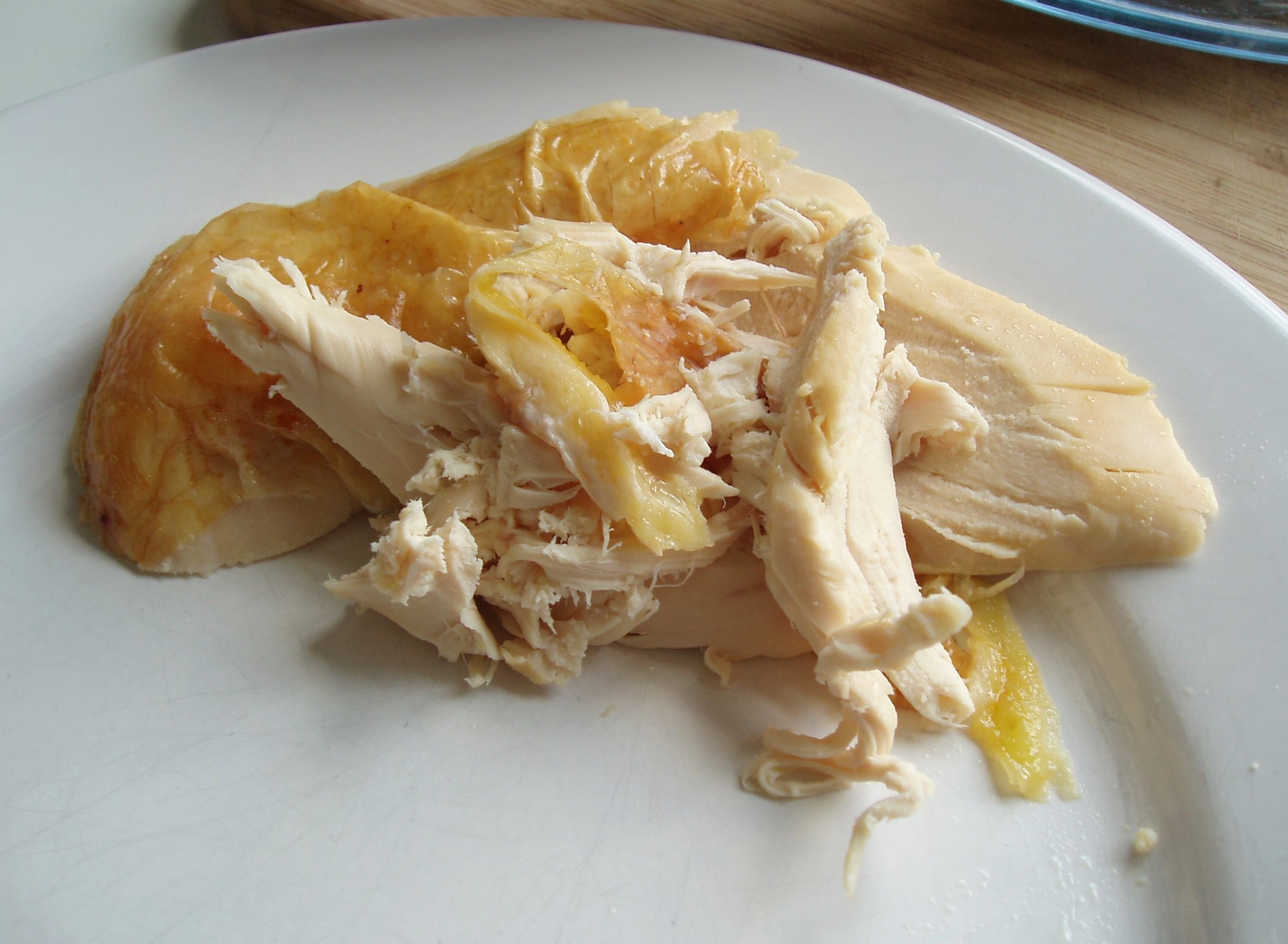
Chicken

It is easy to assume that organic, free-range chicken is a luxury only the wealthy can afford. Take this out of the picture and the rest of us are left to choose among the various standard packages of chicken on the supermarket shelves. Assessing quality becomes problematic, so in reality we are probably most influenced by appearance and price when it comes to actually putting a chicken in our trolley and on our tables.

It is also easy to assume that this is all fine and well. It might not be organic, but it’s the best we can manage. The majority of us are neither super-rich nor seasoned animal-rights activists. We have families to feed and tight budgets to control. Our daily lives are normal, mundane and average. Supermarket chicken might be cheap, but that’s our life. It’s cheap because we need it to be cheap. Consumer demand makes it cheap – it sells.

Does it matter how we keep the price of this chicken so low? Well yes, it does … if we’re at all interested in the quality of the meat we feed to our families, that is.

In January this year, The Independent reported covertly-shot footage of the chickens we are eating. The video was taken by the animal welfare group, Compassion in World Farming (CIWF) and can be seen here on YouTube.

The conditions seen in this video are typical of those in intensive systems of farming. They are designed to keep the cost of chicken low. Researchers from Edinburgh describe how each shed houses up to 20, 000 birds. The floor is covered with wood shavings that are not changed throughout the entire duration of a flock’s six-week life. The chickens therefore live constantly among their own litter and droppings. Furthermore, the chickens have little fresh air and no natural light. The sheds are windowless so that light, heating and ventilation can be artificially controlled to reduce movement and maximise weight gain.

These chickens are termed broilers as they are reared specifically for meat production. In other words, they are not simply egg-producing hens at the end of their useful laying life … as used to be the case. Instead, broiler chickens have been progressively selected to grow bigger and faster than egg-producing chickens, preferably with as much breast meat as possible to satisfy our demand for the product. They grow rapidly from 45g at birth to 2.2 kg at slaughter only 42 days later. This represents a 300% increase in growth rates over the last 50 years.

Recent research by scientists in the UK describes in detail how such a massive weight gain leads to poor walking ability and severe leg disorders in these very young chickens. They point out that strategies to reduce leg health problems would also reduce growth rate and production … which means the chickens could not be reared as quickly or as cheaply.

It’s a vicious circle propelled by the decisions we make in the supermarkets.

A survey in 2001 by researchers at the University of Reading highlights the centrality of animal welfare concerns to food safety, quality and healthiness. On the whole, we do understand that good animal welfare standards lead to good food standards. However, this research also suggests that we don’t really want to know about how our demand for cheap meat is translated into farm rearing practices:

Consumers claim that they are uninformed about modern animal production and would like more information so that they can make informed choices. However, the issue of information is double-edged. On the one hand, consumers believe they have the right to make informed food choices. On the other hand, consumers engage in voluntary ignorance, in order to abrogate responsibility for animal welfare … Moreover, although consumers claim that they are willing to pay more for improved animal welfare, at point of purchase such claims are not translated into practice.

And so we reach the bottom line. We are personally responsible for the meat we eat.

Unless we are willing to meet the costs, the burden of any regulatory change on producers, manufacturers, distributors, retailers and exporters will be too great. If we choose not to pay more for our chicken, broiler companies and farmers will be unable to implement any improvements to current commercial practices. What will be our sources of cheap chicken in the face of EU legislation on animal welfare? Do we really believe our children deserve no better quality of meat than that produced in factory farms?

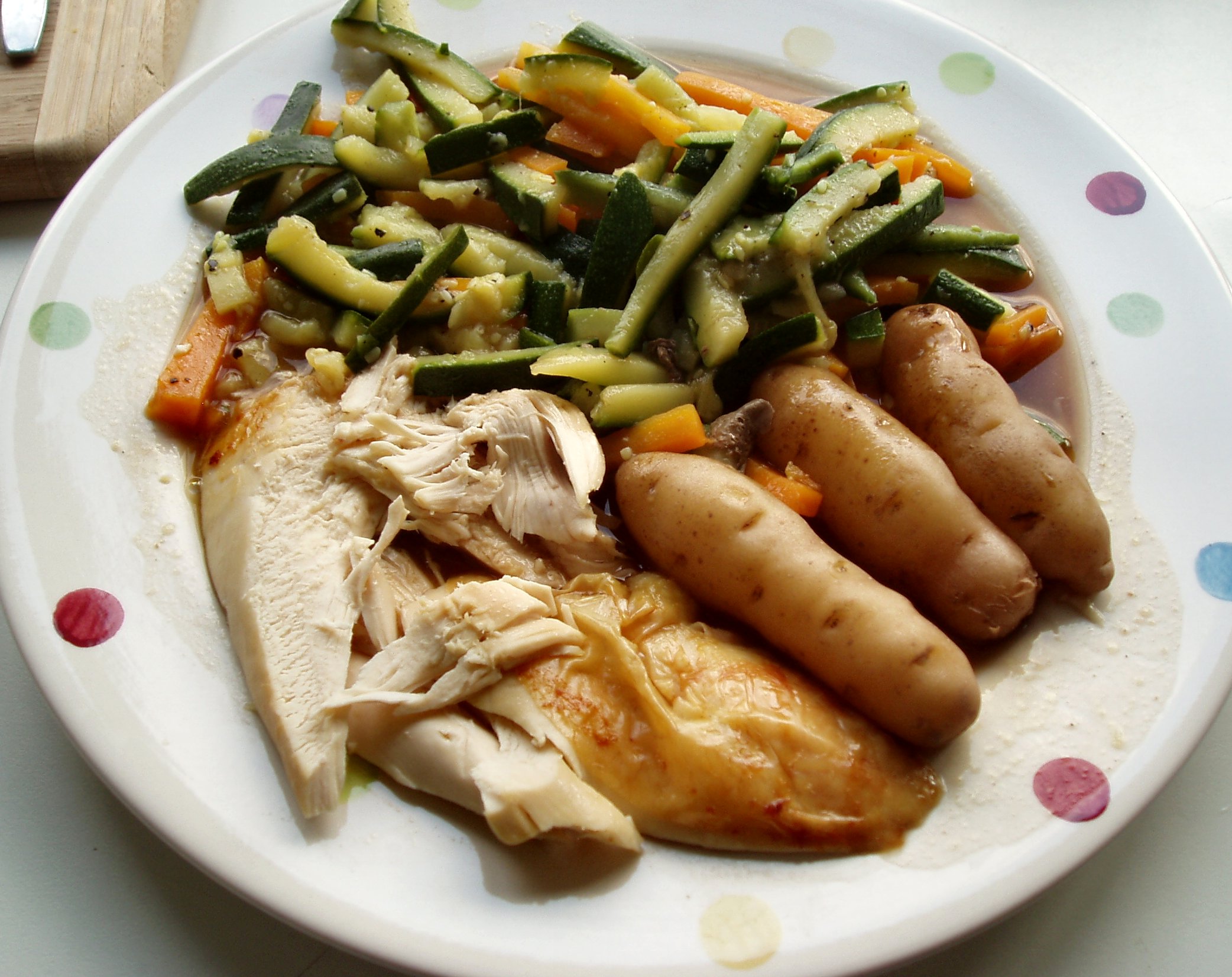
Chicken dinner

If you’d like to join me in raising awareness about broiler rearing systems, there are several things you can do. Most importantly, take responsibility for your choices in the supermarket. Talk to friends and family – involve everyone you meet in a discussion about the quality of chicken meat. Support Hugh Fearnley-Whittingstall’s Chicken Out campaign. In short, create a demand for premium, higher-welfare chicken!

You can also send me your favourite chicken recipe using free-range chicken. I will make a round-up of all entries on my birthday, Friday 18th July.

To participate:

  • Post your favourite chicken recipe on your blog (or email me at amerrierworld@googlemail.com with your name, recipe and photo of your dish)
  • Include in your post information about the chicken you used – where you bought it, what it tasted like etc.
  • Include a link to this blog announcement
  • Email me your name, blog URL and a link to your post by Wednesday 16th July.

I look forward to hearing from you 🙂 .

Pony Mad Birthday

M decided several months ago that she was going to have a “horsie party” for her 3rd birthday yesterday. She even collected together my cake books and searched through them until she found the cake she wanted. Which cake did she choose? … a stable full of ponies from Debbie Brown‘s 50 Easy Party Cakes.

No pressure then!

Motherhood is an easy target for guilt. I have made four cakes from this book for my elder daughter and only one for M. Each cake I vow is my last at the time, but how could I possibly disappoint my pony-mad princess? And so I have spent many hours this week in a cloud of icing sugar, hands stained various pastel colours, swinging between utter despair and relief while the ponies heads eventually took shape and hung miraculously in midair, looking out of their flowery stable. My Mum, who has been staying with us this week, was a great source of encouragement … I mean, you can’t exactly go and buy a cake from the supermarket and pretend you’d never failed with your own when your Mum’s in the kitchen watching, can you? 😉

It was worth it though. M was so pleased and proud to show off her birthday cake to the three little friends who came to her ‘horsie party’ yesterday afternoon.

Happy Birthday … neigh!

Pony Stable Birthday Cake

Colour or Crumb

When Rose Levy Beranbaum wrote her UK version of The Cake Bible, self-raising flour in the UK was still bleached even although plain flour was untreated. The trusty Food Industries Manual suggests that this was purely because people wanted the colour of self-raising flour to be bright rather than because it was necessary for the success of the recipes they were using … which was fortuitous for Rose but perhaps helps explain why there was no apparent demand by home-bakers in the UK for a replacement to bleached flour when chlorination was prohibited in 2000.

The Food Industries Manual also states however:

Since chemically aerated goods are baked shortly after the dough has been made, there is no opportunity for the gluten to ‘ripen’ hence self-raising flours need to be weaker and to contain less proteinous material than bread flours.

Since starting out on my flour quest, it has been a source of great frustration to me that self-raising flour has a lower protein content than plain and 00 grade flours. McDougall’s Supreme Sponge flour with its finely-milled soft wheats and 8% protein content has been sitting, laughing mockingly at me on the shelf of every supermarket. Why couldn’t they just leave out the baking powder and let me have some of it ‘plain’ and unadulterated?

I wasn’t sure what would happen to the baking powder components if I microwaved this self-raising flour … would they be deactivated by the heat, or would they remain unaffected until there was sufficient moisture for a reaction? Was it single-acting or double-acting baking powder? Would it explode?! My head was already spinning and that was even before I delved into the chemical formulations!

Well, today I finally took the drastic step of nuking it regardless.

I would never have believed that the two cakes I made this afternoon used exactly the same starting flour and exactly the same recipe, and were baked under as near to exactly the same conditions as is possible in my kitchen … only the flour in one cake was given the kate-flour treatment whilst in the other it was used straight from the packet.

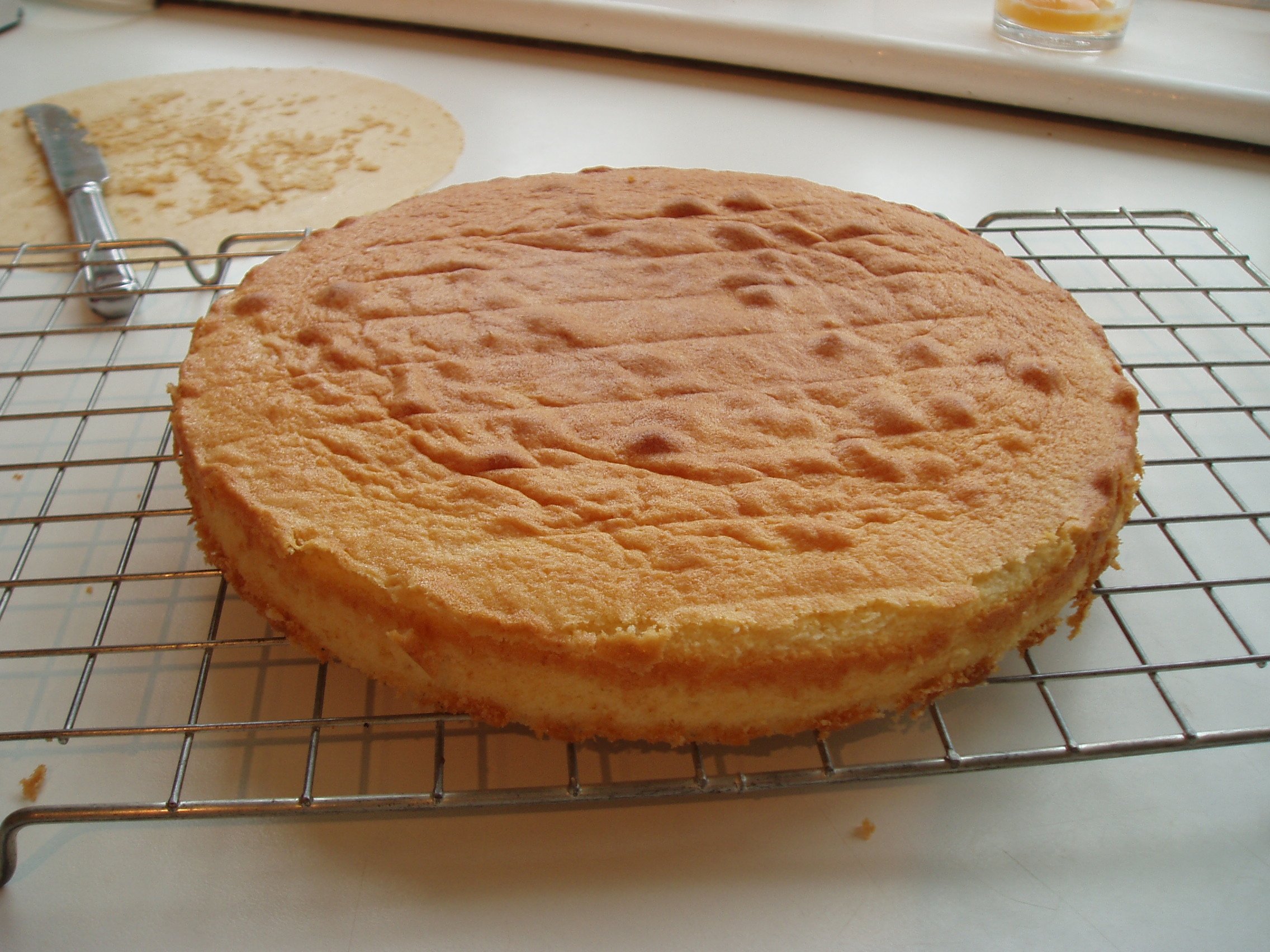
Self Raising Cake

Here’s the first – Rose’s Yellow Butter Cake recipe made with McDougall’s Supreme Self-Raising Sponge flour, untreated.

Here’s the same cake made with kate flour. I didn’t expect it to work. I almost forgot to take it out of the oven, I was so sure it would be a total flop … literally, as I’d gone for the US recipe and assumed that the flour was no longer self-raising after it had been microwaved. Instead, this cake has almost exactly the same vital statistics as a 9 x 1 1/2 inch cake made with authentic cake flour! (Info for Woody: height of batter in pan = 1.9 cms; 27 mins baking time; height at sides = 3.2 cms; height in middle = 4.2 cms).

The only thing … it seems you can either have cake-flour colour … or cake-flour crumb … but not both at once!

Colour or Crumb

  • Enter your email address to subscribe to this blog and receive notifications of new posts by email.

    Join 289 other subscribers
  • Seasonal Recipes

    candied peel

    baileys chocolate truffles

    gingerbread men

    mince pies

    fudge

    smarties cookies

  • Freshly Made

  • Categories

  • Favourite Feasts

  • Awards

    DMBLGIT Award
  • Archives

  • wordpress visitor counter
  • Adventures in food by Kate Coldrick from Woodbury in Devon.