Here’s a Health

It is January 25th, wha hae … and here’s a health to all as we honour the birthday of the great Scottish poet, Robert Burns.

Originating from our student days in Glasgow, my husband and I have carried the traditions of Burns Night with us in our gradual migration to the South-West of England. In 1998, we celebrated our first Burns Supper south of the border with a party of vaguely bemused friends, a vast quantity of haggis and a large bottle of whisky. Ten years and three children later, we will still be celebrating tonight with haggis, neeps and tatties along with the essential single malt whisky (albeit in slightly reduced quantities to those of 1998!).

Burns Night

It’s not too late for anyone to join us – here’s a simple recipe for a successful Burns Night Supper wherever you may be …

1. Track down a haggis (don’t believe those stories of wee hairy beasties roaming the Scottish countryside, one pair of legs shorter than the other since they spend their time spiraling steep slopes – try your local deli instead).

2. Remove any plastic covering. Wrap the haggis in kitchen foil (in case it bursts), place in a roasting dish and fill with water so that it reaches about halfway up the side of the haggis. Cook at 180 degrees C for about an hour or so until the haggis is heated through.

3. Peel and boil (in separate pans) your turnip (swede for those south of the border 😉 ) and potatoes … neeps and tatties. Mash.

4. Find someone to play the bagpipes for you while the haggis is cooking (warning: you’ll need to wear industrial-strength ear plugs if your rooms are small – I speak from experience, having survived a piper’s attempts to deafen all in the Uisge Beatha one Burns Night). Alternatively, put on some traditional music or hum a Scottish jig (Linn Records do a Robert Burns Series of CDs that are excellent).

5. Serve the neeps and tatties on a plate. Pour a dram of whisky. Say the Selkirk Grace …

“Some hae meat and canna eat,
And some would eat that want it,
But we hae meat, and we can eat,
Sae let the Lord be thankit.”

6. … then play a rousing tune as you ceremonially carry the haggis to the table. This is called ‘piping in the haggis’.

7. You should now address the haggis. At the appropriate place in this rendition, raise a knife dramatically, stab the haggis savagely and split it along its length …

“Fair fa’ your honest, sonsie face,
Great chieftain o’ the puddin-race!
Aboon them a’ ye tak your place,
Painch, tripe, or thairm:
Weel are ye wordy o’ a grace
As lang’s my arm.”

8. Raise your dram in a toast to ‘The Haggis’.

9. Eat and drink muchly.

10. Give a toast to ‘The Immortal Memory of Robert Burns’, celebrate his works with enthusiasm (one of my favourite songs is Kellyburn Braes) and wish a health to absent friends.

11. End your evening with a rendition of Auld Lang Syne:

“Should auld acquaintance be forgot
And never brought to mind?
Should auld acquaintance be forgot,
And auld lang syne?

For auld lang syne, my jo,
For auld lang syne,
We’ll tak a cup o’ kindness yet,
For auld lang syne.”

Happy Burns Night – Slainte 🙂

Cow Pat Crunch

My husband is almost entirely without a sweet tooth. He wishes I would devote my time to making cheese rather than cakes and cookies. Until my son came along, he was convinced that chocolate was a ‘girl thing’. However, he has recently been craving something he calls ‘Cow Pat Crunch’.

It turned out that ‘Cow Pat Crunch’ was a dessert from his childhood, boarding-school days. He described it to me as a chocolatey topping with dollops of cream on a crushed-biscuit base. Hmm.

Angel Delight?” I suspected.

“No, no, no,” he assured me.

“… a tasty and convenient powdered pudding that’s quick and easy to make – just add milk and whip!”

He would never have liked it if it had been Angel Delight … would he?

With friends coming for dinner yesterday evening, I decided to phone his former housemistress to discover this winning recipe. She was tickled pink to hear about my husband’s fond memories of her cooking. The ingredients … 6 to 8 oz of McVitie’s Digestive biscuits, 3 to 4 oz of butter … and a packet of Angel Delight, she confided!

Well, here we have a faithful reproduction of the original Cow Pat Crunch. Somewhat amusingly, it passed my husband’s (blind) taste test!

Cow Pat Crunch

Excellent Small Cakes

I am indebted to Jennifer Soucy (aka Lady Guenièvre de Monmarché) for wondering aloud about a recipe from the 17th century. The recipe is from a collection by Sir Kenelm Digby of his favourite pies, roasts, stews, jams, mead and cakes. Entitled The Closet of Sir Kenelm Digby Knight Opened, the culinary notebook was first printed in London in 1669. The fascinating part is that in Digby’s recipe for Excellent Small Cakes, he instructs the cook to “take three pound of very fine flower well dryed by the fire …”

It appears that Digby’s cakes are typically dense and tough when made today. Many modern redactions significantly alter the original proportions of ingredients in an attempt to lighten the texture of these cookie-like cakes. Having read about kate flour, Jennifer was reminded of Digby’s instruction to dry the flour well by the fire before using, and confessed that she had never followed this step in the procedure. Could this be the missing link?

I was intrigued. The implications are far-reaching … were the Elizabethans well-versed in the heat-treatment of flour? The food historian Alice Ross has described how baking in the 17th and 18th centuries often involved lengthy preparations:

“It must have required a few days just to get the ingredients ready – to pound the sugar into fine crystalline form, grind spices, stone raisins, cut imported candied citron fine, to cleanse the flour with several siftings, and to dry it at the hearth to remove excess moisture.”

It is easy to imagine that bakers were primed to pay specific attention to the level of moisture in the flour they were using. Did they discover that some recipes produced better results according to how well the flour had been dried? Looking through other recipes for cakes in Digby’s collection, it is noticeable that the only recipe requiring ‘flower well dryed by the fire’ is the recipe for ‘Excellent Small Cakes’. If he felt the need to include this instruction in a single recipe, he presumably considered it to be an important detail.

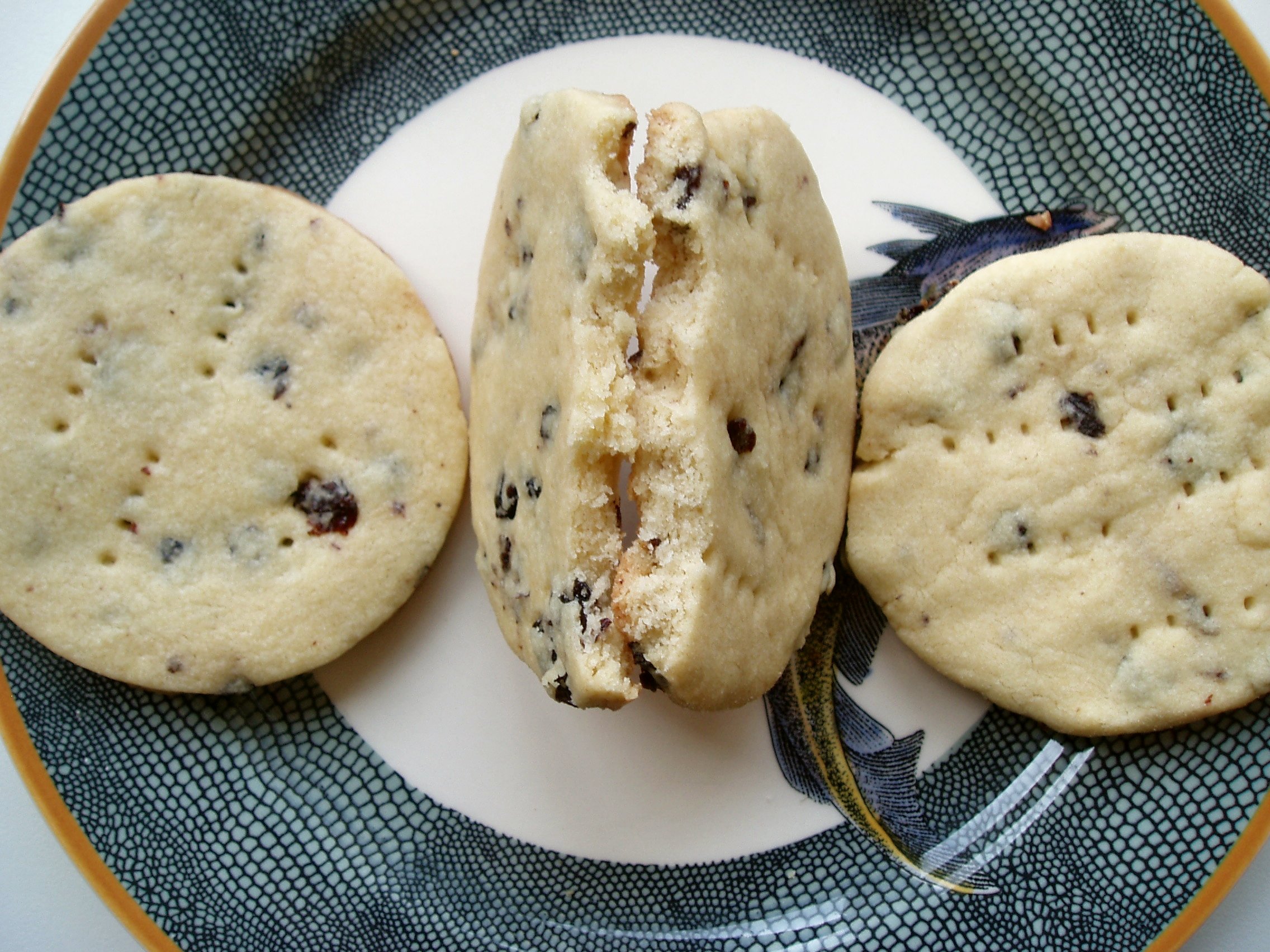
You can probably guess what happened next. Yup – I have just made two batches of Digby cakes, one using kate flour (far) and the other using untreated flour (near).

Excellent Small Cakes

The dough made with kate flour was less easy to work with than that made with untreated flour. I flattened it with my hands and then rolled it to about 1/4 inch thickness. I used a round cookie cutter to cut circles and picked them up by squeezing the edges slightly as I lifted them. The untreated-flour dough was moister. It rolled out better and the circles were less fragile. I was able to transfer these more easily than the kate-flour circles to a lightly greased baking sheet.

Although the untreated-flour dough certainly scored more points in terms of handling, the kate-flour ‘cakes’ (pictured on the right) won hands down when it came to taste and texture. They rose slightly higher than the untreated-flour cakes, had an open cake-like crumb and were meltingly delicious to eat. The untreated-flour cakes (pictured on the left) were dense, tough and chewy – hardly what I’d describe as either ‘excellent’ or ‘small cakes’.

Side by Side Comparison

Excellent Small Cakes
My scaled redaction of an original recipe by Sir Kenelm Digby

450g / 16 oz cake (or kate) flour
225g / 8 oz caster sugar
113g / 4 oz dried currants
225g / 8 oz butter, softened
3 tbsp + 1 tsp double cream
1 egg yolk
2 tsp grated nutmeg
3 tbsp dry white wine

Preheat the oven to 190 degrees C. Lightly grease a large baking sheet.

Combine the flour, sugar and currants in a large bowl and whisk to mix thoroughly.

Cut the butter into small pieces and add to the flour mixture. Beat to combine.

In a separate bowl, lightly combine the cream, egg yolk, nutmeg and wine. Stir into the flour/butter mixture to make a dough.

Flatten the dough with your hands on a clean surface. Roll to a 1/4 inch thickness. Cut into circles with a round cookie cutter and place on the baking sheet. Prick several times with a fork.

Bake in the centre of the oven for 8 to 10 minutes. Leave to cool slightly on the baking sheet before transferring to a wire rack.

When cool, the cakes may be iced with sugar. I didn’t ice my cakes, but I did find some references on sugar icing that provide recipe ideas from contemporary sources.

  • Enter your email address to subscribe to this blog and receive notifications of new posts by email.

    Join 289 other subscribers
  • Seasonal Recipes

    candied peel

    baileys chocolate truffles

    gingerbread men

    mince pies

    fudge

    smarties cookies

  • Freshly Made

  • Categories

  • Favourite Feasts

  • Awards

    DMBLGIT Award
  • Archives

  • wordpress visitor counter
  • Adventures in food by Kate Coldrick from Woodbury in Devon.